
EN
The Mailman’s Mistake

My neighbor, a retired mail carrier with a drooping eyelid, knocked on my door holding a cream envelope. “Got delivered to my place by mistake,” he said. “Looks like a wedding.” I knew that looping cursive before I touched it—Clara Kendrick, my ex-mother-in-law, still believed in monogrammed stationery. Inside was a card with gold lettering: *Robert Kendrick and Tiffany Munson request the honor of your presence.* Tucked behind it, a sticky note in Rob’s squared-off handwriting: *Come watch. She’s already carrying my son. Not so defective now, huh.*
I had a seven-month-old daughter asleep in the next room. I had a manila envelope in my filing drawer thick enough to sink a family dynasty. And I had a number I hadn’t spoken in five years: the sound of my own collarbone cracking against the guest bathroom tile.
I bought a dress for twelve bucks at a thrift store on Colfax and didn’t RSVP.
I met Rob Kendrick at a charity auction in Denver. He was tall, sandy-haired, loud in the way people with old money mistake for charm. His family owned a chain of diagnostic imaging centers—eighteen clinics and a lab with a fake waterfall in the lobby. I was a freelance graphic designer, paying rent on a studio in Capitol Hill with a radiator that hissed all winter. When he proposed on a gondola in Vail, champagne sloshing over the rim, I said yes before the bubbles hit the snow.
The prenup was “just paperwork,” he said. I signed it on a Tuesday, standing in his mother’s kitchen while she refilled my tea. Six weeks later, Eleanor began calling every Sunday to ask if I’d picked an obstetrician. When I didn’t get pregnant, she started dropping off brochures for fertility clinics along with her cranberry bread.
Rob dragged me to a doctor who played golf with his father. Dr. Hendricks ran tests, called us into his office, and slid a report across the desk. *Premature ovarian failure.* Permanent. “I’m sorry,” he said, with the practiced sorrow of a man who practiced golf more than medicine.
That night, Rob drank half a bottle of bourbon and told me I’d trapped him. “You knew,” he said, shoving the paper into my face. “You knew you were broken.” The first punch landed in the garage, not for a big reason—something about a credit card charge—but by the time I packed my bags three years later, I had learned to apply concealer to my ribs and tell ER nurses I walked into doors.
The beagle next door, a fat, anxious thing named Jellybean, howled every time Rob raised his voice. I’d stand at the window, watching the dog pace its chain-link yard, and think: *He knows. The dog knows.*
The night I left, Rob threw a crystal vase at my head. It missed and exploded against the fireplace. I stood barefoot in the shards, not crying, not moving—just calculating the distance to the front door. The next morning, while he was at the gym, I filled two suitcases and took a folder of bank statements I’d hidden behind the water heater. I didn’t have the lab report; they kept the originals at the office. But I had enough to start.
I drove to a shelter in Pueblo and called a lawyer a friend had mentioned, a pit bull named Alicia Torres. Alicia subpoenaed the lab records. Four months later, a courier delivered a box that sat on my kitchen table for three hours before I opened it.
The original file was for one Robert J. Kendrick. Diagnosis: non-obstructive azoospermia. Zero sperm. Permanent. Date of test: two months before our wedding.
The electronic audit trail showed logins from Eleanor’s computer, then Rob’s, then Dr. Hendricks’. They’d swapped my name for his, fabricated my metrics, and filed the altered report with the court to trigger a prenup clause that gave Rob control of my grandmother’s trust if I “concealed a reproductive defect.” That trust—$320,000—had been used as collateral on a business expansion loan. My signature was on the paperwork, forged twice.
Rob had built his newest imaging center with my dead grandmother’s money, then toasted his “self-made” empire at a ribbon-cutting covered by the Denver Business Journal.
I didn’t file for divorce right away. I let them believe I was hiding. I worked with a forensic accountant, filed sealed motions, and cooperated with the state attorney general’s fraud division. And I went to another doctor—this one chosen by me—who confirmed what I already suspected. My body was fine. The problem had never been mine.
I chose a donor. Three months later, I was pregnant. Maya was born healthy, with a sharp cry and a full head of dark hair.
Two weeks before Rob’s wedding, I sat in Alicia’s office and slid the last signed affidavit into a folder. “Serve them at the reception?” I asked.
She said, “They invited you. Seems polite to show up.”
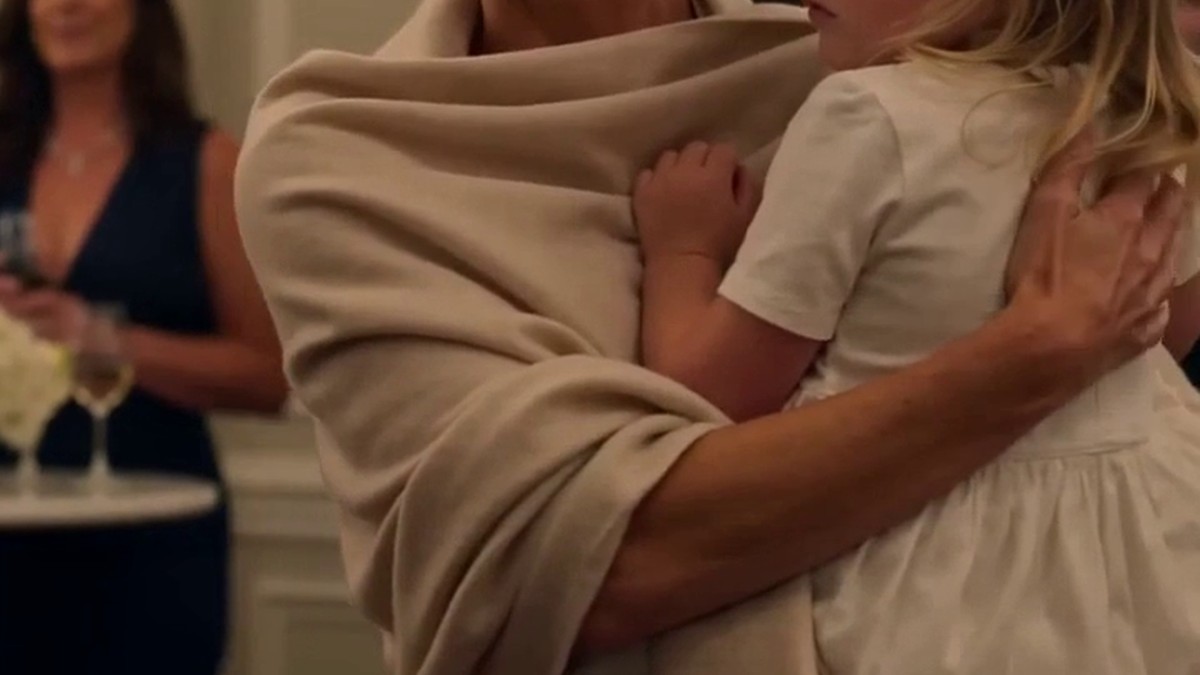
The wedding was at the Brown Palace, all marble and chandeliers. I walked into the ballroom with Maya riding my hip in a cream-colored wrap, and the collective intake of breath from a hundred guests tasted like warm champagne going flat. Eleanor spotted me first. “You actually came,” she said, loud enough for the cousins’ table to hear. “How brave.”
Rob appeared with Tiffany, her belly round and straining the pearl buttons of her gown. He stopped, looked at Maya, then laughed a quick, barking sound. “Whose kid did you borrow? Getting desperate for a storyline?”
I didn’t answer. I handed Tiffany a white box tied with pale blue ribbon. “Open it whenever you like.”
Rob snatched it. “No. Now. Let’s see what the barren ex brought to my day.” Phones went up. Eleanor’s smile widened.
Tiffany lifted the lid. Inside was a one-page summary from a certified lab: *Confirmed azoospermia* with Rob’s full name, the test date, and a notarized statement from the lab manager explaining the original alteration. Below it, a copy of the forged loan document, and beneath that, a photo of Rob and Dr. Hendricks shaking hands at a golf tournament, Eleanor in the background, all three grinning.
Tiffany’s face went pale. Rob grabbed the page.
Then Tiffany lifted her head, looked past him toward the bar, and said, in a voice that carried: “Dean. Dean, don’t you dare walk out of here.”
The best man froze mid-step. The silence in that ballroom dropped like a blade.
Rob turned slowly. “What the hell?”
Tiffany crumpled. “I didn’t know how to tell you. Your mother said—she said it didn’t matter, that the baby would secure the family image, that you’d never need to know.”
Eleanor slapped her. The sound cracked through the chandeliers. Three hundred guests inhaled. Two men in suits rose from a table near the back and walked forward.
“Robert Kendrick, Eleanor Kendrick—we’re with the Colorado Attorney General’s fraud division. We have warrants for your arrest and for seizure of all business records.”
Rob lunged at me—or tried to. The investigator caught his arm. A third officer joined them, handcuffs already out. “You did this,” Rob spat at me, his cheek pressed against the marble floor where he’d planned to have his first dance.
“You did this to yourself,” I said. “I just brought the paperwork.”
I walked out the side door as the screaming started. Maya slept through the whole thing.
The criminal case took eleven months. Dr. Hendricks flipped first: he admitted to falsifying the report at Eleanor’s request for a $50,000 cash payment. The lab tech who kept the original raw data traded it for immunity. The notary who’d stamped my forged signatures was a golf buddy of Eleanor’s; he pleaded out too. Rob was convicted on sixteen counts—forgery, fraud, identity theft, assault—and sentenced to seven years in federal prison in Florence. Eleanor received three years for conspiracy and evidence tampering. The courts ordered restitution of $412,000 to me, released from the frozen sale of the imaging centers.
Tiffany’s baby belonged to Dean. He’s paying child support now; she moved to Phoenix. I don’t keep track.
Two years after the wedding, I sat in the office of a small foundation I’d started with the recovered trust money. I called it Maya’s House—it offers free forensic accounting to women trying to untangle financial abuse. The heater in my Capitol Hill studio had been replaced with a quiet Mitsubishi unit; Mrs. Ortiz next door still leaves tamales on my doorstep every Tuesday, wrapped in foil, spicy and perfect.
Maya is three now. Last week she handed me a crayon drawing of our house and a sun with a squiggly smile. I taped it to the refrigerator with a magnet shaped like a Colorado license plate.
Rob’s parole letter arrived in January—a gray envelope with the federal seal, asking for a character statement. I didn’t burn it. I didn’t cry. I slid it into a manila folder labeled *Archived* and handed it to Alicia for the file.
The revenge was never the point. The point was the last piece of paper that proved the truth, and where I chose to put it.




One Dollar for Thunder
I trained that dog for four years before I understood what he actually was. Not a tool. Not a piece...


The $43 Sensor I Taped Above My Mother’s Bedroom Door
I found my grandmother Dorothy on her kitchen floor at eleven in the morning, back in 2009. She'd missed her...


The Van I Bought for Sofia After I Almost Swiped Left
I almost didn't message her. That's the part nobody knows. Her profile picture was a close-up, cropped tight, so you...


The Empty Chair at Miller’s Diner
My name's Ray Kowalski, I'm forty-six, and I own a body shop off Route 9 outside Scranton. For eleven years,...


Table Six and Mason Hartley’s Paper Bag
Jefferson Elementary smelled like floor wax and tater tots that Tuesday in October, the kind of smell that gets stuck...


Reba Stopped Eating, So I Asked My Sister for the $2,400
I'm Casey Mercer. I'm thirty-four, I work three days a week as a vet tech at Muskingum Valley Animal Hospital,...


Walt Hobbs Sold 47 Ewes So His Son Could Read
People in Ten Sleep still ask me how my boy turned into the kind of man who flies into Casper...


Eppure era proprio quello che mi succedeva ogni volta che mio suocero veniva a trovarci.
Non avrei mai immaginato di arrivare a quarantasette anni e provare vergogna per una cosa così semplice: essere felice quando...