
EN
**The Last Note**

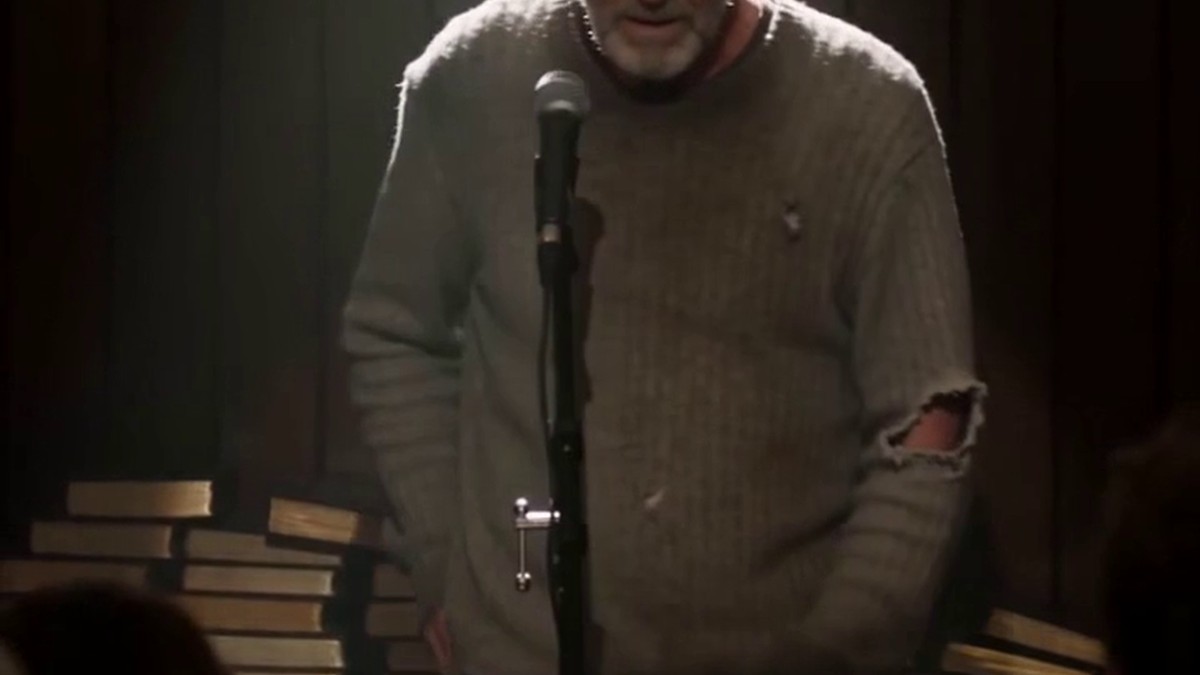
The air inside the old church hall was thick with dust and the metallic smell of folding chairs. A single spotlight cut through the dim room, illuminating the microphone stand like a lonely tree in winter. Somewhere in the back, a baby fussed, then went quiet.
Everyone was there for the county talent show. Farmers in stiff button-downs, a woman with hair freshly set at the beauty parlor on Main Street, three teenagers slouched so low in their chairs they looked boneless. I sat in row four with a paper cup of lukewarm lemonade going flat in my hand.
His name was Elias. I only knew because my sister used to clean his mother's house.
Elias walked up the side steps. Not the center aisle, where the light was good and people expected the performers to come from. He came along the wall, past the stacks of old hymnals, his shoes making a sound like sandpaper on the wooden floor. He wore a gray sweater with a hole at the elbow. Jeans that had been washed too many times.
The crowd did what crowds do. A few glanced away, embarrassed. Somebody's father in row two checked his phone. The teenagers didn't even look up.
Elias reached the microphone. He didn't adjust the height, even though it was set for the seven-year-old twin girls who'd tap-danced ten minutes before. The stand came up to his chest. He would have to bend.
He didn't bend.
He reached into his back pocket and pulled out a small object, no bigger than a cigarette lighter. For a moment, I thought it was a phone. The teenagers thought so too—one of them snorted, a quick, nasal sound like a rabbit caught in a fence.
It wasn't a phone.
He brought it to his lips. And then he began to play.
The harmonica was old, the kind with peeling red enamel you find at a flea market for three dollars. But the sound that came out of it was not three dollars. It was not anything that belonged in that church hall with its scuffed floor and its banner from Vacation Bible School still taped above the exit.
The first notes were low, almost tentative, like a man testing ice on a January pond. Then they rose. And the whole room changed.
The woman with the fresh hairdo put her hand over her mouth. The man in row two put down his phone. The teenagers went still—actually still, which I had not seen happen once in seventeen years of working the ticket table at these things.
Elias played with his eyes closed.
It wasn't a song I knew. It wasn't a song anyone knew. It sounded like the wind that comes off the plains in late October, when you can smell the first frost in the air. It sounded like a screen door slamming at midnight. It sounded like the thing you wanted to say at your mother's funeral but couldn't.
On the second verse—if you can call it a verse—he took his left hand off the harmonica and let it hang at his side. Then the other. The harmonica stayed at his mouth, held by nothing but breath and balance.
That was when the baby in the back stopped fussing.
You could hear the dust settle on the windowsills.
A man three rows behind me was crying. Not sobbing—just tears running down into the stubble on his jaw, like he'd forgotten to stop them. His wife didn't look at him. She reached over and took his hand, and they sat like that, watching Elias, neither of them moving.
The melody went somewhere I can't describe. It climbed, and it kept climbing, and just when you thought it had to come back down, it climbed again. My chest hurt. I realized I'd been holding my breath and didn't know for how long.
Then it ended.
Not with a flare, not with a bang. The last note just… dissolved. Like sugar in warm water.
Elias lowered the harmonica. Opened his eyes. Blinked at the spotlight like it was a morning he hadn't expected to see.
Nobody moved.
Nobody clapped.
For what felt like a full minute, the room held still, as if everyone was waiting for permission to breathe again.
Then the old piano teacher in the front row—Mrs. Calloway, who had judged this show for thirty-one years and criticized every act with the same drawn-on eyebrows and the same tight smile—Mrs. Calloway stood up.
She walked to the stage, her orthopedic shoes squeaking on the steps.
She took Elias's hand—the one that had been hanging at his side—and pressed something into his palm.
I leaned forward to see. It was her judge's ribbon. The one she'd been holding for the winner. She hadn't even written the name on it yet.
"Play that at my funeral," she said. Her voice carried in the quiet like a stone dropped into a well.
And then, as if a spell had broken, the room erupted.
The applause wasn't polite. It wasn't the measured clapping of people doing their civic duty. It was the kind of noise that hurts your ears and leaves your palms stinging. People were on their feet. The teenagers were on their feet. The crying man in row three was clapping with both hands above his head, his mouth open in a shout I couldn't hear over the din.
Elias stood there with the ribbon clutched to his chest, the little red harmonica still warm in his other hand. He didn't bow. He didn't smile. He looked out over the crowd like a man who had just crossed a river he'd been told was uncrossable.
My sister told me later that Elias lived in a single-wide trailer on the east side of town, with his mother and two dogs. That he'd been at the talent show only because his mother had seen the flyer at the Stop-N-Go and signed him up without telling him. That he'd missed the rehearsal because he'd been fixing the alternator on his truck, and then he'd walked three miles to the church because the alternator was still broken.
She told me he played the harmonica on the porch every night at nine o'clock, and that the neighbors had started keeping their windows open at that hour, even in the dead of summer when the air was so thick the mosquitoes had to swim through it.
But I didn't know any of that then. All I knew was what I saw: a man in a gray sweater with a hole in the elbow, and a room full of people who came expecting nothing and got more than they could carry home.
The show went on after that, I suppose. There were more acts—a ventriloquist, a baton twirler, a woman who sang "Amazing Grace" with a backing track that skipped.
I don't remember any of them.
The lemonade went warm in my hand. I poured it out on the grass by the parking lot, where the light from the church windows made long yellow rectangles on the gravel.
Behind me, through the open door, I could hear Elias's name being called for the encore.
He didn't come back out.
They say he was already walking home, three miles down the county road, the harmonica in his pocket and the ribbon folded neatly in his palm.




Momenti felici sul Ticino, quattrocentomila euro e un sacco da campeggio lasciato sul prato
— Dammi qua. Riccardo le strappò lo spiedino dalle mani, senza nemmeno chiederlo, con quella rapidità distratta di chi è...


La porta di Villa Montalto
Il campanile della chiesa di San Girolamo, a Bergamo Alta, batteva le quattro del pomeriggio quando le prime Maserati cominciarono...


Momenti felici al Belmonte: i tulipani che Lorenzo non doveva comprare
Lorenzo Ferraro, cardiologo tra i più stimati di Torino, aveva comprato dei tulipani bianchi. Non per me. Li ho visti...


Il brano della sarta di Villa Carenzi
La luce di novembre entrava obliqua nella sala grande di Villa Carenzi, sopra Bellagio, e si posava sulle pareti color...


Quando la vita ti crolla addosso
Lasciai la cartelletta gialla sul tavolo di formica della cucina, quella che mio padre aveva comprato ai saldi di un...


Il matrimonio di Chiara e la casa che non era più sua
— Vi ho appena fatto perdere la sposa, l'appartamento e il poco rispetto che vi restava! — e ho lanciato...


Quello che mia nipote nascondeva sotto il grembiule a Monza
Nessuno in quella casa doveva vederla così. La cucina sapeva di caffè Lavazza appena fatto e di niente che fosse...


Watering Can on the Edge of the Law
"You moving in with suitcases or a backhoe, Aunt Marie?" came a shout from the window of an SUV that...