
EN
The Belt Was on the Floor

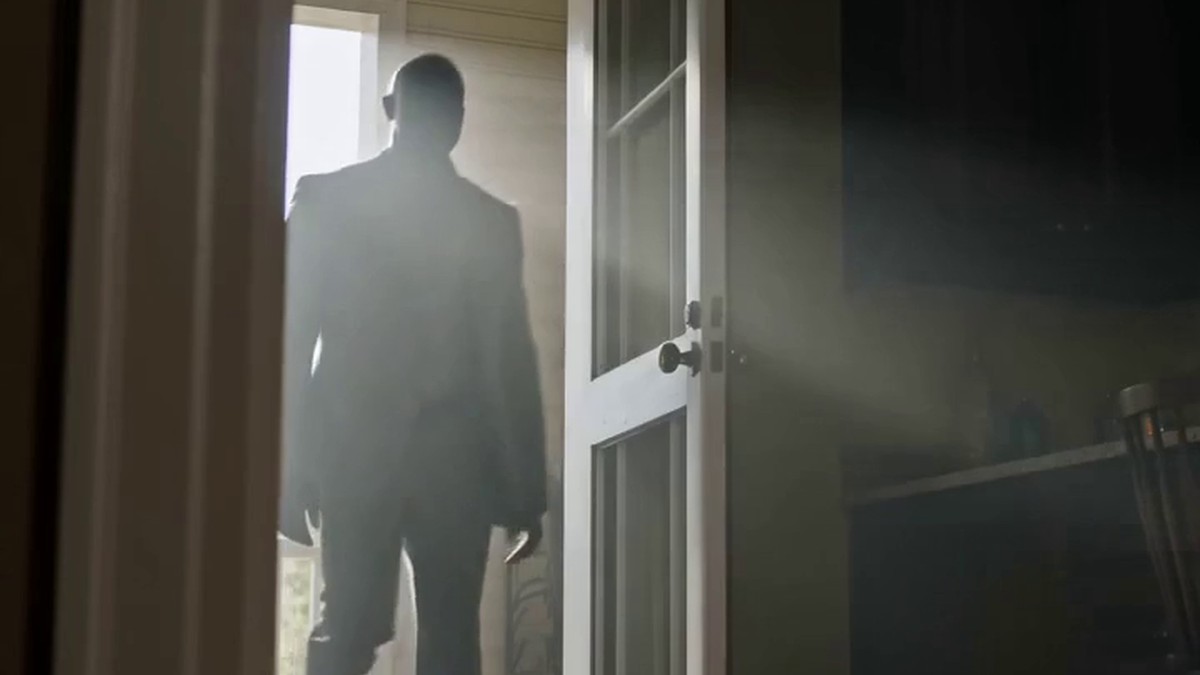
I’d been at Bennett Law Group exactly four weeks when Marcus shoved the red folder across my desk.
“Notary stamp. Now. We’re going to Jones Street.”
He was already wearing his gray suit jacket, sweat darkening the collar. Savannah in May is a sauna. The office AC had been wheezing all afternoon.
“What’s in the folder?”
“A woman’s entire life,” he said. “And her son’s attempt to take it.”
I grabbed the stamp, a bottle of water, and a granola bar I never touched. The drive took nine minutes. I remember because Marcus checked his phone at every stop sign, jaw tight. Live oaks met overhead like a green tunnel. Spanish moss hung still in the heat.
We parked in front of a pale yellow Greek Revival with black shutters. A dog barked behind a fence across the street. A tabby cat slept on a porch railing next door. The garden was overgrown—pink azaleas choking out rosemary, a birdbath full of brown water.
Marcus didn’t knock. He pressed the bell three times and peered through the side window.
A woman in her late thirties opened the door. Blond hair in a ponytail, white blouse, phone in her hand. Her face went the color of old putty when she recognized him.
“Ashley, step aside.”
“This is a family situation, Mr. Bennett. Nobody called you.”
Marcus put his hand flat on the door and pushed. It opened hard enough to bang a coat rack.
The foyer was dim, smelled of lemon oil and whatever was rotting in the kitchen. Photographs lined the wall: an older man in a Navy uniform, a boy on a baseball diamond, a woman at a hospital gala. Heart pine floors creaked under my flats.
In the dining room, an older woman sat at a mahogany table. Silver hair pulled back. Green cardigan with a coffee stain on the right sleeve. Hands folded like she was waiting for the bus.
A man stood over her. Early forties. Same silver hair but cropped close. Sweat rings under both arms. In his right hand: a leather belt, doubled over.
He was slapping it against his palm.
The rhythm stopped when he saw us.
“Who the hell are you?”
Marcus ignored him. His eyes stayed on the woman.
“Mrs. Reynolds, don’t sign anything.”
She didn’t speak. She just turned her head toward Marcus and gave the smallest dip of her chin. Then she looked at the belt. Then she looked at her son.
I noticed the table. A folder fat with clipped pages. A black pen. A phone lying face down.
The son took one step toward Marcus. The belt hung at his side like a dead snake.
“This is my mother’s house. You need to exit before there’s trouble.”
“The only trouble here is yours, Zack,” Marcus said. “The police are behind me.”
The word “police” was still echoing when the front door opened again. Two Savannah PD officers came through, hands on their belts. Behind them, a detective in a sleeveless blouse and thick glasses.
“Sir, drop the belt.”
He didn’t.
“Sir. Drop it. Floor. Now.”
The belt hit the floorboards with a sharp smack. I can still hear it over the ceiling fan.
—
That was my first introduction to Doris Reynolds.
She was seventy-one years old. She had spent twenty-two years running the financial office of a regional hospital network. She had raised Zack in this same house. She had nursed her husband Robert through pancreatic cancer and buried him on a humid August morning in 2019. I know that detail because I later read the funeral program in the evidence box.
The officers separated Zack and Ashley into different rooms. The detective picked up the phone from the table with the corner of a tissue. The screen was still lit. A text thread was open.
I saw only a fragment before the detective pocketed it: “If she gets difficult, we record her confusion and show the doctor.”
Marcus sat across from Doris. He opened the red folder.
“I have everything,” he said.
Doris nodded. Then she did something that surprised me. She reached into her cardigan pocket and pulled out a small brass key. She slid it across the table.
“That’s for the safety deposit box at Wells Fargo on Bull Street,” she said. “He doesn’t know it exists.”
I remember the sound of that key on the wood. A single clean note.
—
Over the next six weeks, I learned the full picture. I was the one copying bank statements, organizing recordings, highlighting the forged signatures. I drank so much coffee my right eye twitched for a week.
Here’s what they tried to do.
Zack and Ashley had spent fourteen months building a case that Doris was losing her mind. They told relatives she forgot appointments. They hid her keys and claimed she misplaced them. They canceled doctor visits and then reported she refused care.
They found a physician named Dr. Harlan Ricks. He was Ashley’s second cousin. He signed a medical evaluation that described Doris as having “moderate cognitive decline” and “inappropriate financial confidence.”
The price for that diagnosis: five thousand dollars.
I saw the check. It was written from Ashley’s account. The memo line said “evaluation.”
They also found a notary named Cynthia Hollis. She had been Robert’s college friend’s wife. She came to Robert’s funeral. She brought Doris a casserole dish wrapped in tinfoil after the burial.
Cynthia notarized a power of attorney with Doris’s forged signature. She certified a bank authorization that let Zack withdraw from her retirement account. She helped list the Jones Street house for sale through an agent in Hilton Head.
The asking price: four hundred eighty-five thousand dollars. A buyer had already wired fifty thousand into escrow.
The house Doris had lived in for thirty-eight years was two weeks from belonging to strangers.
—
The trial started in October. I sat in the third row with a yellow legal pad, turning my pen over in my fingers until the clip broke.
Doris took the stand on a Wednesday. She wore a navy dress and a small gold pin shaped like a rose. It had belonged to Robert’s mother.
The prosecutor asked her about the afternoon in the dining room.
“Tell us what happened, Mrs. Reynolds.”
She folded her hands on the railing.
“My son came into my house at four o’clock. He had a belt. He told me to sign a paper that would let him borrow money against my home. He said if I signed, everything would be easier.”
She paused. The air conditioning cycled on.
“When I asked what would happen if I didn’t sign, he told me I was a confused old woman who didn’t know what day it was.”
The courtroom was so still I could hear the clock on the back wall.
The defense tried to paint Zack as a worried son. They showed texts where he asked about doctors and medications. They called Ashley to describe Doris “wandering” at a grocery store.
On cross-examination, the prosecutor played a recording from Ashley’s phone. It was from five weeks before our visit to Jones Street.
Ashley’s voice, calm and loud: *“If she doesn’t sign, we say she’s having an episode. We take her to the hospital. We tell them she’s a danger to herself.”*
Zack’s voice: *“And we get the temporary guardianship. Then the house is ours anyway.”*
The jury took four hours.
Guilty. Conspiracy, elder abuse, fraud, forgery, attempted theft, and filing a false medical report.
Zack received eight years. Ashley received seven and a half.
Cynthia Hollis, the notary, received eleven years and permanent revocation of her commission. The judge called her “the hinge of the entire scheme.”
Dr. Harlan Ricks lost his medical license for three years and was ordered to complete one hundred hours of elder abuse training.
The court also ordered restitution to Doris Reynolds in the amount of two hundred ten thousand dollars.
—
Three weeks after sentencing, Doris came to our office. It was a Tuesday morning, not yet noon. She wore a yellow sundress and carried a canvas tote from the Savannah Book Festival.
She sat at the conference table. She took a manila folder from the tote and set it squarely in the center.
“Allison,” she said. “Would you notarize this for me?”
It was a revocable living trust. Nine pages. She had typed it herself on a word processor. There were two typos on page four—a misspelled “beneficiary”—but not one sentence drifted from what she wanted.
She had named a legal aid clinic on Oglethorpe Avenue as the sole beneficiary of her estate. The trust specifically excluded Zack Reynolds by name. The trust specifically excluded Ashley by name. It stated that no funds would ever pay their debts, their legal fees, or their attempts to appeal.
On page seven, in bold letters: **“The person who chose to harm me does not get to inherit from me.”**
Doris took a black pen from her bag. The same make and model as the one on her dining room table that day in May.
She signed each page. Nine signatures. Steady lines. No hesitation.
I pressed my notary seal onto the last page and felt the raised circle with my thumb.
Then she wrote a check. She tore it from the book with a sound like a page turning.
Two hundred ten thousand dollars. To the legal aid clinic.
She slid the check across the table.
“File the trust today,” she said. “And send a copy to my son at the prison. I want him to see his name in the exclusion clause.”
I did.
A week later, I drove to the state prison in Cameron, Georgia. I didn’t have to deliver it in person. I could have mailed it. But I was the one who stamped the seal, and I wanted to sit across from him.
They brought Zack to the visitor’s room in an orange jumpsuit. His hair had gone gray at the temples. He looked shorter than he had that spring afternoon.
I slid the folder across the table.
“Your mother asked me to deliver this.”
He opened it. He read page one. His finger stopped at page seven. His jaw tightened until I could see the muscle flex under his ear.
“She gave everything to a clinic,” he said. It wasn’t a question.
“Every dollar.”
He stared at the bold line on page seven. His lips moved without sound.
Then he pushed the folder back.
“Tell her I didn’t mean for it to go that far.”
I took the folder and stood.
“Tell her yourself. When you get out.”
I left before he could answer. The door behind me closed with a metallic clank that echoed down the corridor.
—
Doris rents a brick bungalow in Ardsley Park now. It has a screened porch, a ceiling fan, and a rose bush she transplanted from the Jones Street house. It bloomed in April.
The legal aid clinic has a plaque near the front desk. It says: **The R. E. Reynolds Fund for Elder Rights.**
Every Thursday, Doris answers the phone for three hours. When a caller says their son is asking them to sign over the house, Doris says the same thing:
“Find a lawyer. Change your passwords. And never sign anything with someone standing over you.”
I know because I volunteer there now. Twice a month, I take the Number 6 bus down Oglethorpe. I sort intake forms. I make coffee for the waiting room.
The first time I saw Doris there, she was at a small desk by the window. She had a miniature fan blowing on her face and a stack of messages in her left hand.
She didn’t say anything to me. She just pointed to an empty chair across from her.
I sat down. I unpacked my bag. I uncapped a pen.
The first caller came in at 8:47 AM.
A woman, maybe sixty, clutching a brown handbag. She said her daughter had taken her checkbook. She said she was afraid to go home.
Doris listened. Then she wrote something on a pink message pad, tore the page off, and slid it across the desk.
I saw only the name of a lawyer and a phone number. But I saw the woman’s fingers shake as she folded the paper and tucked it into the handbag.
That was enough.




One Dollar for Thunder
I trained that dog for four years before I understood what he actually was. Not a tool. Not a piece...


The $43 Sensor I Taped Above My Mother’s Bedroom Door
I found my grandmother Dorothy on her kitchen floor at eleven in the morning, back in 2009. She'd missed her...


The Van I Bought for Sofia After I Almost Swiped Left
I almost didn't message her. That's the part nobody knows. Her profile picture was a close-up, cropped tight, so you...


The Empty Chair at Miller’s Diner
My name's Ray Kowalski, I'm forty-six, and I own a body shop off Route 9 outside Scranton. For eleven years,...


Table Six and Mason Hartley’s Paper Bag
Jefferson Elementary smelled like floor wax and tater tots that Tuesday in October, the kind of smell that gets stuck...


Reba Stopped Eating, So I Asked My Sister for the $2,400
I'm Casey Mercer. I'm thirty-four, I work three days a week as a vet tech at Muskingum Valley Animal Hospital,...


Walt Hobbs Sold 47 Ewes So His Son Could Read
People in Ten Sleep still ask me how my boy turned into the kind of man who flies into Casper...


Eppure era proprio quello che mi succedeva ogni volta che mio suocero veniva a trovarci.
Non avrei mai immaginato di arrivare a quarantasette anni e provare vergogna per una cosa così semplice: essere felice quando...