
EN
Grief and Two Hearts Beating

The nurse at Riverside General kept calling me Mrs. Callahan even after I told her twice it was Ellery. I didn't correct her a third time. There wasn't room left in me for it.
Dean and I got married on a Tuesday at the county clerk's office in Springfield, Illinois, because his insurance renewed on the first of the month and we couldn't wait for a real wedding. That was four years before the diagnosis. We'd been trying for a baby for two of those years, and when the second line finally showed up pink on the test, Dean cried in the Walgreens parking lot before we'd even gotten back in the truck.
Five months later, he started losing weight he didn't have to spare. The doctors at Riverside ran the scans twice because nobody wanted to be the one to say it out loud. Stage four. Pancreatic. Dean was thirty-six.
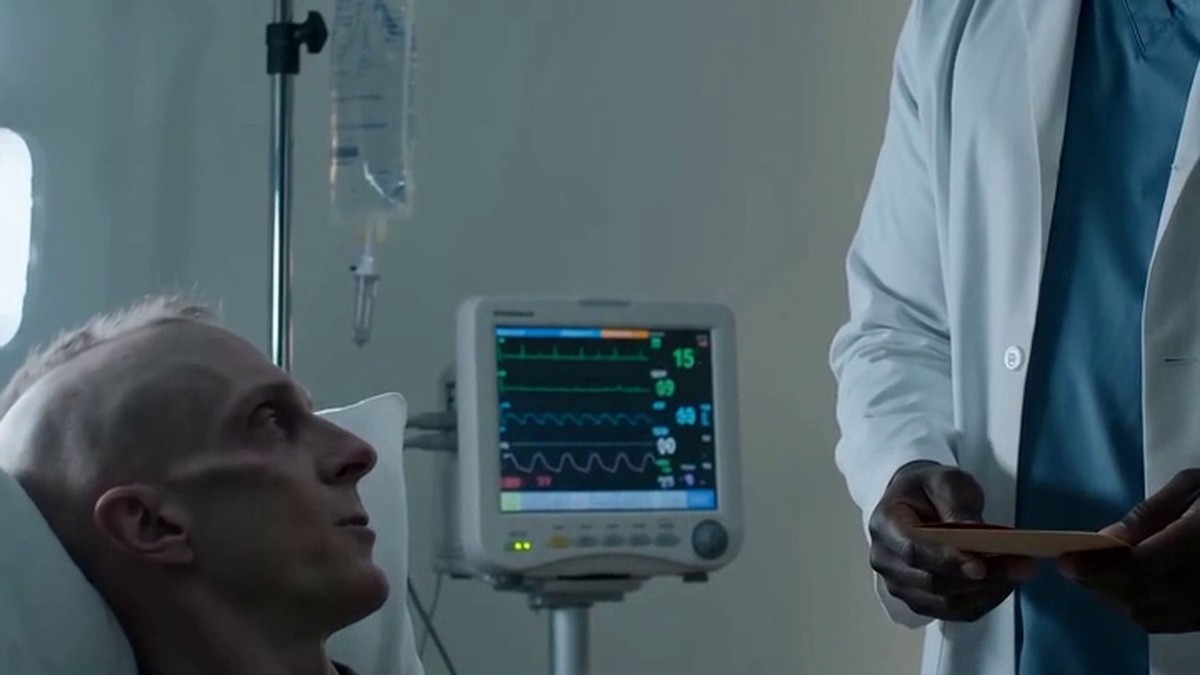
"Ninety days, maybe less," Dr. Okafor told us, not unkindly, in a room that smelled like the powdered soap from the dispenser by the sink. Dean just nodded and asked if he could still coach his nephew's Little League team through the end of the season.
Our daughter was due in November. Dean wasn't going to make it to October.
We had this porch swing his father built him for his sixteenth birthday, chain a little rusted, and some nights in September we'd sit out there and watch the Amtrak lights cut across the field behind the house. One of those nights, he put his palm flat against the side of my belly, right where she'd been kicking for an hour straight.
"When it's time," he said, "I want to be a donor. Whatever's still good in me."
"Dean, she's kicking right now, don't do this to me."
"That's the reason I'm saying it now and not later." His voice was steady in a way that made it worse. "If I can't be the one raising her, maybe some other kid gets to keep their dad a while longer."
He got sicker faster than the timeline they gave us. By the time I was eight months along, I was the one buttoning his flannel shirts because his fingers wouldn't cooperate, and some mornings he had to sit down on the edge of the tub just to catch his breath before we made it to the kitchen. I never let him see me cry in the bathroom. He had enough weight on him already.
About three weeks before the end, he started requesting closed-door meetings with Dr. Okafor. I'd ask him about it in the truck on the way home and he'd just squeeze my hand.
"There's a piece of paperwork I'm handling. Let me have this one thing."
He died on a Thursday morning in October, in room 412, with my hand locked around his and the window cracked because he liked hearing the crows in the parking lot. When they brought me the donor consent forms, the ink swam on the page. I signed anyway, because it was his, and because some choices you make for someone are really just you finally listening to them.
I thought that signature was the worst thing I'd have to do that week.
I was almost to the sliding doors of the lobby, car keys already digging into my palm, when I heard someone jogging up behind me on the tile. It was Dr. Okafor, out of breath, one hand pressed against his side like he'd run the whole hallway from the ICU.
"Ellery — wait. Please."
He had something held against his chest, half-hidden under his white coat, like he wasn't sure until the last second he was actually going to hand it over.
"Dean gave me this three weeks ago. He made me swear I wouldn't give it to you until after."
It was a plain white envelope, corners soft from being carried around in someone's coat pocket, my name written across the front in Dean's blocky all-caps handwriting — the same handwriting he used on grocery lists and on the birthday cards he always signed too fast. I stood there by the vending machines, one of them buzzing with a burnt-out light, and I held that envelope against my collarbone before I could make myself open it.
Inside, folded twice, was a single page.
*If you're reading this, I didn't make it to meet her. I'm sorry I'll miss her first steps, her first day of kindergarten, the phone call when she tells you some boy broke her heart. Tell her I loved her before I ever saw her face — every kick, every hiccup, all of it, I felt every second of it and I'm keeping that with me.*
*I also told Okafor to hold this back from you for a while. I didn't want the donation to just be a medical form I signed on a bad day. I wanted you to know that somewhere out there, because of what's left of me, some other family gets more time at their kitchen table together. That's not nothing. That's the whole point.*
*Don't let the empty side of the bed be the biggest thing about our life together. Tell her about the porch swing. Tell her I coached a Little League team down to the last game of the season with a feeding tube taped to my arm. Tell her I was here.*
*— D.*
Dr. Okafor put his hand on my shoulder and didn't say anything else, which was the right call. I wasn't crying because I'd lost him. I was crying because even flat on his back in a hospital bed, running out of days, he'd still found one more way to take care of us.
Our daughter, Reese, was born on the second of November, seven pounds two ounces, with Dean's exact eyebrows. I held her in the recliner in my mother's living room that first week, TV playing some rerun neither of us was watching, and I told her the whole thing — the swing, the letter, the man three states away who was probably home for Thanksgiving because of a decision her father made on a porch in September.
She didn't understand a word of it yet. That was fine. I've got years to say it again.
Last spring, I got a letter through the transplant registry — no names, just initials and a state, the way they do it to protect everyone's privacy. A man in Ohio, forty-one, two kids, back at work full-time. He wrote three paragraphs about getting to walk his daughter down the aisle in June.
I keep both letters in the same drawer now, Dean's and the stranger's, folded next to each other. Some nights I still take them out and read them side by side, right there at the kitchen table, with Reese's crayons scattered across the wood and the porch swing still chained up outside, rusting a little more every winter.




The Dog Who Wasn’t Allowed to Wait
Walter Nowak was sixty-two when he decided to walk the Appalachian Trail on his own terms — not the whole...


The 4B Nursery Photo Nobody Planned
At Methodist Hospital in San Antonio, Texas, there's a photo still taped to the bulletin board in the neonatal unit....


The Night He Said I Was Nothing
Marisol Reyes felt the baby move for the first time while standing outside a dining room she had no business...


The Pantry That Outlasted Her Joke
I never meant it as cruelty. I want that on record before I say anything else. My name is Diane,...


Keys to the Harbor House
The call came at eleven-forty on a Tuesday night, and Renata Vasquez almost let it go to voicemail because she...


Non mettere fretta al destino. La vera felicità arriva in silenzio, senza corse né inutili agitazioni.
Non mettere fretta al destino. La vera felicità arriva in silenzio, senza corse né inutili agitazioni. Una donna anziana, seduta...


The Thirty-Two Thousand Dollars My Sister Never Mentioned
The bank called about a wire transfer I never authorized — thirty-two thousand dollars, moved out of my own sister's...


Quando mio figlio Lorenzo mi ha annunciato che stava per comprare casa con sua moglie Chiara, ero felicissima.
«Ho cresciuto mio figlio, ho fatto sacrifici per lui per trentacinque anni, e adesso vuole intestare la casa a sua...