
EN
The Locksmith on Denby Street

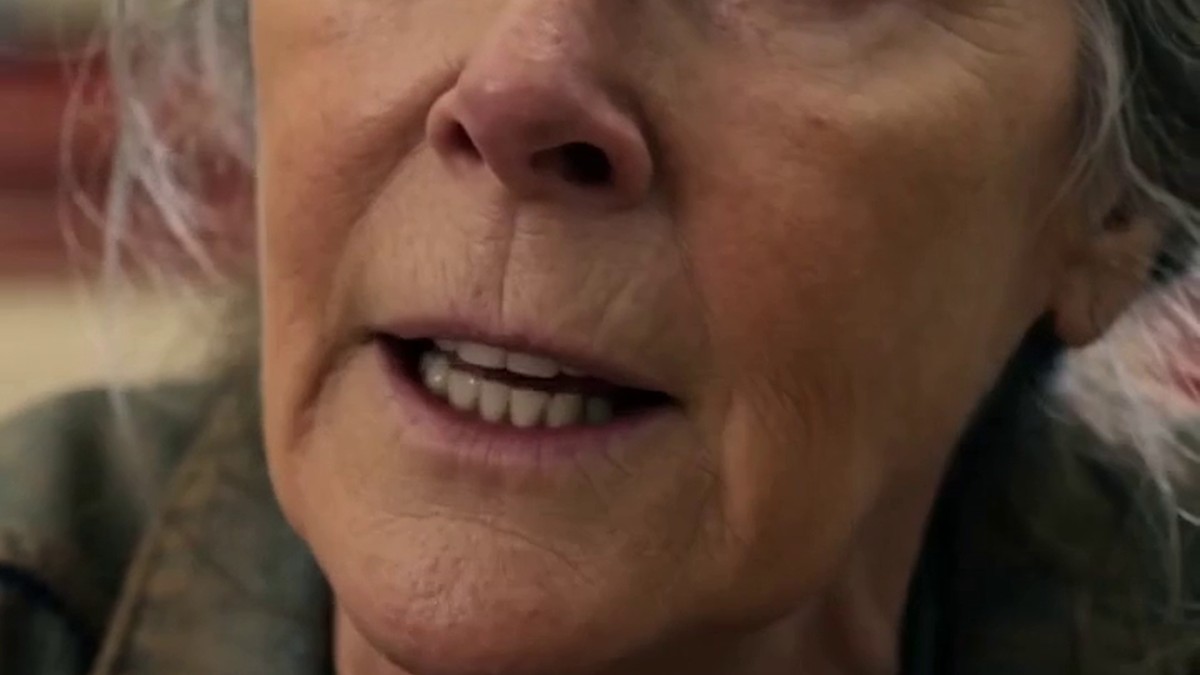
Marlene Higgins had exactly four hundred dollars in her checking account and a decision she'd been putting off since March. She sat at her kitchen table in Youngstown, Ohio, the radiator ticking behind her, and looked at the letter from her son's lawyer like it might rearrange itself into something kinder if she stared long enough.
It didn't.
Her son Dale had taken over her late husband's auto shop on Denby Street two years ago — Higgins Auto & Tire, the sign still said, though Dale had quietly dropped her name from the paperwork the same year he put his wife's brother on payroll. Marlene had signed the transfer herself. Sixty-two years old, grieving, not reading the fine print because Dale was her boy and boys didn't need watching.
The letter said the shop was being sold. Dale hadn't called to tell her. She'd heard it from Ruthie at the diner on Market Street, who'd heard it from a guy getting his brakes done.
"Six hundred thousand," Ruthie said, refilling Marlene's coffee without being asked. "That's what I heard. For the building and the lot both."
Marlene didn't touch the coffee. She was thinking about the eleven years she'd kept the books for that shop after her husband died — unpaid, because "it's family, Ma, we don't do invoices between family" — and about the studio apartment on Glenwood she'd moved into after Dale said the house was "too much house for one person" and helped her sell it, folding the proceeds into the shop's expansion. Ninety thousand dollars of her house had gone into that garage. There was no paper for that either.
Outside the diner window, the Salvation Army bell ringer was already out on the corner, way too early for the season, testing his bell like he wanted to get ahead of the cold. Marlene watched him for a while. Somebody's dog, a beagle mix tied to the newspaper box, kept trying to bite the bell every time it rang.
"You gonna call him?" Ruthie asked.
"I'm gonna call somebody," Marlene said. "Not sure it's him yet."
—
The call, when it came, was from Dale's wife Candace, not Dale. That told Marlene something right there.
"We just think it's time, Marlene." Candace always used her name instead of "Ma," a small flag Marlene had learned to read years ago. "The shop's not what it was. Dale's tired. We got a buyer wants to turn it into a car wash chain, and honestly the number's too good to pass up."
"And where does that leave me?"
A pause that lasted one beat too long. "There's no line item for you in this, Marlene. There was never really — I mean, you gave the down payment as a gift. That's what the papers say."
Marlene had signed those papers. She remembered the exact pen — a blue Bic with a chewed cap, sitting on Dale's kitchen counter, her granddaughter's cereal bowl three inches away from where she signed. Nobody had explained "gift" versus "loan" versus "investment" to her that morning. Nobody had explained anything. She'd trusted the boy who called her every Sunday because he needed something, and stopped calling the Sundays he didn't.
"I want to see the closing papers," Marlene said. "Before anything sells."
"Marlene, come on. Don't make this weird."
"It's already weird, Candace. I'm just catching up to it."
She hung up before Candace could smooth it over the way Candace always smoothed things, and sat with her hands flat on the table, the letter from the lawyer still open in front of her, and thought about the beagle mix chewing at that bell on Market Street. Something about an animal that just keeps trying, no matter how many times the thing it wants swings away from it.
She thought: I have been that dog for eleven years.
—
She called her cousin Patty first, not a lawyer — Patty had gone through a nasty business dispute with her own sister over a bakery in Warren and had come out the other side with an actual education in what "gift" and "loan" mean on paper.
"Do you have anything," Patty asked, "anything at all, showing money went from you into that shop?"
Marlene thought. And then she remembered — the ninety thousand from the house sale hadn't gone straight into Dale's business account. It had gone through her own checking account first, on its way, because Dale had asked her to "hold it a minute" while the shop's business account was mid-transfer between banks. There was a wire transfer record. Her bank could pull it. There was also a text message, four years old, sitting in her phone where she'd never deleted anything because she didn't know how: Dale texting her, "thanks Ma, this saves the whole quarter, you're a lifesaver, I'll get you set up as a partner once the dust settles."
He never had. But he'd written it.
"That's not nothing," Patty said. "That's actually something. Get a lawyer Monday. Don't wait."
—
The lawyer's office was above a dry cleaner on West Federal Street, and the woman behind the desk, Ms. Okafor, read the text message twice and then read the wire transfer record Marlene's bank had printed out at the branch on Belmont Avenue.
"This won't get you fifty percent of the sale," she said. "I want to be straight with you about that. But it establishes you as a creditor with a documented claim, not a gift-giver with hurt feelings. Ninety thousand, plus interest for four years — that's real money, and it has to come off the top before your son sees a dime of that sale."
"He'll say I'm doing this out of spite."
"He can say whatever he wants in a car. This is a filing." Ms. Okafor slid a form across the desk. "You want to put a lien on the property before the sale closes. It stops the sale cold until your claim is settled. That's the tool. It's called a mechanic's-style lien, but for a personal loan like this, we'll file it as a judgment lien after a small claims judgment — quick process, six to eight weeks if he doesn't fight it hard."
Marlene looked at the form. Simple thing. A few blanks. Her name, the amount — ninety-two thousand four hundred, with the interest calculated — and a line for the court date.
"Do it," she said.
—
Dale showed up at her apartment on Glenwood eleven days later, on a Tuesday, still in his shop coveralls, Higgins Auto & Tire stitched over the pocket in thread that was starting to fray at the H. He didn't sit down.
"You put a lien on my building."
"I put a lien on the building I paid ninety thousand dollars into," Marlene said. "There's a difference, but I understand it doesn't feel that way to you right now."
"The buyer's walking, Ma. You understand that? This kills the deal. Six hundred grand, gone, because you wanted to make a point."
"I don't want to make a point. I want the ninety thousand back, with the four years of interest, before you and Candace split six hundred thousand dollars and I go back to my one-bedroom on food stamps."
"You're not on food stamps."
"I will be in three years at this rate, Dale. You did the math on the shop. Did you ever once do the math on me?"
He didn't answer that. Outside, a garbage truck was working its way down Glenwood, the hydraulic arm groaning on every third house, and somewhere a kid was bouncing a basketball against a garage door in that flat, relentless rhythm that carries in cold air. Dale stood in her kitchen — smaller than the kitchen he grew up in, the ceiling water-stained in one corner she'd never gotten around to reporting to the landlord — and for a second his face did something she hadn't seen since his father's funeral.
"I don't have ninety thousand dollars sitting around," he said, quieter.
"You will, in about six weeks, when that check clears." Marlene folded her hands on the table. "The lien comes off the same day my money's in my account. Not before. I already talked to Ms. Okafor about the paperwork. You want, I can have her call your lawyer directly so we're not the ones arguing about it."
"Candace is gonna lose it."
"Candace isn't the one who owes me."
He left without saying goodbye, which she'd expected, and she watched from her window as he sat in his truck in the visitor parking spot for almost four minutes before he finally pulled out. The basketball kept bouncing the whole time.
—
The sale closed thirty-one days later. Ms. Okafor called with the number — ninety-two thousand four hundred, minus her fee, wired into an account Marlene had opened specifically for it at the Second National branch on Belmont, a savings account she picked because it had the highest interest rate of anywhere in the county and because Dale had never set foot in it.
Marlene didn't call Dale to tell him it went through. She let him find out from the bank's confirmation, the same way she'd found out about the sale from Ruthie at the diner.
He called two nights later. She let it ring twice before answering.
"You could've just talked to me instead of filing papers," he said.
"I tried talking to you for eleven years, Dale. You had Candace call me about the sale of your father's shop. I'm not going back to talking."
There was a long stretch of nothing on the line — not silence exactly, she could hear the shop sounds behind him, an impact wrench somewhere, somebody laughing at something that wasn't this conversation.
"You good, at least?" he said finally. "Money-wise?"
"I'm good," Marlene said, and meant it in a way she hadn't in years. She looked at the passbook on her table, the number printed clean and certain in the last column, and then out the window, where the first hard frost of the season had turned every car on Glenwood white and anonymous overnight.
"Tell Candace I said the shop looked good, before it sold," she said. "I mean that."
She hung up first this time.




The Mechanic’s Second Act
I never set out to be the villain in my mother-in-law's story. But apparently that's what I am now —...


The Second Spring of Carol Hatfield
Carol Hatfield turned sixty-three on a Tuesday in March, standing in the kitchen of her house on Linden Avenue in...


Winnie Doesn’t Wait by the Fence Anymore
For forty-six days, Winnie stayed at the back of her kennel, on a gray blanket that smelled more like bleach...


Forse quel piccione torna al nido perché è l’ultimo luogo in cui tutto gli sembra ancora familiare.
Forse quel piccione torna al nido perché è l’ultimo luogo in cui tutto gli sembra ancora familiare. Lì ha trascorso...


The Hoodie That Broke the Cameras on Fulton Street
Maya Okonkwo noticed the blinking amber light above the pharmacy door on a Tuesday in late September, the kind of...


La promessa più importante che facciamo a un cane non viene pronunciata ad alta voce.
La promessa più importante che facciamo a un cane non viene pronunciata ad alta voce. Non la scriviamo su un...


The Seven Containers in My Garage Freezer
My name is Linda, I'm 68, and I live in a two-bedroom bungalow in Dayton, Ohio, the same house where...


The Only Dance That Mattered
My name doesn't matter much here. What matters is that I was seventeen, standing in the gym of Westbrook High...