
EN
Maggie pulled into the parking lot of Desert Willow Senior Living ten minutes late, Tucker panting in the passenger seat of her Honda CR-V. His gray muzzle was pressed against the window, leaving streaks of slobber she’d have to wipe later. She killed the engine and sat for a moment, watching the automatic doors of the memory care unit. Eight months since she’d moved her father in. Eight months of this old Lab shedding on her backseat, whining at the door every time she grabbed her keys.

*What if Dad doesn’t even know him anymore?*
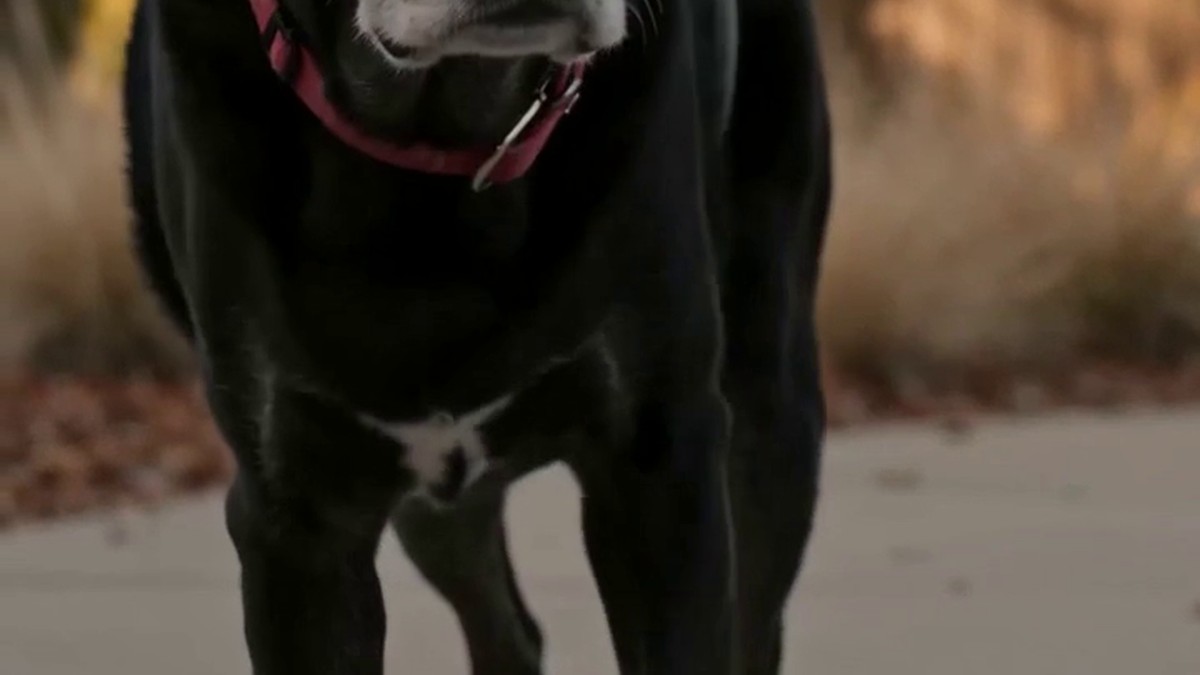
She grabbed the leash, and Tucker’s tail thumped hard against the center console. His back legs gave a wobbly hitch as he hopped down — he was thirteen now, hips shot, eyes cloudy — but the second his paws hit asphalt, he aimed his nose at the building like he already knew where to go.
A week earlier, she’d called the front desk and practically begged. “He’s in a decline,” the activity director had said. “Your father’s having trouble with faces.” Maggie assured them she’d handle everything, sign whatever waiver they put in front of her. She just wanted five minutes. Ten at most.
Inside, the lobby smelled of lemon floor wax and reheated meatloaf. A nurse’s aide named Carmen walked them past the common room, where a game show blared from a flatscreen mounted too high on the wall. Tucker stayed glued to Maggie’s leg, nails clicking on the linoleum, until they reached the back courtyard. Carmen pointed through the glass doors. “He’s right there, by the fountain.”
Jim Owens sat in a wheelchair, a blanket draped over his knees even though it was 87 degrees. He was angled toward the dormant fountain, shoulders slumped, one hand absently picking at a loose thread on the blanket. Maggie’s throat tightened. He looked smaller than last month.
She stepped outside first, leaving Tucker with Carmen. “Dad?”
He didn’t turn.
“Dad, I brought someone to see you.”
A flicker of recognition crossed his face when he heard her voice — not her name, not her relationship, just a vague alertness, like someone trying to tune a radio station through static. “Maggie,” he said, but it came out flat, a fact he’d been handed rather than a feeling.
She motioned to Carmen, who walked Tucker forward on a slack leash. The dog took two steps, then froze solid.
For a full ten seconds, Tucker didn’t move. His ears, still soft and dark against his pale face, pricked forward. His nose worked the air in quick, short pulls. And then his entire body went through a change: the stiffness in his hind end loosened, his tail lifted, and he gave one single wag — not a full sweep, more like a question mark, a testing of the waters.
Jim hadn’t noticed any of it. He was still worrying that thread on the blanket.
Tucker started forward, and this time the hitch in his gait was gone. His stride was all business, the same purposeful lope Maggie remembered from years ago, when this dog would barrel through the back door to find her father in his recliner after work. Carmen let the leash go slack and just followed.
The collar made a faint jingling sound. Jim’s hand paused. He turned his head, and Maggie saw the confusion flicker across his face — the usual lost-at-sea look that had become permanent over the last year. Then Tucker shoved his gray muzzle right under Jim’s palm.
Jim’s fingers closed around the worn leather of the collar. It was the same red one Tucker had worn since he was a puppy, faded now to the color of old brick.
“Buddy,” Jim said.
Wrong name. Buddy had been their dog when Maggie was a kid, a Springer Spaniel who’d died two decades ago. But Tucker didn’t care. He pressed his weight against Jim’s shins, and something behind Jim’s eyes clicked into place. Not all the way — Maggie could tell he still didn’t know where he was or why she was standing there with a wet face — but he knew this creature. He knew the warmth and the weight and the smell of dog.
He leaned down, cupped Tucker’s face in both hands, and said it again, softer: “Buddy.”
Tucker’s tail tapped a steady rhythm against the wheelchair’s metal spoke. Maggie didn’t bother wiping her eyes. She just stood there, a visitor in her own father’s memory.
Later, in the director’s office, she learned the full picture. Jim no longer recognized his reflection in the mirror most mornings. He’d hit a nurse’s aide last Tuesday because he thought she was a stranger in his house. The Sundowner’s had gotten so bad they were adjusting his medication every three days.
“But he knew the dog,” Maggie said.
The director, a woman named Elaine with reading glasses on a beaded chain, nodded slowly. “That kind of recognition — it’s not about memory. It’s about the body knowing something the brain can’t access anymore. We see it sometimes. Not often.”
Maggie reached for her purse. “How much to move him to one of the cottage units?”
Elaine’s glasses came off. “Those are for independent living, not memory care.”
“I know,” Maggie said. “But the cottages allow pets. I checked.”
“Ms. Owens, the cottages rent for an additional fourteen hundred dollars per month, and that’s on top of the memory care fees. And we’d need a pet deposit.”
“How much is the deposit?”
“Fifteen hundred.”
Maggie didn’t flinch. She pulled her checkbook out of her bag — a leather one, the kind that snaps shut, a gift from her father on her thirtieth birthday — and wrote the check on the corner of Elaine’s desk. The pen was one of those promotional ballpoints from a local credit union; it left a small blob of ink at the tip. She wrote $1,500 in the box and signed her name, then pushed it across the desk.
Elaine looked at the check. “I’ll need to get approval from the regional office. This isn’t standard.”
“There’s a covered porch on Unit C,” Maggie said. “I saw it when I toured last spring. Dad can sit out there with Tucker in the afternoons. I’ll bring Tucker’s bed and his food bowls tonight. The deposit check’s right there.”
Three days later, Maggie watched an orderly wheel Jim into the cottage. Tucker was already inside, curled up on a braided rug by the sliding glass door, the one Maggie had bought at a HomeGoods on Oracle Road because it was exactly the same shade of oatmeal as the rug in Jim’s old living room. Jim didn’t say anything at first. He looked around the room as if it were a place he’d seen in a photograph once.
Then Tucker lifted his head, and Jim said, without hesitation, “There’s my boy.”
Maggie stood in the doorway with the signed residency agreement in her hand. The numbers were brutal: fourteen hundred every month, plus a five-hundred-dollar surcharge for the extra supervision the unit required. She’d have to dip into the retirement account she and John had been building for ten years. That was a conversation she’d have with her husband later, and it wouldn’t be easy.
But as she stood there, Tucker rose stiffly to his feet, walked over to Jim’s wheelchair, and laid his head in the man’s lap. Jim’s hand found the dog’s ear and began rubbing it between his thumb and forefinger, a gesture so familiar Maggie could almost hear her own childhood in the room.
She folded the agreement, tucked it into her bag, and pulled the cottage door shut behind her. Through the window, she could see her father laughing — actually laughing — as Tucker’s tail swept crumbs off the coffee table.




Il foglietto nel taschino del camice
Lavoro da diciassette anni come infermiera caposala in cardiologia in un ospedale di Bologna, e ho imparato una cosa: gli...


Il violino di Kalista e i soldi che Brennan non capì mai
Il violino di Flavia e i soldi che Edoardo non capì mai Il salone del Grand Palazzo Visconti, al settimo...
Alle sette e dieci Teresa annullò il bonifico che faceva a Matteo il primo di ogni mese.
Alle sette e dieci Teresa annullò il bonifico che faceva a Matteo il primo di ogni mese. Erano trecento euro....
La sciarpa arancione di Adele si impigliò nella cassetta della posta proprio mentre lei cercava di uscire dal portone
La sciarpa arancione di Adele si impigliò nella cassetta della posta proprio mentre lei cercava di uscire dal portone. Tirò...
Mia madre si infilò il telefono nella tasca del grembiule.
Mia madre si infilò il telefono nella tasca del grembiule. — Lascia stare. Quella gente è venuta da fuori. Ormai...


Giorgio continuò a cercare le chiavi nella tasca della giacca.
«Domenica non contarmi», disse Lidia. «Ho promesso a mia sorella che andiamo al mare.» Giorgio continuò a cercare le chiavi...


La prima volta che tornai al deposito dopo il funerale, Toby salì mentre cercavo di chiudere la portiera
La prima volta che tornai al deposito dopo il funerale, Toby salì mentre cercavo di chiudere la portiera. Avevo lasciato...


Teresa sollevò il coperchio della pentola.
«Mamma, ho trovato casa.» Teresa sollevò il coperchio della pentola. «Dove?» «A dieci minuti da qui. Quella con le persiane...