
EN
The Fare That Made the Evening News

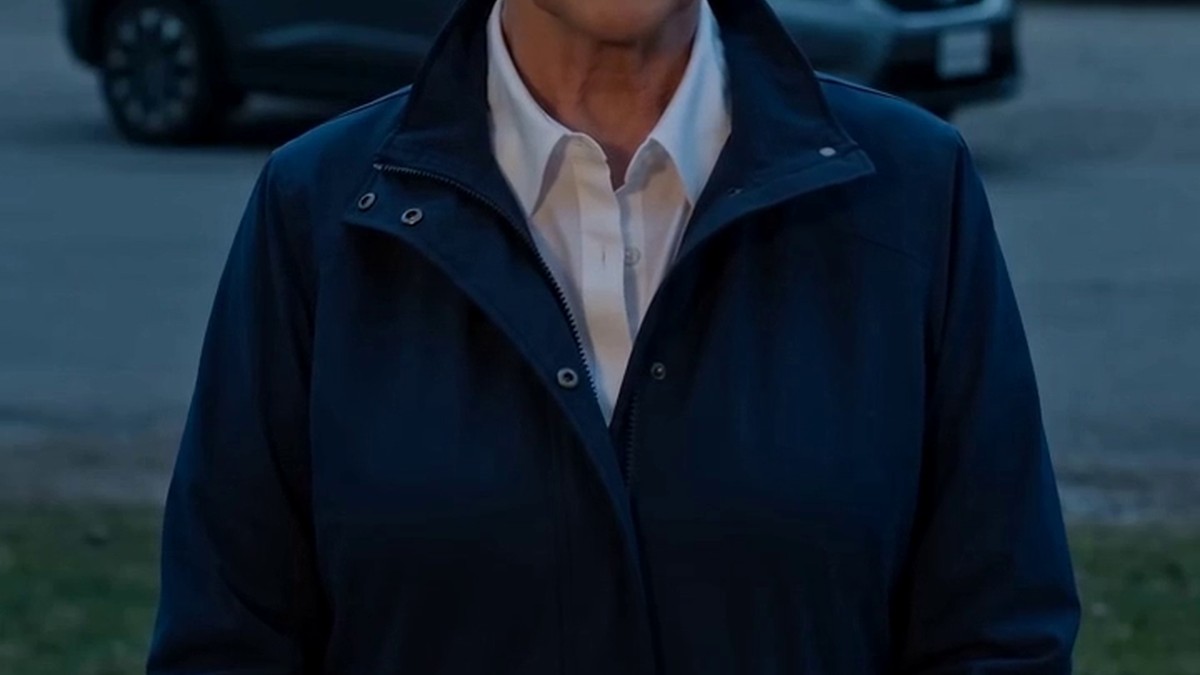
I drive a cab in Tulsa. Fourteen years now, ever since the oil fields spat me out. You pick people up, you drop them off, you forget them. But once in a while, somebody climbs into the back seat and you just know this one's gonna stick.
She was waiting at the arrivals curb at Tulsa International with one small carry-on and a look like she'd been folded up and put away wet. Late sixties, maybe seventy. Navy blue coat, sensible shoes, hair pinned back so tight it pulled at the corners of her eyes. No checked bags. She'd been standing there a good ten minutes before I pulled up, watching the automatic doors like they owed her something.
I helped her into the car. The handle of that carry-on was worn down to the metal.
"Where to, ma'am?"
She gave me an address out near Broken Arrow. Then she got on her phone. The voice on the other end was loud enough that I caught most of it even with the radio off.
"Mom, we can't. We're just slammed right now. Take a cab, it's not that far."
She closed her eyes. "I haven't slept in three days, Mark."
A sigh. Then: "Dad's gone. You can't keep making your grief everybody else's problem. We'll see you when you get here."
In the background, a kid's voice hollered something about "Grandpa's truck" and a woman laughing. The old lady's finger pressed the red button so gently you'd think she was afraid of hurting the screen.
She tried another number. Her daughter, I'm guessing. Same kind of reply — We knew Dad was sick, it wasn't a surprise, you're a grown woman, figure it out. Somebody in that room was already talking about who'd get the china cabinet. I heard the word "hutch" twice before the call cut off.
The woman put the phone in her purse and stared out the window at the Tulsa skyline. She didn't cry. Didn't shake her head. Just sat there while I took the 51 exit and the sun dropped behind the Arkansas River.
When I pulled onto her street, she leaned forward and said, almost to herself, "Third one on the left."
The driveway was full. Two trucks, a Honda, and a red Jeep with a University of Tulsa sticker on the back window. Lights were on in every room. I stopped at the curb because there was no space. She paid me in cash — exact change, plus a tip that came to $3.75. I remember the coins because she counted them one by one from her purse, apologizing for making me wait.
I got out to open her door. Through the front window of the house, I could see the whole tribe: a man in his forties with a beer, two women sorting through a box on the coffee table, teenagers sprawled on couches. And on the furniture, on the doorway, on a vintage rocking chair by the porch — bright green stickers. The kind you use for a garage sale. Names written in black Sharpie: MARK, CHLOE, DEVIN, SAVANNAH.
The old lady saw them too. She stopped halfway up the path. The rocking chair had a sticker that read CHLOE — $40. The chair where, as I'd find out later, her daughter had nursed her own babies not ten years back — the same chair the old lady had rocked her own children in, decades before that.
The front door opened. A woman in her late forties, yoga pants, hair in a messy bun, stuck her head out. "Oh, hey. Finally. What took so long? We had to do dinner ourselves."
She didn't ask about the flight. Didn't mention the husband. Didn't say a word about not picking her up. Just turned around and went back inside.
The old lady walked to that rocking chair and peeled the sticker off. She folded it in half and tucked it into her coat pocket. Then she went inside.
I got back in the cab and sat there for a minute with the engine running. I don't know why. Once in a while, I just do.
Three weeks passed before I thought about her again. I was taking a break at the QuikTrip on 71st, eating a roller dog and half-watching the little TV over the coffee station. The 6 p.m. local news out of Channel 8.
And there she was.
The anchor was saying something about an "extraordinary act of generosity, months in the making." The screen showed the same woman from my cab, sitting at a long folding table covered in papers, a big cardboard check propped beside her, the kind they use for publicity photos. The check read: $847,000. Made out to the Tulsa Humane Society.
The reporter explained it plain enough — the woman, a widow named Eleanor Calloway, had spent the weeks since her husband's death liquidating what she could: a life insurance payout, a brokerage account, a small rental duplex she and her husband had owned outright since the '90s. The house itself she was keeping, for now. But everything liquid, everything that could be turned to cash without a fight, she'd signed over.
"I don't need it," she was saying into the microphone, her voice even and unhurried. "Harold and I built this together, over forty years. He's gone now. And the people who were supposed to carry on his memory… well." She didn't finish the sentence.
I put down my hot dog.
Then my dispatch radio crackled. A pickup out in Broken Arrow, same neighborhood. Urgent. I took the fare.
When I pulled onto that street again, the house was lit up like something was on fire. The family spilled onto the front lawn in clumps, phones to their ears, arms waving. Mark — the son — was shouting into his cell: "Two hundred thousand dollars, gone, just like that. She had no right."
He spotted my cab and rushed over, nearly tripping on the garden hose. "You — can you take us downtown? The law office on Main. Now."
They piled in. Four adults, two teenagers, all of them talking over each other. The wife was crying. The grandson, maybe sixteen, kept muttering something about a truck his grandfather had promised him. One of the daughters — Chloé — was scrolling through the Humane Society's Facebook page, thumb jabbing at the screen.
"She sold the duplex. The duplex, Mark. That was supposed to be Devin's college money."
No one corrected her. No one said, "Maybe we had it coming." I just drove, eyes on the road.
Downtown, outside the lawyer's office on South Main, the street was quiet except for one old Buick parked by the door. The family burst out before I'd even stopped and pushed into the building like they were storming it. I killed the engine and followed. I told myself it was because they hadn't paid the fare. But honestly, I was curious.
The reception area was small, chairs pushed against fake wood paneling. The family crowded around a glass door with gold lettering: ATTY. DANIEL REEVES. Through the frosted glass, I could see shapes moving.
Eleanor was standing by the desk, coat still on, the same navy blue. She was handing a manila envelope to the lawyer. Mark shoved the door open so hard it bounced off the filing cabinet.
"Mom! What is this?" He held up his phone, the news clip already spreading.
She looked at him, then at the rest of them crowding in behind. No anger on her face. No satisfaction either. Just a clean, tired kind of stillness.
"It's exactly what it looks like, Mark."
He gripped the edge of the desk. "Eight hundred forty-seven thousand dollars. To a dog shelter. That was Dad's money."
"No," she said. "It was my money. Your father left everything to me. Every last cent, in his own handwriting, three years before he got sick."
Chloé stepped forward, the rocking-chair sticker somehow still stuck to the back of her phone case. "We're your children. Your grandchildren. How could you do this?"
Eleanor reached into her purse — the same worn leather bag she'd had at the airport — and pulled out small white envelopes. She handed one to Mark, one to Chloé, one to the grandson. Then she looked around and passed the last two to a younger couple hovering near the door.
"This is for each of you."
Mark tore his open. Inside was a single dollar bill, crisp, fresh from the bank.
"The rest," Eleanor said, pulling on her gloves, "went out over the last three weeks. Wire transfers, closing documents, the works. It's done. Mr. Reeves can give you copies of the paperwork if you want to see it in black and white."
Chloé's face went pale, then flushed. "You're not serious."
"I am. Your father and I spent forty years building what we had. And in all that time, not one of you called him just to talk. The day he died, Mark asked if he could have the boat before he'd even asked how I was holding up. Not 'how's Mom.' Not 'can I help with the arrangements.' The boat."
She picked up her carry-on from beside the desk. That same bag with the worn handle.
"The night I came home from burying my husband, not one of you offered to pick me up from the airport. Not one. You'd already put price tags on my furniture. The rocking chair I nursed you in, Chloé, and you nursed your own babies in, not so long ago. Your father's tools. Our wedding china. You didn't want your mother home. You wanted the inventory settled."
The lawyer cleared his throat. "I believe this concludes the disbursement. Mrs. Calloway, your ride's waiting out back."
She nodded. Then she walked past them — past her children, her grandchildren — toward the side exit by the water cooler. Chloé lunged forward, but the lawyer raised a hand.
"Ma'am, the documents are all binding. There's nothing left to contest."
I slipped out through the front door before anyone noticed me. I stood on the sidewalk and watched Eleanor round the corner of the building, get into that Buick — the driver a woman about her own age, a friend, maybe from church — and pull away down Main Street.
The family poured out a minute later, shouting, waving their one-dollar bills at nobody in particular.
I opened my cab door and slid into my seat. The fare to Broken Arrow was still unpaid, but it didn't matter much. On the radio, the anchor was running the story again: "Tulsa widow donates the bulk of her estate to local animal shelter, says family 'showed her who they really were'…"
I turned the volume up, put the cab in gear, and headed back toward the airport, in case somebody needed a ride.


Il primo arriva alle nove e un quarto, sotto forma di un ombrello giallo.
Il primo arriva alle nove e un quarto, sotto forma di un ombrello giallo. Sei ferma sulla soglia del panificio,...


L’uomo che aveva lasciato Toby nel parcheggio era lo stesso che, poche ore prima, aveva promesso a sua madre di riportarglielo a casa.
L’uomo che aveva lasciato Toby nel parcheggio era lo stesso che, poche ore prima, aveva promesso a sua madre di...


Dove ti stai frenando da sola? Scegli una porta
Dove ti stai frenando da sola? Scegli una porta Guarda le sei porte e scegli quella che ha attirato per...


Facile dirlo dall’esterno.
«In un divorzio la colpa è di entrambi!» Facile dirlo dall’esterno. Ma sapete cosa succedeva dietro quelle porte? Forse dovremmo...


Rimandate ancora una volta i vostri impegni per stare con i nipoti
Rimandate ancora una volta i vostri impegni per stare con i nipoti. Ma i vostri figli vi hanno almeno chiesto...


Mio figlio smise di tagliare la mela
«Duecento euro, Paolo. Te ne ho chiesti duecento, mica lo stipendio.» Mio figlio smise di tagliare la mela. Aveva ancora...


Per un istante pensai di aver capito male. Guardai il posto di Alice a tavola
«La firma sull’ultima fattura è di tua figlia», disse Giulia. Per un istante pensai di aver capito male. Guardai il...


Scendi dal letto a piedi nudi
Il sorriso ti sfiora le labbra prima ancora che tu riesca ad aprire gli occhi. Dalla cucina arriva il rumore...