
EN
The Honey Thief of Widow’s Notch

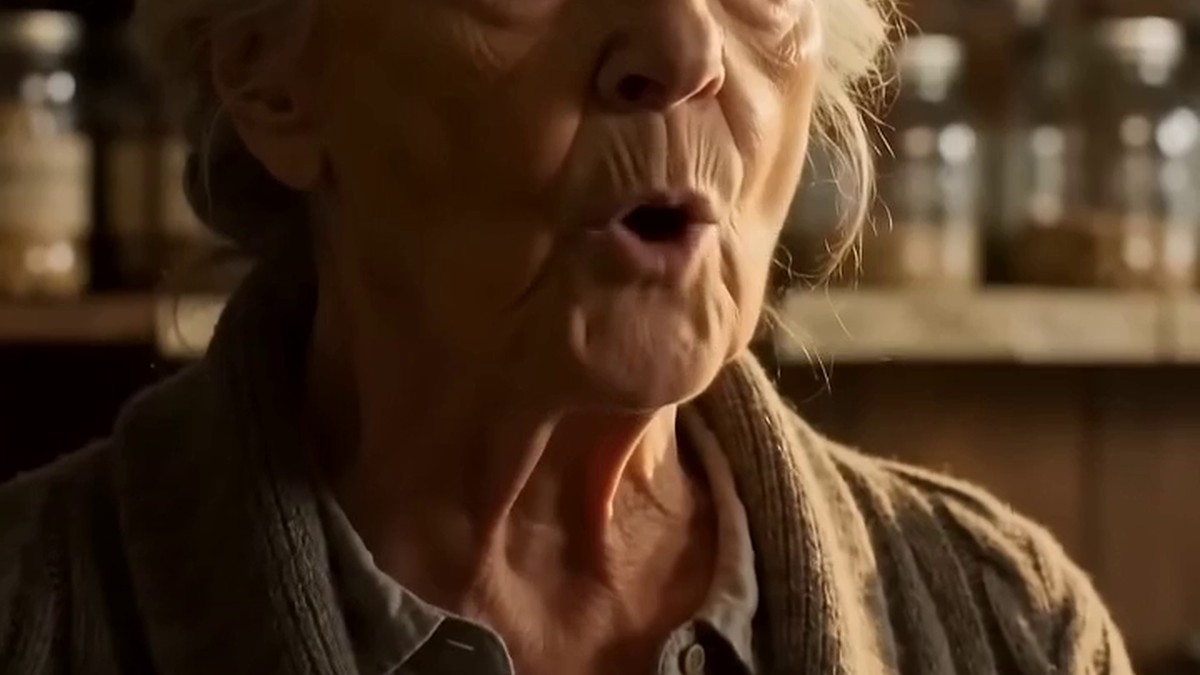
Nobody in Widow's Notch, Kentucky, believed old Pearl Casteel when she said the marks on the rock ledge behind her property weren't hunting signs. She was eighty-one, half blind from cataracts she refused to have fixed, and she'd spent six decades running the general store on Route 7 before her knees gave out and her granddaughter took over the register. But Pearl had grown up climbing that ledge with her father, and she knew every crack in it the way other people know their own hands.
Her granddaughter, Dana Ellison, was thirty-four and had a degree in art history she'd never used, because the store needed her more than any museum did. Dana had always figured the rust-colored smudges on the overhang were just mineral staining, iron leaching down through limestone the way it does all over that part of the county. She'd walked past them a thousand times carrying feed buckets.
It was Dana's husband, Mitch, who changed things — not on purpose. He was clearing brush that August to put in a fence line, and he knocked loose a chunk of moss that had been growing over the lower part of the overhang for who knows how long. Underneath it, the color came up sharper than anywhere else on the rock: two human shapes, climbing what looked like knotted ropes, one reaching into a dark gap in the stone with bees — too many bees, too big to be real — swarming around it.
"That's not paint holding up that good after two hundred years," Pearl said, standing there with her cane sunk into the leaf litter, squinting up at it. "That's older than the county. Older than this country."
Dana thought her grandmother was having one of her spells. She almost said so. Instead she took pictures on her phone, the kind of grainy shots you get when the light's coming in low through sycamore leaves, and she sent them to a professor she remembered from her one semester of art history at Eastern Kentucky before she dropped out to help at the store.
The professor didn't write back for eleven days. Then he called, and he didn't sound like a man returning a favor to a former student. He sounded like a man who hadn't slept.
He drove out from Richmond with two graduate students and a case of equipment Dana didn't recognize, and he stood under that overhang for forty minutes without saying a word — which, for a college professor, Dana figured was its own kind of miracle. When he finally spoke, he said the pigment looked consistent with ochre, that the composition — two figures, ropes bowed under their weight, a natural hollow in the rock used deliberately as the hive's mouth — was the kind of thing you read about happening in Spain, not something you expected to trip over behind a feed store in eastern Kentucky.
What nobody could explain, not right away, was how it got there. There's no verified prehistoric honey-hunting art documented in North America — nothing like the cave scenes in Valencia that are eight to ten thousand years old. So for a while, the county buzzed with two theories: either this was something genuinely unknown and ancient, missed for generations under moss and assumption, or it was newer than anyone wanted to admit — a folk piece from the 1800s, maybe, made to look older than it was.
That question is what nearly tore the family apart, because Pearl's late husband's cousin, a man named Dwight Casteel who ran a construction outfit two counties over, showed up within the week holding a copy of the property deed and talking about "significant historical value" and "development rights" like the two things belonged in the same sentence. Dwight had a stake in the land through an old easement nobody had bothered to clear up after Pearl's husband died, and he wanted the rock face — and forty acres around it — sold to a private buyer he wouldn't name, fast, before, in his words, "the government gets ideas about it."
Pearl told him no in the store, standing behind the counter where she'd stood for sixty years, with Dana at her elbow and Mitch by the door in case Dwight decided to raise his voice, which he did.
"You don't even know what it is," Dwight said. "Could be nothing. Could be some old boy's joke from 1890."
"Then it's still mine to be wrong about," Pearl said, and she didn't blink.
The testing took four months. Carbon dating on trace organic material caught in the pigment, cross-referenced against soil deposition and lichen growth on the exposed rock — the professor, whose name was Alan Reyes, walked Dana through every step of it because she asked, and because he'd started, somewhere in those months, to look at her less like a former student and more like someone he wanted to keep explaining things to. The results came back late in December: not eight thousand years, nowhere close, but old enough — the university's best estimate placed it at roughly four hundred years, likely made by people who lived in that hollow generations before Daniel Boone ever crossed into the region. Not the oldest honey-gathering scene in the world. But real, and unrecorded, and theirs.
Dwight didn't take the news well. He drove out one more time in February, snow still crusted along the fence line, and stood at the edge of the property with his hands in his coat pockets, telling Pearl that a folk art site "worth maybe a magazine article" wasn't worth losing a development deal over.
Pearl didn't argue with him that day. She'd already done the thing that mattered, three weeks earlier, sitting at her kitchen table with Dana and a lawyer from Berea, going through the deed line by line until they found the exact clause Dwight was leaning on — an easement from 1961 that had never been renewed, never re-filed, dead in every way but on paper he still waved around. The lawyer drew up a quiet-title filing, forty pages thick, and Pearl signed her name on the last page in the same shaky hand she used to sign checks at the store for fifty years. Dana mailed the copy to Dwight herself, return receipt requested, so there'd be no arguing later about what he did or didn't know.
He came out one final time that spring, once the paperwork cleared, and stood at the gate Mitch had put a new padlock on the week before. He didn't get past it. He stood there long enough to read the notice zip-tied to the chain-link — filed with the county, site under review for the state historic register — and then he got back in his truck and left, and nobody in that family heard from him again.
The rock ledge behind Pearl Casteel's store is fenced off now, waiting on paperwork that moves slower than anybody would like, with a laminated sign explaining what's underneath the moss that used to hide it. Dana still runs the register most mornings. But some afternoons, when the light comes in low through the sycamores the way it did that August, she walks out back and stands where her husband knocked the moss loose, looking up at two people who climbed a rope four hundred years before her family ever saw that hillside, reaching for something sweet in a hole in the rock that was always, it turns out, exactly the right shape for what they needed it to be.




Una moglie deve restare invisibile alla festa del marito!
«Una moglie deve restare invisibile alla festa del marito!» Mio suocero mi umiliò davanti a 28 invitati. Ma quella sera,...


The $38,000 Signature Walt Already Promised the Bank
Dee Marsh had the turkey in the oven by six-fifteen, before the sun cleared the pecan tree in her backyard...


Ci sono giorni in cui tutto sembra andare storto.
La famiglia non è fatta soltanto di fotografie sorridenti, pranzi della domenica e momenti felici. La famiglia si riconosce soprattutto...


Il mio cane non sa quanto guadagni, che macchina guidi o quale lavoro fai.
❤️ Il mio cane non sa quanto guadagni, che macchina guidi o quale lavoro fai. Non gli interessa se indossi...


Scegli un albero. Quale risorsa ti fa bene coltivare?
Scegli un albero. Quale risorsa ti fa bene coltivare? Guarda i sei alberi e scegli quello che ha attirato per...


The Deed on Franklin Avenue Had Only One Name
I've worked the front desk at a probate office on Main Street in New Britain, Connecticut for eleven years, and...


Signora, ma lei lo sa che non si mangia sull’autobus?
«Signora, ma lei lo sa che non si mangia sull’autobus?» Ero pronta a dirglielo, quando un anziano seduto accanto a...


Mi chiamo Giorgio, ho sessantotto anni e vivo in una casa di campagna sulle colline vicino a Perugia.
❤️ «Mi servono venticinque euro per salvare il mio gatto. Se non li guadagno entro le sei, il veterinario chiude.»...