
EN
The Note That Stopped the Laughter

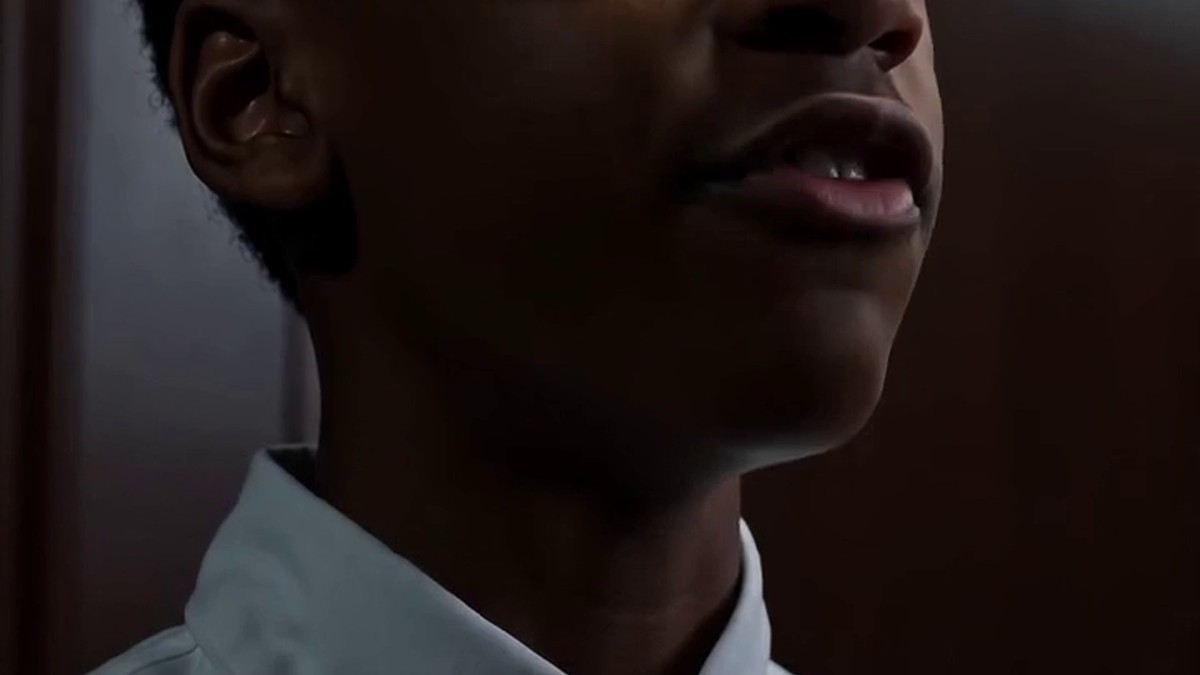
The richest people in Cleveland were laughing at me, and I was holding a tray of chicken bones.
It was a Saturday night in mid-November. Lake-effect snow had been crawling off Lake Erie all day, dusting Public Square, and the Renaissance Hotel's marble lobby smelled like wet wool, expensive perfume, and roasted meat. I was sixteen. My name is Micah. I was hired as a busboy for a thousand-dollar-a-plate fundraiser for the Cleveland Orchestra's youth program. The pay was eleven-fifty an hour, cash. The only reason I got the job is because my grandmother, Miss Clara, has cleaned the seventh floor of that hotel for twenty-two years, and she knows people.
The ballroom was packed. Men in tuxedos, women in dresses that shimmered under the chandeliers. The hired pianist, some guy from Chicago, had called in from the highway saying his car died near Sandusky and he wouldn't make it. The banquet manager, Mr. Kowalski, was sweating through his cheap shirt. He kept yelling in the service hall: "What do I tell Mrs. Adler? Huh? The piano is silent, the guests are paying fifteen hundred a plate, and I got no music!"
I heard him because I was scraping plates right by the swing door. The kitchen was hot and loud. The dish pit smelled like bleach and shrimp shells. My grandmother was on the other side of the wall, running the floor polisher on the mezzanine. She didn't know what was happening.
I put the tray down. I walked over to the door, looked through the round window. The stage was empty. The grand piano sat there, a nine-foot black Steinway, polished like a coffin. And something in my chest clicked.
I went up to Kowalski. "I can play," I said.
He turned. He looked at me like I'd just asked to borrow his car. Then he laughed. Not a soft laugh—a bark. Two of the line cooks looked over and laughed too. One of the waitresses, a woman named Yolanda, hid her mouth with her order pad.
"You?" Kowalski said. "With those dishwater hands? You ain't even old enough to be in here—go clear table nine before I dock you."
I didn't move. "The piano's just sitting there. Let me play one piece." I kept my voice even. "If it's bad, fire me. If it's good, maybe you keep your job."
His face went purple. Before he could yell, the ballroom door opened and Mrs. Patricia Adler walked in. She was the host. Silver hair, red dress, a lawyer's cold eyes. She looked at Kowalski, then at me. "What's the delay?"
"He says he can play," Kowalski sputtered. "This busboy."
Mrs. Adler studied me for a second. Her eyeliner was perfect. She had a martini in one hand and a phone in the other. "You can really play?"
"Yes, ma'am."
"Have you had any training?"
"My mother taught me on the church piano. Before she died. I been teaching myself since."
The words hung there. Mrs. Adler took a slow sip of her martini. Then she tilted her head toward the stage. "Sit down, son. If you embarrass me in front of these people, I'll make sure you never set foot in a hotel again. If you're good… we'll talk."
I walked out into the ballroom. The room was loud with conversation. Waiters floated between tables. Somewhere a woman laughed at a joke. And when I climbed onto the piano bench, a few heads turned. One man in a bow tie said, to his table, "What's this? The entertainment?" and a few people chuckled.
I didn't answer. I reached under the bench, found nothing, and went back to the service door. Kowalski was standing right there, arms crossed. I ignored him. I took the concierge's phone book—the thick Cleveland Yellow Pages, still damp from the snow—and brought it back. I sat on it. The bench was too high. Now it was right.
I opened the keyboard cover. I put my left hand on the keys. B-flat. Low. The room was still chattering. A fork scraped a plate. A glass touched a table.
I pressed the key.
The note came out like a train horn from a mile away. Low, heavy, with a resonance that vibrated through the floorboards. The chatter stopped mid-syllable. A man with a fork halfway to his mouth froze. A woman set her wineglass down and it landed on a napkin with a soft clink. The whole room went dead.
I didn't play "Clair de Lune" or "Für Elise" or anything they expected. I played a piece I'd been working on for three years, a piece I called "Winter in Glenville." It's about the night my mother went out in a snowstorm to buy milk and never came home. The left hand stomps a slow, bluesy groove, like footsteps in slush. The right hand floated above it, shaky at first, then climbing, falling, repeating a theme that sounds like a question nobody answered. It's sad but it doesn't beg. It swings. It's got church in it, and it's got rage in it, and it's got the sound of a bus pulling away from the curb on Euclid Avenue at four a.m.
I closed my eyes. I wasn't in the ballroom anymore. I was in our living room on Hampden Avenue, where the radiator clanks and the cat, a torn-ear stray my grandmother calls Bones, sleeps on a pile of grocery bags. I was watching my mother's hands on the old upright piano at Mount Olive Baptist, her chipped red nail polish catching the light. I was hearing the meter, the off-beat, the quiet place where the notes stop and the listener has to decide to keep breathing.
The piece took maybe four minutes. It felt like four hours. When I lifted my hands, there was dead silence. Not the polite silence before applause. A pure, ringing vacuum, like the whole room had forgotten how to exhale.
Then a chair scraped back. One man stood up. He was old, Black, in a gray suit with a gold watch chain. He didn't clap. He just raised his hands slowly and brought them together three times. That broke the dam. The applause crashed into me like a wave. People got to their feet. A woman in a white dress was crying, real tears, her mascara running. Mrs. Adler stood at the edge of the stage, her mouth open, her phone hanging at her side.
And then the hired pianist walked in. Mr. Baransky. A sixty-year-old Russian man with thick glasses and a limp. He'd made it after all, somehow caught a cab from Sandusky. He stood in the back of the ballroom by the service door, listening. He didn't come forward. He just stood there, arms at his sides, and his lips moved like he was saying something to himself. Later, he told me he said, "Don't stop. You're better than I am tonight."
That was the first turn. The second came ten minutes later.
Mrs. Adler pulled me into a private room off the lobby. She had her checkbook out. She offered me a contract: twelve performances over the next year, at three thousand a pop. That's thirty-six thousand. Plus a tip jar the guests had already filled with cash and a few checks—another two grand. Total: thirty-eight thousand dollars. The exact number was on the foreclosure notice sitting in my grandmother's kitchen drawer.
Thirty-eight thousand. The house my grandfather built in 1951 on Hampden Avenue, the one my mother grew up in, the one the bank had been trying to take for three years. Back taxes. Penalties. A predatory refinance my grandmother signed without understanding. The number was burned into my brain like a brand.
I looked at the contract. I looked at the checkbook. Then I did something that surprised even me.
I didn't take the gig.
"Mrs. Adler," I said, "I'm not worth thirty-eight thousand. Not tonight."
She raised an eyebrow. "Then what do you want?"
"An audition. At the Cleveland Institute of Music. Mr. Baransky said he'd teach me. And I want a job—not a charity gig. A real job, playing at your firm's holiday party next month. Pay me two hundred. That's what a regular pianist gets."
She stared at me for a long time. Then she wrote something on the back of her business card and slid it across the table. "The audition is Friday at nine a.m. Bring your own sheet music." She stood up. "And you'll play my holiday party. Two hundred. But if you miss a note, I'll have you back busing tables."
Kowalski was waiting in the service hall when I came out. He had a cardboard box in his arms. Two security guards stood behind him. Mrs. Adler had fired him ten minutes earlier, right after the applause died down. He looked at me, and for a second I thought he was going to spit.
Then he said, "Your grandmother's still cleaning toilets. Don't forget that."
I didn't answer. I watched the security guards walk him out through the alley door, into the snow. The box had a coffee mug sticking out the top. A little thing. When the door slammed, it sounded final.
I went back into the kitchen. The night crew had gathered around the stainless steel counter. Yolanda, the waitress, was crying into a napkin. The line cooks were clapping me on the back. And there was my grandmother, Miss Clara, still in her blue housekeeping uniform, her name tag crooked. She had her hands folded in front of her, and she wasn't crying. She was just looking at me like she'd known all along.
"Took you long enough," she said.
I laughed. The first real laugh out of me all night. "I was busy."
On the counter, next to the dish soap, was the foreclosure notice. She'd brought it from home, just in case. The parcel number was printed in tiny letters at the top: 42-11-308. The amount due, in bold: $38,000.
I picked up the phone on the wall. The cord was greasy from the dishroom. I dialed the number on the notice. The kitchen was quiet, except for the hum of the ice machine and the squeak of Bones meowing somewhere in the alley, waiting for scraps.
A woman answered. "Cuyahoga County Treasurer's Office. How can I help you?"
I looked at my grandmother. She had a stain on her collar. She'd been on her knees scrubbing a bathtub six hours ago. Now she was watching me with her head tilted, like she was listening to a song only she could hear.
"I'm calling about parcel number 42-11-308," I said. "I want to settle a debt."
There was a pause. The woman on the other end typed something. Then she said, "That account is scheduled for foreclosure auction next week. The full amount is thirty-eight thousand dollars, sir."
"I know," I said. "I can pay it. All of it."
And out in the ballroom, through the closed door, the hired pianist—Mr. Baransky—sat down at the grand piano and began to play the same piece I'd played. Low B-flat. Like a train horn. I could hear it through the wall, faint and far away, as the snow kept falling on Public Square and the last of the rich people went home.




Il lampadario di Lorenzo
Pioveva da un quarto d'ora quando hanno chiuso la bara di Lorenzo nella cappella del cimitero di Prato. Io sono...


The $2.3 Million Shop Renée Almost Signed Away From Mara Doyle
The smell hit her before anything else — diesel, hot rubber, and the faint sweetness of almond blossoms drifting in...


Elisa smise di tagliare il pane
«Posso festeggiare il compleanno due volte?» chiese Tommaso. Elisa smise di tagliare il pane. Suo figlio compiva nove anni il...


Anna aveva ancora davanti il quaderno su cui aveva fatto i conti
«L’appartamento è di Patrizia», disse sua madre. «Gliel’ho donato tre anni fa.» Anna aveva ancora davanti il quaderno su cui...


Sul monitor comparve il nome di Anna Bellini
Sul monitor comparve il nome di Anna Bellini. Il veterinario compose il numero associato al microchip e, quando rispose un...


Il nuovo vicino le consegnò un elenco di 12 reclami dopo appena otto giorni
«Al punto nove dice che scarico l’acqua della lavatrice nel suo terreno.» Lucia sollevò lo sguardo dal foglio. «Mi porta...


Quando torni a casa, trovi tuo figlio seduto sul pavimento della cucina
Quando torni a casa, trovi tuo figlio seduto sul pavimento della cucina. Ha un cacciavite in mano e lo sportello...


La prima volta che trovai il gatto nella culla, mio nipote doveva ancora nascere.
La prima volta che trovai il gatto nella culla, mio nipote doveva ancora nascere. Milo si era sistemato proprio al...