
EN
The Ledger Room at Cedar Point Notary, Table Four

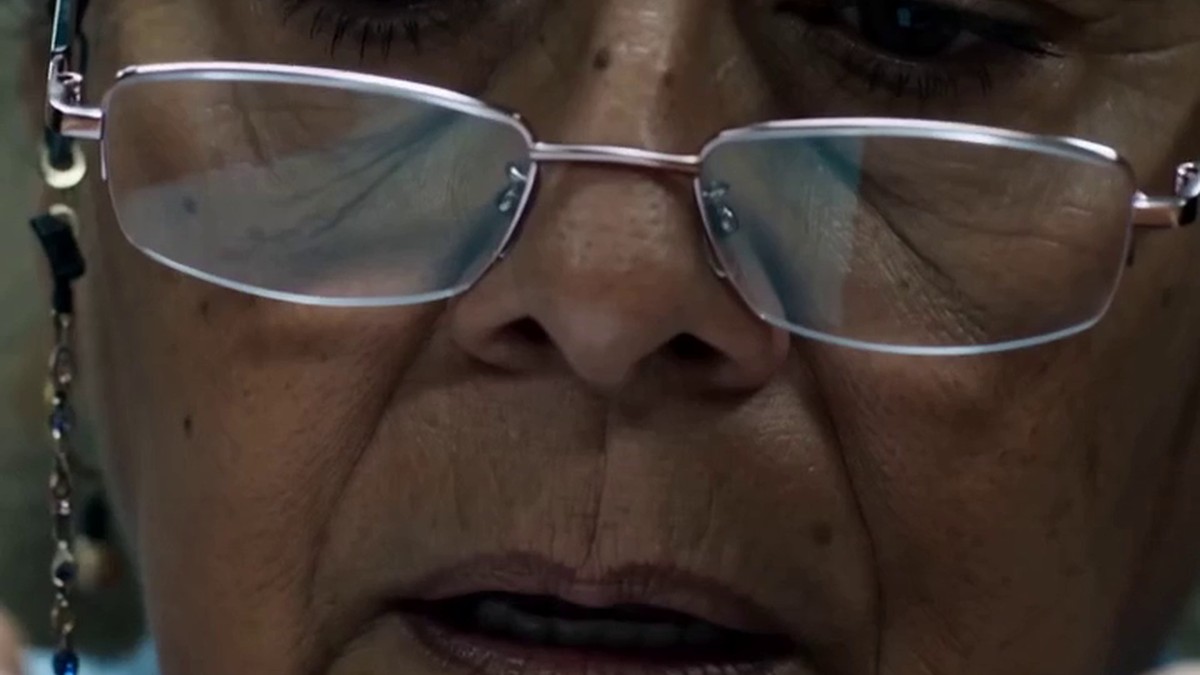
I've stamped documents at Cedar Point Notary and Escrow, out on Route 9 in Erie, Pennsylvania, for nineteen years. Most of what crosses my desk is refinancing paperwork and the occasional will. You stop noticing faces after a while — until one sticks.
Marisol Andrade came in on a Tuesday morning in late June, the kind of gray lake-effect morning where the parking lot still smelled like last night's rain on hot asphalt. She had a manila folder pressed flat against her chest like it might blow away, even indoors. My coffee had gone cold on the warmer behind me — I remember because I kept meaning to refill it and never did, the whole hour she was here.
She wasn't my appointment. She was early for someone else's slot, so I let her sit at Table Four by the window while she waited, and that's how I ended up hearing more than I probably should have.
Her son-in-law showed up about fifteen minutes later. Dale, she called him, when she introduced him to the receptionist — though I don't think introductions were really the point. He had the look of a man who'd rehearsed something in his truck before walking in: jaw set, papers already in hand, moving like he wanted this over with fast.
Fourteen years, I gathered, Marisol had co-signed and quietly bankrolled a transmission shop her daughter's husband ran off Route 20 — Andrade & Cole Auto, the sign still said, half hers by name even if nobody who drove past knew it. She'd put in eleven thousand dollars of her late husband's pension payout the year the place nearly folded, back when their daughter Priya was pregnant with the second kid and money was thin enough to see through.
What she hadn't known — what apparently nobody had told her — was that six months back, Dale had filed new incorporation papers. Cut her clean out. Now he was here to get her to sign a "release," some notarized statement saying she had no ownership claim, no equity, nothing. He needed it, he said, for a business loan he was trying to get from PNC. Banks don't like unclear ownership.
I've seen this before. Not the exact shape of it, but the bones. Somebody props up a family business in the lean years, and once it's not lean anymore, the ground shifts under them without warning.
Dale didn't raise his voice. That was almost the worst part — he was calm, businesslike, sliding the paper across Table Four like he was doing her a favor by asking nicely instead of just going around her. "It's just a formality, Marisol. You were never really on the LLC paperwork anyway. This just makes it official."
She didn't answer him right away. She had her reading glasses out, the cheap drugstore kind with the crooked hinge, and she read that release front to back twice. I know because I glanced over — occupational habit, I always clock what's actually printed on a page people are about to sign in my building.
Then she folded her glasses, set them on the folder, and said, "I'm not signing anything today, Dale. I have somewhere to be."
He pushed a little — said the loan officer needed it by Friday, said her daughter would be disappointed, said a few things meant to sound gentle and land hard. Marisol just stood, picked up her folder, and walked to Window Two, where I was covering while my colleague Beth ran to the bank. She wasn't waiting on him anymore. She was here for her own business now, whatever that was, and Dale hadn't figured that out yet.
Turned out the folder she'd been holding wasn't blank paper waiting for his release. It was a demand letter from her own lawyer over in Millcreek, already drafted, calling for repayment of the original eleven-thousand-dollar loan plus a documented ten percent stake she said she'd been promised verbally back when the shop was drowning — a stake Dale's new paperwork had erased. She had me notarize her signature on it, along with a sworn statement attaching bank records: the cashier's check from 2012, image and all, made out to Andrade & Cole Auto Repair.
Dale went a little pale reading over her shoulder — he hadn't expected to be the one signing something that day, or watching someone else do it instead of him.
"You're going to sue me? Over the shop?" His voice cracked on shop, like the word itself surprised him.
"I'm going to collect what's owed me," she said, not looking up from the paper while I pressed the seal. "There's a difference."
She told him the letter gave him thirty days to either honor the original ten percent or pay back the eleven thousand with the interest her lawyer had calculated — six years' worth, compounded, coming to just over nineteen thousand dollars. Either way, she said, she was done being quiet about money nobody remembered was hers.
He didn't say much after that. He picked his blank release form back off Table Four, folded it once, and left it sitting there anyway, like he couldn't decide if he still wanted it. I threw it out with the coffee filters at the end of my shift.
She thanked me on her way out, the way people do when they're not really thinking about you, already dialing someone on her phone — her daughter, I'd guess, though I didn't ask. My coffee was still sitting on the warmer, stone cold by then. I dumped it and poured a new cup, and Table Four sat empty until my eleven o'clock came in for a power of attorney.
I never did find out if Dale paid the nineteen thousand or gave up the ten percent. Not my business, past the stamp and the seal. But I think about her sometimes — how she didn't raise her voice either, how she just let the paperwork do what fourteen years of silence hadn't.




Per un istante pensai di aver capito male. Guardai il posto di Alice a tavola
«La firma sull’ultima fattura è di tua figlia», disse Giulia. Per un istante pensai di aver capito male. Guardai il...


Scendi dal letto a piedi nudi
Il sorriso ti sfiora le labbra prima ancora che tu riesca ad aprire gli occhi. Dalla cucina arriva il rumore...


Avevo ventotto anni, lui cinquanta
«Potrei essere tuo padre», mi disse l’uomo di cui ero innamorata. Avevo ventotto anni, lui cinquanta. Abitavamo sullo stesso pianerottolo...


Una moglie deve restare invisibile alla festa del marito!
«Una moglie deve restare invisibile alla festa del marito!» Mio suocero mi umiliò davanti a 28 invitati. Ma quella sera,...


The $38,000 Signature Walt Already Promised the Bank
Dee Marsh had the turkey in the oven by six-fifteen, before the sun cleared the pecan tree in her backyard...


Ci sono giorni in cui tutto sembra andare storto.
La famiglia non è fatta soltanto di fotografie sorridenti, pranzi della domenica e momenti felici. La famiglia si riconosce soprattutto...


Il mio cane non sa quanto guadagni, che macchina guidi o quale lavoro fai.
❤️ Il mio cane non sa quanto guadagni, che macchina guidi o quale lavoro fai. Non gli interessa se indossi...


Scegli un albero. Quale risorsa ti fa bene coltivare?
Scegli un albero. Quale risorsa ti fa bene coltivare? Guarda i sei alberi e scegli quello che ha attirato per...