
EN
The Envelope in the Drawer

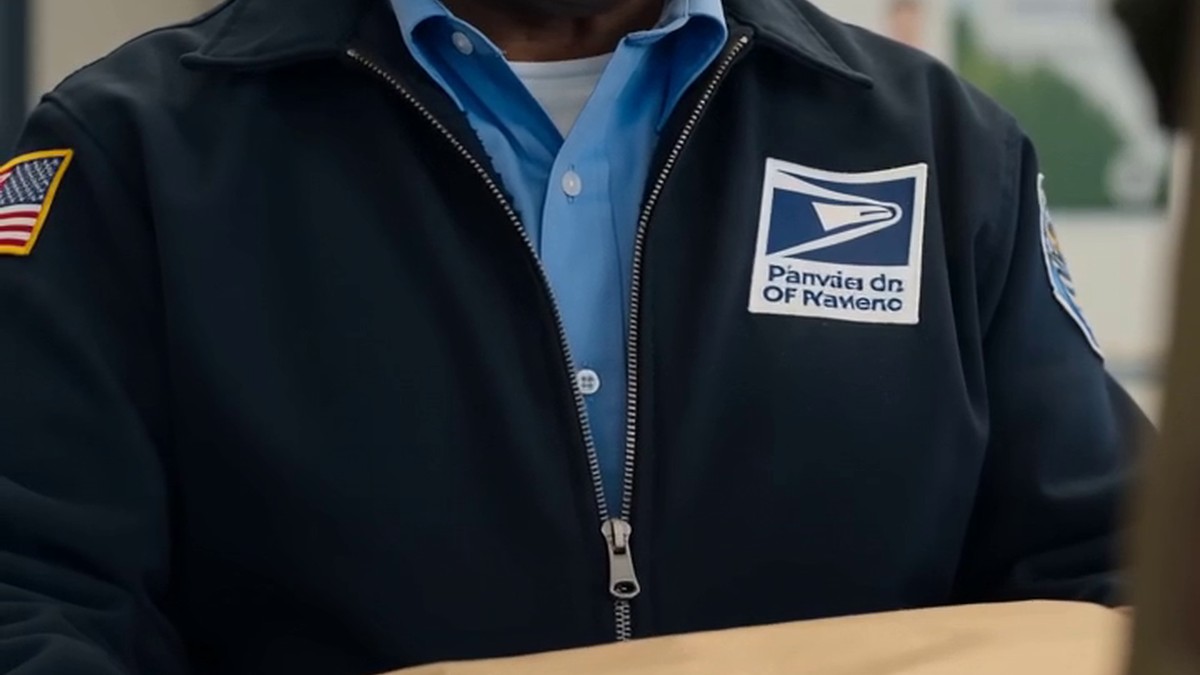
**The Envelope in the Drawer**
I've worked at the post office on Elm Street in Rochester for twelve years. It's a tiny branch, two service windows, a coffee machine that's been broken since Clinton was president, and a calendar with a lighthouse on it that's hung there since I was still weighing packages as a trainee. I know every customer by name, and some of them by the cologne they've worn for thirty years.
But this woman wasn't a regular.
She came in mid-November, when a nasty mix of rain and sleet was coming down outside and the sidewalk was a mess of slush and dead leaves. She had on a bottle-green coat, damp at the shoulders, and carried a small box wrapped in brown paper under one arm. She walked up to my window, set the package on the counter, and said, low:
"I'd like to send this."
I asked, like always, who it was going to and where. She gave me an address in Buffalo. The recipient's name was a man's, different from hers. I didn't say anything — not my business. I started weighing it, checking the dimensions, printing the labels. She stood there without moving, hands in her coat pockets, watching her own reflection in the glass partition between us and the street.
The box was light. Maybe a pound. I asked about the contents, since that's procedure.
"Just some odds and ends," she said. "A book, some photos, a CD."
I leaned in to enter the information into the system, and that's when I noticed someone had written a single word on top of the box in marker: "LAST." Big block letters, a little smeared at the edge, like the paper had gotten wet.
I didn't ask what it meant.
She paid — fifteen dollars and forty cents. I made change, stuck on the receipt, handed it over. She tucked it into her wallet next to a photo of a little boy, maybe two years old, sitting on someone's shoulders at what looked like a county fair. In the corner of the photo, in faded ink, somebody had written a date — three years back.
Then, already turning to leave, she stopped.
"You know," she said, off to the side, addressing the rack of greeting cards more than me, "there are things a person can't throw away. But can't hold onto anymore, either."
I didn't know what to say, so I just made some agreeable noise. She left. The bell over the door jangled, the smell of wet asphalt drifted in from the street, and somewhere in the distance, from the direction of St. Mary's, a single church bell rang.
A week later she came back.
This time she wasn't carrying anything. She walked up to the counter, set down a white envelope, and said:
"This is a letter. In case anyone ever asks about that package."
I asked what I was supposed to do with it.
"Nothing," she said. "Just let it sit."
The envelope wasn't sealed. On the front, in the same marker: "DO NOT READ UNTIL I CONTACT YOU FIRST." Her hair was wet from the rain, and she kept turning a wedding ring around her finger — one way, then the other, like she was checking whether it still fit. Her hand paused on it a second too long, the way you'd touch a sore tooth to see if it still hurt.
I agreed to keep it.
The letter sat in the back office, in the bottom drawer of my desk, under a box of paper clips. Next to it was a little pot of chives I'd been growing since spring, and a jar of instant coffee. Sometimes, while processing another package, I'd catch sight of that envelope and wonder what was written inside. But I never opened it.
Weeks went by. The woman didn't come back.
December was chaos. Armfuls of holiday packages, lines out the door, the smell of clementines someone spilled by the register, and the constant question of whether things would get there before Christmas. Somewhere in the middle of it, the Buffalo package came back to us — undeliverable, stamped in red, the box dented on one corner. Return to sender. I set it in the storage room with the other undeliverables, and on the label, under the man's name and address, someone at the receiving post office had scrawled: "Deceased — no forwarding."
I didn't tell anyone. It wasn't my place to. But I thought about that word on the lid — LAST — and I understood, without wanting to, that she'd known before she ever brought it in.
Right before the end of my shift on the twenty-third, Katie, my younger coworker who'd only started in September, was digging through my drawer for paper clips. She knocked the envelope to the floor. I watched her pick it up, and for a second she turned it over, reading the warning on the front.
"Somebody's ex?" she asked, half-joking.
"Widow," I said, before I'd decided to say it. "I think."
Katie looked at me like she wanted to ask more, but the line at the counter was six deep, and the moment passed. She set the envelope back exactly where she'd found it. The letter stayed put.
After New Year's, the woman came back.
She looked different. No more bottle-green coat — just a light jacket, hair pulled back in a ponytail. Her mouth was set in something that wasn't quite a smile, the look of someone who'd made peace with the idea that certain things were behind her now.
"Marlene," she said, and I was surprised she knew my name, though of course it was right there on my name tag, "I'd like to pick up the letter."
She showed me the shipping receipt from that package, crumpled and worn soft at the edges. That was enough. I went to the drawer, took out the envelope, and set it on the counter. I almost told her then about the box coming back, about the red stamp, about "no forwarding." I didn't. She already knew.
She took the envelope in her hand, looked at the writing, then at me, and tore it open without a word. Not the way you'd normally open a letter — no clean flick of the flap. She just ripped straight through the paper, like she needed to make sure whatever was inside was still there.
Inside was something small, something that caught the light. I only saw it for a second — a thin gold band — before she closed her fist around it and slid it into her jacket pocket. She'd mailed her husband's ring to Buffalo in November not knowing he was already gone, and it had traveled there and back before finding its way home to her hand, where the bare finger now had nothing left to turn. She tossed the torn, empty envelope into the trash can by the counter.
Then she said something I've thought about ever since.
"Didn't need to keep it after all. It's over now."
She wasn't talking about the letter. She was looking at her own hand, at the finger where the ring had been and now, for one more moment, wasn't. Then she closed her fingers around the ring in her pocket, and I understood: whatever question she'd been asking herself for three months — whether to keep sending pieces of him away, whether to let any of it go — she'd finally answered it, standing right there at my counter.
She turned and walked out, and the bell over the door gave one short, flat ring.
All that was left behind the counter was a piece of spearmint gum somebody had stuck under the ledge, and the smell of wet dirt tracked in on her boots.
Last week Katie asked if she could leave her spare office key with me since she'd forgotten her bag. I gave her a place to keep it — the bottom drawer, where the envelope used to sit. And next to the key, I placed my own four-leaf clover, pressed flat between the pages of an old calendar, the one I'd found the same week the woman first came in, tucked into a birthday card nobody ever picked up. I'd kept it all this time meaning to give it to somebody for luck. I smoothed it out with one finger so the stem wouldn't snap, then pushed the drawer shut until the latch caught, thinking of a woman turning a ring around her finger, checking to see if something still fit, and finding, in the end, that it didn't have to.
Outside, the rain and sleet were coming down again.




The Bar Tab in Scottsdale
I used to think the worst part of marriage would be something like a slammed door or a cold shoulder...


Warsztat, który Tomek zapisał na wnuczkę
Mam pięćdziesiąt dziewięć lat i przez dwadzieścia sześć z nich prowadziłem warsztat samochodowy przy Grójeckiej w Warszawie. Moja teściowa, Halina,...


Кіт, якого мало не викреслили з парафії на Куренівці
Отцю Ярославу, який тоді вирішив, що руда Мурка більше не має чого робити коло церкви, хочу розказати те, що вже...


Кухня «Джерело», Тернопіль — двадцять хвилин до закриття
Мене звуть Олег Гнатюк, мені сорок один, і я дванадцять років готую на нічній кухні лікарняного кафетерію обласної клінічної лікарні...


Зять на чужому городі: як я «здав в оренду» татову дачу під Житомиром
Мене звати Тарас, мені сорок два, і я досі не знаю, як пояснити те літо своїй дружині так, щоб вона...


Zwinięty list w misce z owocami przy ulicy Świętokrzyskiej
Kasia, siedemnastoletnia, znalazła to pod płytami winylowymi, w szafie ojca, w mieszkaniu przy ulicy Świętokrzyskiej w Warszawie. Stare pudełko po...


The Envelope in the Drawer
**The Envelope in the Drawer** I've worked at the post office on Elm Street in Rochester for twelve years. It's...


Warsztat po teściu, dwieście tysięcy i klucz, który oddałem inaczej
Nazywam się Dawid, mam trzydzieści cztery lata i przez sześć lat prowadziłem warsztat samochodowy przy ulicy Grunwaldzkiej w Bydgoszczy razem...