
EN
The Deed Had Her Maiden Name On It

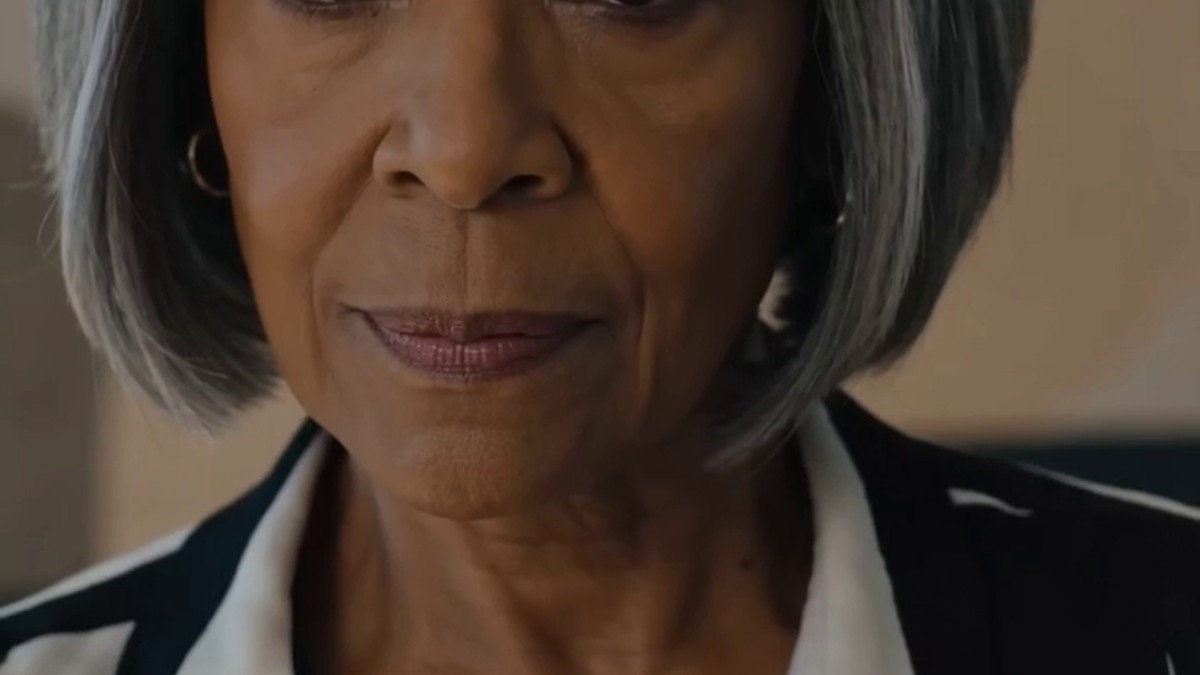
Denise Whitfield set two coffee mugs on the kitchen table and didn't sit down.
"We need to talk about the house," she said.
Her son-in-law, Marcus, was still in his work boots, grease under his nails from the shop. He'd married her daughter Angela eight months ago, and in that time he'd made exactly one request that stuck in Denise's throat like a fish bone: that Angela drop her last name — Whitfield — and take his.
Not hyphenate. Not keep it professionally. Drop it.
"Angela's at work," Marcus said, checking his phone. "She said you wanted to talk about the deed situation."
"I do." Denise slid a folder across the table. Inside was the deed to the duplex on Larkspur Street — the one Angela had been renting out for three years, the one that paid for half her mortgage on the house she and Marcus now shared. "It's in her name. Just her name. Whitfield."
"I know whose name is on it, Denise." Marcus's jaw worked. "That's actually the problem."
"How is that a problem?"
"Because my wife's name is supposed to be Carver now. We agreed."
"She didn't agree. She said she'd think about it, and then your mother started telling people at the reception that it was already done, and now you're acting like it happened."
Marcus pushed the mug away without drinking from it. "This isn't about my mother."
"It's a little about your mother."
Here's what Denise hadn't said yet, because she was still deciding if she had the right to say it at all: three weeks earlier, Angela had called her at eleven thirty at night, crying so hard she could barely get the words out, saying Marcus wanted her to sign a form adding him to the Larkspur deed — as co-owner, not just spouse-with-rights, but owner — and he wanted it done before she changed her name, "so there's no confusion with the county."
Denise had asked her lawyer about that phrase. There was no confusion to clear up. A deed doesn't care what your driver's license says. What it does is split a property Angela bought alone, with money from her father's life insurance, eleven years before she ever met Marcus Carver.
"She told me about the form," Denise said now. "The one your buddy at the title company drew up."
Marcus's face didn't move much, but his hand did — he turned the coffee mug a quarter turn on the table, like he was stalling for the right sentence. "That form is standard. Married couples do it."
"Married couples who bought the house together, maybe. Angela bought that duplex when she was twenty-six. You were still living with your college roommate in Tempe."
"So I'm just supposed to rent space in my own marriage?"
"You're supposed to not touch what isn't yours." Denise kept her voice level. Flat, even. She'd learned that from thirty-one years as a claims adjuster — you don't raise your voice at people who are trying to get a rise out of you, because the minute you do, you've lost the room. "I'm not here to fight about your mother or the wedding toast or any of that. I came because Angela asked me to look at the paperwork before she signs anything, and what I found is that this form doesn't just add you — it removes the clause that protects her sole ownership if things go sideways."
"Things aren't going sideways."
"Then there's no reason to sign it before Friday."
Marcus looked at her for a second too long. Outside, somebody's sprinkler kicked on, that metallic tick-tick-tick against the Whitfields' chain-link fence, the sound Denise had heard every summer evening in this house for twenty years. A car with a bad muffler rattled past on Larkspur two streets over. None of it mattered to the conversation, and all of it kept happening anyway, because that's how afternoons work even when something underneath them is breaking.
"Why Friday," he said finally.
"Because Friday's when the lease renews on unit B, and your buddy needs it signed before the new tenant moves in, otherwise the title company has to redo paperwork and he loses a commission. That's not urgency about marriage, Marcus. That's urgency about money."
That landed. She watched it land — the small tightening around his eyes, the way his thumb stopped moving on the mug handle.
"Angela wants this," he said, quieter now. "The name thing. She told me herself."
"She told you she'd think about the name. She never said a word to me about signing over half a rental property her father paid for with his life. His life, Marcus. He died in a warehouse accident when she was fifteen, and that insurance money is the only thing left of him that she can point to and say, that's mine, that's what he gave me."
Marcus didn't answer. He picked up the mug, finally drank from it, grimaced because it had gone cold, and set it back down harder than he needed to.
Angela came home at six fifteen, keys still in the door, and found both of them sitting at the table not talking, the folder between them like a referee that had already made its call and gone home.
"What is this," she said.
Her mother slid the folder toward her without a word. Angela read for four minutes straight — the deed, her lawyer's handwritten note in the margin, the title company form Marcus had brought home from his buddy Ray's office two weeks ago and left on the kitchen counter "just to look at."
"You wanted me to sign this before the wedding toast was even cold," Angela said. Her voice had a shake in it, but she kept talking through the shake. "You told me it was routine."
"It is routine—"
"Ray works on commission, Marcus. You told me that yourself, at his cookout, bragging about how fast he closes deals. This isn't routine, this is fast."
Marcus stood up. For a second Denise thought he was going to walk out, and some old, practical part of her brain was already calculating whether his truck was blocking the driveway. Instead he just stood there, hands on the back of the chair, looking at his wife like he was trying to find the version of this conversation where he came out looking like a man protecting his family instead of a man caught holding a form two weeks early.
"I wanted us to be one thing," he said. "One name, one house, one everything. I didn't think it through past that."
"You thought it through enough to get Ray to draft it," Angela said. "That's thinking it through."
Nobody said anything for a while. The sprinkler outside finally shut off. Denise reached over, not to touch her daughter, but to turn the folder a few inches so the deed's top line faced up — Angela M. Whitfield, sole owner — like she wanted the paper itself to be the last word in the room instead of any of them.
Angela didn't cancel the wedding, because there was no wedding left to cancel — it had already happened, rings and all, eight months prior. What she canceled, three days later, sitting at her mother's kitchen table with her own laptop open and Denise on speakerphone with the lawyer, was the title company appointment. She called Ray's office herself and told the receptionist to pull the file. Then she drove to the county recorder's office on Grant Avenue, paid the eleven-dollar fee, and filed paperwork adding a transfer-on-death beneficiary clause to the Larkspur deed — her mother's name, not Marcus's — so that no matter what happened to her marriage, the one thing her father left her would never need anyone else's signature to stay hers.
She kept the last name Whitfield. She told Marcus that night, not with tears this time, just the folder back in her hands and her voice steady as a closing table: some things in a marriage you build together, and some things you just protect, and the duplex on Larkspur was never going to be the first kind.




The Only Dance That Mattered
My name doesn't matter much here. What matters is that I was seventeen, standing in the gym of Westbrook High...


The Deed Had Her Maiden Name On It
Denise Whitfield set two coffee mugs on the kitchen table and didn't sit down. "We need to talk about the...


The Ledger at Sweetwater Diner
Forty-one dollars and change. That's what Marisol Reyes owed on a tab at Sweetwater Diner on Route 9 outside Macon,...


Il tavolo in fondo alla sala
Mi chiamo Carla, ho sessantatré anni e vivo a Lucca, in una casa che con mio marito Renato abbiamo tirato...


The Interview That Split the Christmas Movie Audience
I was the one standing next to her when the reporter's follow-up question landed, and I still think about how...


The Garage on Route 9
My name is Carol Jensen, and I've been a hospice chaplain at St. Luke's for almost twenty years. I don't...


Il matrimonio di Daniel e la cartella che aspettava in banca
Avevo partorito da nemmeno due ore quando il telefono vibrò sul comodino dell'ospedale. Mia figlia dormiva sul mio petto, ancora...


Il cavallo che riconobbe Elisa nella tenuta di Casalpino
La sala del Castello di Casalpino, vicino a Bergamo, era addobbata per la serata di beneficenza più esclusiva dell'anno. Lampadari...