
EN
The Afternoon I Noticed My Father’s Hand on the Table

I'm thirty-eight, I run a dental practice in Tucson, Arizona, and I almost drove past my parents' street that Tuesday in October. I only stopped because I was running errands two blocks over and figured I'd pop in for ten minutes before picking up my daughter from soccer practice.
When I pushed open the screen door, my mother yelped like I'd dropped in from Mars.
"Rachel! You should've called ahead, I would've — look at this mess—"
She was already smoothing her cardigan, tucking a strand of gray hair behind her ear, glancing at the stack of unopened mail on the counter like it personally embarrassed her. My mother, fixing herself up for her own daughter. Forty-one years I've known that woman and she still does this.
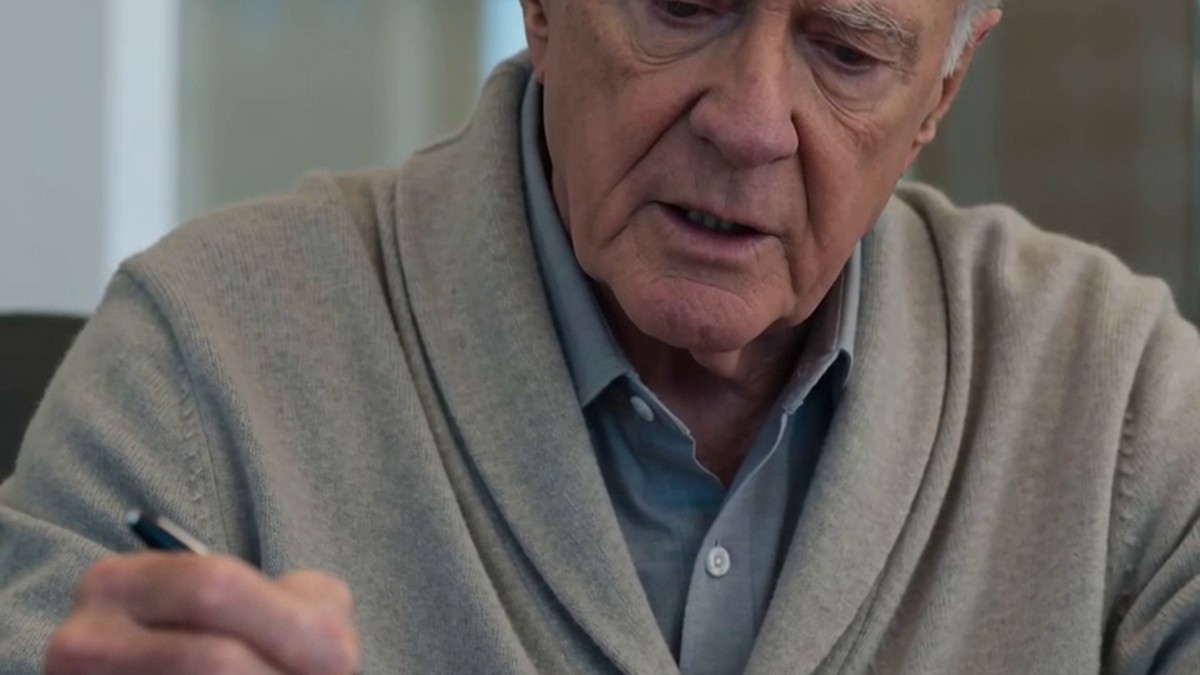
My father came out from the den. He moved slower than I remembered — not shuffling, exactly, but careful, like a man crossing ice. His grin, though, hadn't changed an inch. That same crooked, lopsided warmth that used to greet me at every school play, every birthday, every single time I needed him in a crowded room and found his face first.
We sat at the kitchen table — the same chipped yellow Formica one from my childhood — and talked about nothing. The tomatoes in the backyard garden that refused to ripen. The new couple who'd moved in next door with the loud Jeep. The leaf blower that wheezed twice before dying every time Dad tried to start it. Mom's pot roast recipe that she swears she keeps in the same drawer every week and somehow loses anyway.
Then my father got up to get himself a glass of water from the tap.
Halfway there, he stopped. His hand pressed flat against the counter edge, bracing. Not a stumble. Not a fall. Just — a pause. A beat too long. The kind of pause someone makes when they've quietly learned to ration their own strength, step by step, without telling anyone they've started doing it.
I must've stared longer than I meant to, because my mother caught it. She laughed it off too fast, too bright.
"It's nothing," she said, voice dropping. "Your dad's just getting old. That's all it is."
That's all it is. The man who built my treehouse with his own two hands. Who drove four hours round trip to watch me get my dental license pinned on. Who never once missed a single thing that mattered to me. Getting old. While I'm out there chasing deadlines and insurance paperwork and a calendar that never has room in it.
Sitting in that kitchen — the one with the cuckoo clock that's been ten minutes fast since 1998 — it hit me square in the chest: my parents still live in the same house, on the same street, with the same wind chimes on the porch. But inside those walls, time moved differently now. It had sped up for them while I wasn't watching.
After dinner, my father walked me to my car. He put his hand on my shoulder — the same hand that used to feel like a steel beam, something you could lean your whole weight against. Now it felt thin. Papery. Like it belonged to someone running on half the fuel he used to have.
"Don't be a stranger, kiddo," he said quietly. "Come around more. Days go by fast for us now."
I got in my car and just sat there. Didn't turn the key. Didn't check my phone. Just sat, because nobody warns you about the exact moment it lands on you — the moment you realize your parents are aging right now, in real time, while you're buried in Slack notifications and client charts and a grocery list that feels urgent until it isn't.
That night I didn't drive straight home. I sat in the parking lot outside the practice for twenty minutes, just thinking, and then I did something I'd been putting off for three years: I called the attorney my office manager had recommended and set up an appointment for the following Monday — not for me, for them. My parents had been talking for a decade about updating their will and setting up a healthcare proxy, and every time it came up, I'd said "yeah, we should do that," and then let it slide back into the drawer with the pot roast recipe.
So two weeks later, I drove them to a small office off Speedway Boulevard with a folder under my arm — bank statements, the deed to the house, my father's VA paperwork from Vietnam. We sat across from a woman named Diane Whitfield for ninety minutes while she walked us through a durable power of attorney and a healthcare directive, and my father, who hates admitting he needs anything from anyone, signed his name four times and then looked at me and said, "Guess I should've done this back when your mother first mentioned it."
"Ten years ago," I said. "She mentioned it ten years ago."
He laughed — a real laugh, not the polite kind — and my mother swatted his arm.
We also sat down with their accountant and moved eighteen thousand dollars out of a dusty CD that had been rolling over since 2011 into an account they could actually access without a thirty-day penalty, in case Dad needed a procedure or a hospital stay came up fast. Small thing. But it meant if something happened on a Tuesday, we weren't waiting on a bank's schedule to act.
I didn't fix anything that was broken. My father's hand still shakes a little reaching for the water glass. He still gets that half-second pause when he stands up too fast. But now there's a folder in my filing cabinet with his signature on it, and a woman at a law office who knows my name, and an account number I keep in my phone.
These days I call more. I drive over on Sundays with no excuse, no errand two blocks away, just because. I ask him about the Army, about the diner he worked at in 1979, about the car he lost his virginity's worth of savings on in 1971, and I let the stories run long instead of checking the clock on the stove. I always make time for coffee at that chipped yellow table, even when my calendar says I don't have it.
Because I know now — these small mornings are the only thing I'll have left to hold onto, someday, with both hands.




The Only Knife in Nana Ruth’s Kitchen
There was one knife in Nana Ruth's kitchen on Culver Street, and it did everything. It shredded the Sunday chicken,...


The Afternoon I Noticed My Father’s Hand on the Table
I'm thirty-eight, I run a dental practice in Tucson, Arizona, and I almost drove past my parents' street that Tuesday...


The Carburetor Shop on Route 9
My name's Danny Kowalski, I'm thirty-four, and I run a transmission shop outside Scranton, Pennsylvania. People love to talk. That's...


The Ledger at St. Brennan’s
My name doesn't matter much here — I've kept the books for St. Brennan's Episcopal in Hartford, Connecticut for nineteen...


What Grant Left in the Nursery Drawer
The last thing Daniel Reyes ever asked me to do was trust a man in a white coat I barely...


The Current
Marina Castellano had worked at the Port Authority office in Cape May, New Jersey, for nineteen years, but that morning...


The Current
Marina Castellano had worked at the Port Authority office in Cape May, New Jersey, for nineteen years, but that morning...


The House on the Loop
Walter Hendricks kept a workshop out behind his place near Harrisburg, three apple trees, and a view of the Susquehanna...