
EN
The Forty-Minute Notice

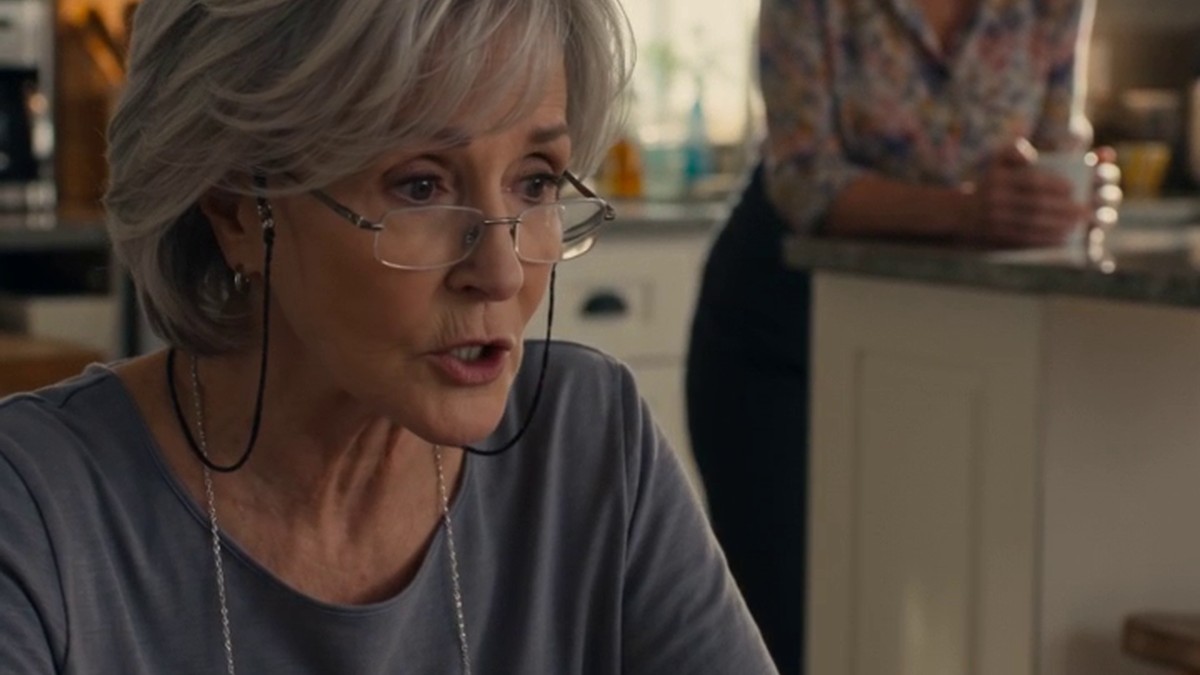
Barbara Kowalczyk kept a key to her son's house on a hook by her own front door in Erie, Pennsylvania, right next to the one for the storage unit she hadn't opened in three years. She'd had that key since the day Danny and Melissa closed on the place — a rambler off West 26th with a crooked basketball hoop and a kitchen that always smelled like whatever Melissa was meal-prepping for the week.
For six years, Barbara used that key like it was nothing. Tuesday afternoons, mostly. She'd let herself in, put on a pot of coffee, and be sitting at the table with a coloring book by the time her grandkids, Josie and Sam, got off the bus. Nobody ever told her not to.
Then in March, Melissa sat her down at that same table — no coffee this time — and said the key needed to become a formality instead of a habit.
"We just want a text first," Melissa said. "Even just twenty minutes ahead. That's all."
Barbara set her purse on the chair next to her, slow, like she needed the extra second. "I'm not a delivery driver, Melissa. I'm their grandmother."
"I know. But Sam's been having a hard time with transitions since we started at the new pediatrician for his ADHD evaluation. Structure helps him. Surprises don't."
That word — evaluation — landed on Barbara wrong, like she was hearing it for the first time even though Danny had mentioned it weeks earlier and she'd let it slide past her.
Barbara didn't fight it that day. She just stopped coming on Tuesdays.
It was her sister, Connie, who talked her into calling the local senior center's family counseling line — a free service Barbara had walked past a hundred times on the bulletin board at St. Peter Cathedral without ever reading the flyer. The counselor, a woman named Denise, asked Barbara one question that stuck: "When Melissa asks for a warning, what does she actually get to control?"
Barbara didn't have an answer. She'd been so busy feeling shut out that she'd never asked what the rule was actually protecting.
She found out three weeks later, unannounced — she showed up anyway, the old habit winning out, key already in the lock — when she walked in on Sam mid-meltdown on the living room floor, Melissa crouched next to him with a laminated card of pictures, trying to walk him through calming steps a therapist had given them. Barbara stood in the doorway with a grocery bag of orange slices, feeling like she'd wandered into someone else's emergency.
Melissa looked up. Not angry. Just tired in a way Barbara hadn't let herself notice before.
"This is exactly it," Melissa said, quiet, not stopping what she was doing with Sam's hands. "It's not about you. It's about him needing the house to feel the same every day."
Barbara left the orange slices on the counter and drove home without saying much of anything.
She didn't sleep that night. She sat at her own kitchen table with the phone in front of her and thought about her own mother-in-law, forty years back, who used to show up at Barbara's apartment in Buffalo with a casserole dish and no warning, and how Barbara used to dread the sound of that particular knock. She'd sworn she'd never be that woman. And here she was, hand on a doorknob that wasn't hers to turn without asking.
The next morning she called Danny, not Melissa. "I want to fix this," she said. "Tell me exactly what a text needs to say."
Danny walked her through it — plain and specific, no lecture. A text by 3:30 if she wanted to come by after school. A yes or a no back within the hour. If it was a no, she didn't get to ask why.
Barbara agreed to all of it. Then she did something nobody had asked her to do: she drove to Fifth Third Bank the following Monday and took the $400 she'd been quietly setting aside every month in a "grandkids' fund" savings account — money meant for birthday trips to Waldameer, for Christmas presents, for whatever came up — and instead of spending it on gifts that made her feel indispensable, she used it to pay for four sessions with Denise, the family counselor, this time with Melissa invited too.
Melissa almost didn't go to the first one. She showed up eleven minutes late, coat still on, sat at the far end of the small conference table like she was bracing for an ambush.
There wasn't one. Barbara had brought a single page, handwritten, listing out what she was willing to change: always text first, no keys used without a reply, no comments about Sam's evaluation results, no showing up "just because." At the bottom she'd written one more line — that she wanted to be told, plainly, when something at the house was hard, instead of finding out by walking into it.
Melissa read it twice. Her shoulders came down from around her ears somewhere in the second read.
"You didn't have to pay for this," Melissa said.
"I did, actually," Barbara said. "I've been showing up with orange slices instead of asking real questions for six years. This felt like the actual thing to spend that money on."
They kept the sessions going through April. By May, Barbara had a standing Tuesday text — 3:15 sharp, every week, same as clockwork — and Melissa had started answering within five minutes instead of the hour she was owed. Sam, for his part, started drawing Barbara a picture every time she came, unprompted, like the routine itself had become something he trusted.
Barbara still has the key. She still uses it — but only after the text goes through, only after the yes comes back. Last Tuesday, Josie ran to the door before Barbara even knocked, hollering that Grandma texted, so it was fine, she could come in. Barbara stood on the porch a second longer than she needed to, listening to that, before she put the key in the lock.




Warsztat po teściu, dwieście tysięcy i klucz, który oddałem inaczej
Nazywam się Dawid, mam trzydzieści cztery lata i przez sześć lat prowadziłem warsztat samochodowy przy ulicy Grunwaldzkiej w Bydgoszczy razem...


I need to write this as fiction from the second participant’s perspective (the “other person” — meaning the aggressor’s viewpoint, per the “OTHER PERSON” instruction), fully localized to the US, avoiding clichéd phrases, with a proper ending featuring a concrete action.
The Laundry Tub at Fenwick Creek I'm the one they warned new arrivals about. Diane, forty-one, and by the time...


Валіза до Дубая, яку я не встигла закрити
Термінал «Д» бориспільського аеропорту о шостій ранку пахнув кавою з automату і мокрою тканиною — надворі лив дощ, і люди...


Warsztat po teściu, który zabrał zięć Marcina
Nazywam się Marcin Duda, mam trzydzieści sześć lat i przez ostatnie osiem byłem mężem Kasi Woźniak z Bydgoszczy. Piszę "byłem",...


Czterysta osiemdziesiąt złotych na koncie i klucz do warsztatu w kieszeni
Marek Winiarski policzył pieniądze trzy razy, jakby od trzeciego liczenia miało przybyć. Czterysta osiemdziesiąt złotych. Tyle zostało na koncie firmowym...


Тиха вода під високим мостом
Мене звати Ірина Ковальчук, мені двадцять дев'ять, і я досі не знаю, як розповісти цю історію так, щоб у неї...


Прокинулась у труні під Двома Метрами Землі: Собака Рекса Почув Стук Ганни
Мене звати Оксана Бабенко, мені шістдесят один рік, я двадцять три роки працюю на кладовищі в Немішаєвому під Києвом —...


Мама Антона, а не суперприз
Мене звати Мирослав Дацюк, мені сорок один рік, я живу в Полтаві. Дружину мою звати Юля — молодша за мене...