
EN
The Locksmith Never Got Past My Doorman

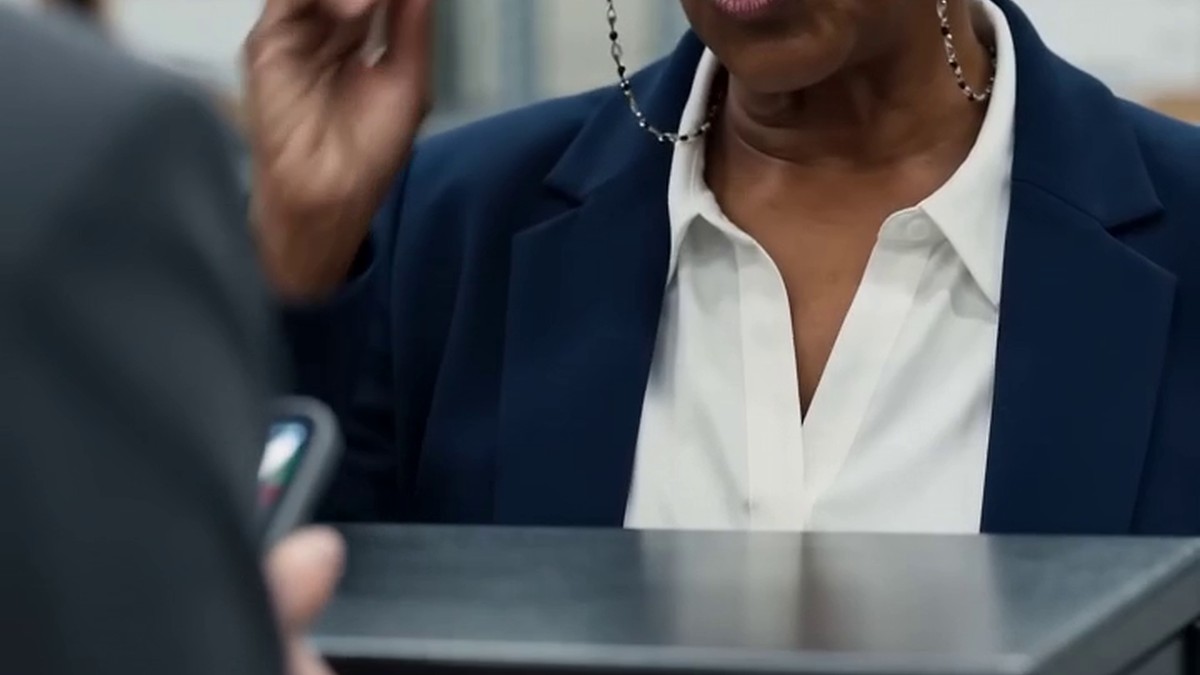
The morning my divorce became final, I canceled a credit card. Forty minutes later, someone tried to drill through my front door.
I'm Rachel Kessler, thirty-six, a portfolio manager at a mid-sized asset firm in Chicago. I live on the eleventh floor of a building on North State Street, the kind of place where the doorman knows your coffee order and the elevator smells faintly of the eucalyptus diffuser the building manager insists on. That morning the radiator was clanking the way it always did in October, and I remember thinking I'd finally call maintenance about it now that I only had myself to answer to.
Then my phone lit up. Derek Halloran. My ex-husband, as of nine-fifteen that morning.
"What did you do?" he said, before I'd even said hello. "My mother's card got declined in front of forty people."
His mother is Patricia Halloran, a woman who'd spent six years calling me "sweetheart" only when she needed something wired to her account by five p.m. That morning she'd been at a charity gala at the Peninsula, bidding on a diamond necklace — a Tiffany piece, $52,000 — using a card linked to an account that was, until nine-fifteen, still mine.
Marbella never came up in our marriage. Instead it was Cabo, twice a year, always billed to "family expenses." A kitchen renovation on Patricia's condo in Naperville that somehow ran through my checking account. Weekend trips to New York for shows Patricia insisted the whole family needed to see. Derek's line, every single time I asked a question, was: "We don't keep score in a family."
I learned too late that what he meant was: I paid, and the Hallorans decided.
"The card's canceled," I told him, standing at my window looking down at the traffic crawling up State Street. "The marriage ended this morning. So did your family's relationship with my money."
"You humiliated my mother. You're going to fix this."
I didn't answer that. I hung up, texted my lawyer, and went to bed earlier than I had in months. I slept better than I had in months, too.
At 6:40 the next morning, a grinding noise woke me. Metal against metal, right at my front door. I lay there a second, disoriented, before I understood what I was hearing — a drill, biting into the lock.
I pulled up the hallway camera feed on my phone instead of opening the door. There was Derek. Pale, jittery, still in yesterday's clothes. Patricia stood behind him in a coat that cost more than my rent used to. A locksmith knelt at the door, drill in hand.
"She's having some kind of breakdown over the divorce," Derek was telling the locksmith. "She's not answering. We need to get in there."
I didn't call down to him. I didn't open the door. I got dressed, called the front desk to alert my doorman, Hector, and then called 911. After that, I did something that would matter more than any of it: I went into my home office for a seven a.m. video call with the firm's investment committee — six people, dialing in from three time zones — and I angled my laptop camera so it caught the front hallway through the open office door.
All six of them watched Derek push past the doorman's objection and watched Patricia glide in behind him.
"Rachel, honey, we're here to help you," Patricia said, in a voice so gentle it made the hair on my arms stand up. That was the detail I couldn't shake afterward — not the drill, not the shouting. That voice.
Building security got there before they made it past the foyer. Chicago PD arrived four minutes later. The locksmith said he'd been told it was a welfare emergency. Derek called it a family misunderstanding. Patricia told the responding officer I was "unstable" from the stress of the split.
The video call, though, had already synced to the firm's servers.
At 8:20, while an officer was still taking statements in the hallway, my attorney, Naomi Ostrander, arrived. She let herself past the doorman, walked into my office, and set a folder on my desk without sitting down.
"I pulled the old joint accounts last night," she said. "There's a company tied to your name that you've never heard of."
She glanced toward the hallway, where Derek was still hovering near my laptop like it owed him money.
"He's not here for you this morning," she said. "He's here for whatever's on that hard drive."
She laid out six documents. The company was called Brightpine Holdings LLC. I'd never heard the name in my life, but it listed me as managing member and personal guarantor on financings totaling $4.1 million.
"These signatures aren't yours," Naomi said. "Some look lifted from the closing documents on the Naperville condo. Others are copied off old authorization forms."
It came back to me in pieces — the months Derek had pushed to "simplify" our finances. A shared cloud folder. Passwords we both knew. Papers he'd leave on the counter for me to sign before a dinner or a flight, always when I was rushing. Patricia, a former private-banking rep, always somehow in the room.
By noon, our forensic accountant, a sharp, unhurried guy named Ted Okafor, had traced transfers from Brightpine to vendors that didn't exist and to a nonprofit Patricia chaired. He also found a recurring monthly charge to a self-storage facility off I-355 in Lisle.
Then a text came in from a blocked number: Stop digging. You don't know who you're protecting.
Naomi told me to preserve everything and looped in a financial crimes detective she knew from a prior case. Before we left my apartment, I opened an old cloud backup and found a photo I'd forgotten existed — Derek in his home office, standing beside a black metal lockbox. Written across the lid in silver paint marker: BRIGHTPINE.
Naomi wouldn't let me touch anything else in the apartment after that.
For the rest of that day, my home stopped feeling like mine and started feeling like an evidence locker. Ted worked remotely off copies of the bank records. My firm preserved the video call. The building handed over hallway footage. The police report now included the locksmith's statement. Derek kept insisting he'd only wanted to "protect" me. Every fact pointed the other direction.
The break-in attempt had come right after I canceled Patricia's card — the card tied to a secondary account Derek had used for years as a bridge between household spending and Brightpine. Once that access was cut, he panicked that I'd start reviewing statements and find what he'd buried. That lockbox, I'd learn, could prove it.
The Lisle facility confirmed a unit rented under Brightpine's name, with me listed as an authorized contact I'd never agreed to. Naomi got the contents frozen pending review.
At 5:10 that evening, Naomi, the detective, and I walked into the unit. Five banker's boxes, an old inkjet printer, two empty suitcases, and the black lockbox from the photo. The first box held copies of my own documents. The third, printed invoices and emails. The fourth was worse — page after page of practice signatures, my name written over and over in slightly different hands.
I sat down on a folding chair against the wall and didn't say anything while Naomi and the detective worked through the inventory. The lockbox stayed sealed, pending a warrant. But before we left, the detective pulled a manila envelope out from under a folder, my name written across the front in handwriting I didn't recognize.
That night I understood the marriage hadn't ended because of a demanding mother-in-law or a husband who couldn't set a boundary. It ended because for six years, Derek had used my exhaustion as a master key. Late nights at the office meant "urgent" papers waiting on the counter. Business trips meant a request for login info to "handle" insurance or taxes. When I asked too many questions, he sulked. When I refused to send Patricia money, he told me I didn't know how to love a family.
The next morning, the detective opened the lockbox with Naomi present. Inside: three USB drives, old bank correspondence, copies of property deeds, and a green spiral notebook.
It wasn't a diary. It was a ledger — dates, dollar amounts, meeting notes, company names. Brightpine first appeared four years earlier. Next to my name, in Patricia's handwriting, was a single line: Clean record. High income. Signature people trust.
Five words, and everything went quiet in my chest. Patricia hadn't tolerated me all those years out of affection. She'd been vetting collateral.
Piecing it together took weeks, but the shape of it was ugly and simple. Years before I ever met Derek, the Hallorans had run through a string of bad investments and debts they'd hidden behind a comfortable front. When Derek married a woman with a clean financial record and a six-figure salary, Patricia saw an opening — a guarantor whose name would raise no red flags.
She'd built Brightpine using documents lifted during the Naperville closing. She'd recycled signatures, emails, old authorization forms. And she'd let her son use my identity for deals I never approved and never even knew existed.
Ted's final tally: over three years, more than $4.1 million had moved through entities tied to my name. Not all of it was money I was liable for — some came from loans, some from the nonprofit, some from vendors billing for services Brightpine never delivered. But my name was stitched into every layer of it. If the whole structure collapsed, I'd be the one holding the bag.
Then Naomi found the actual reason for the break-in. Buried in a recovered email backup was a message Patricia had sent Derek the night the divorce was finalized: If she canceled the card, she'll go through the account. Get the laptop back before she talks to her firm.
Not one word in it about how I was doing.
Two days later, Derek agreed to meet at Naomi's office. He came alone. He looked like he'd aged a decade since the morning of the drill — no suit, days of stubble, hands that wouldn't stay still.
I sat across from him and didn't touch the coffee someone had set down between us.
"Was it ever temporary?" I asked. "Was practicing my signature temporary too?"
He didn't answer right away, and that silence told me everything Naomi's folder hadn't.
It had started small, he said — an old authorization used to cover a minor debt. Then Patricia talked him into opening Brightpine, promising it would all be closed out within months. But every deal created another obligation, and every lie needed a bigger one to cover it. When Derek tried to pull back, Patricia reminded him he'd signed things too — that if it ever came out, he'd go down first.
"So you put me in front of it," I said.
"My mother said if we got the laptop back, we could clean things up before your firm ever saw it."
This was the man I'd married. For years I'd mistaken his fear for softness. Now I saw it plainly: cowardice.
"Your mother tried to spend fifty-two thousand dollars on a necklace the same morning our divorce was final," I said. "And you still didn't think it was over?"
"She was sure you'd keep paying."
"You both mistook my generosity for something you owned."
As he stood to leave, he said one more thing, and for the first time all morning, he looked genuinely ashamed.
"There's more. My father's foundation records."
Patricia had chaired a cultural nonprofit for years — the same circuit of galas and silent auctions where she'd tried to buy the necklace. The woman who'd built her image posing next to donors had used pieces of that foundation to bury private losses and family expenses.
When confronted, Patricia did what she'd always done when told no: she went on offense. She called mutual friends, hinting I was punishing the family out of spite. She showed up at my office lobby one afternoon demanding to see me. Hector's counterpart at my building called security, and I had them escort her out and forwarded the incident to Naomi.
Later that day she left a voicemail. "Everything you have, you got because you married into this family."
Three weeks after that, the detective's team located a second stash of records — a storage unit Patricia kept near her office in Oak Brook. Documents predating the marriage. Notes showing she'd pressured Derek to keep me on as a financial front. One note even anticipated the split: If she leaves, keep access until Brightpine is wound down.
Derek had known the marriage might end and tried to hold onto my money and my name anyway.
What stung wasn't the fraud. It was that it erased the one soft memory I had left — that in the beginning, at least, he might have loved me without doing math.
"Loving me once doesn't undo what he chose to do after," I told Naomi.
My firm's compliance team audited every transaction tied to my name. I turned over emails, devices, account histories — nothing held back. There were exhausting weeks, endless interviews, nights I woke up sure I'd heard the drill again.
Access logs, device locations, original signatures, and email timestamps all lined up the same way: many of the transactions had happened while I was traveling for work or had no idea they were occurring.
Derek eventually cooperated with investigators. He turned over messages from his mother, identified documents, admitted his role. It counted in his favor. It didn't erase it.
Patricia denied everything until they showed her the green notebook.
Months later, both were formally charged — fraud, forgery, identity misuse. The foundation's finances became a separate investigation entirely.
I felt no satisfaction watching Patricia walk out of the courthouse. Just distance. The woman who'd spent six years making me feel small didn't look powerful anymore. She looked like someone finally facing bills she'd spent years handing to other people.
Seven months after the divorce, I got the confirmation I'd been waiting for since that first morning: my name was cleared from Brightpine's liabilities. The joint accounts were closed for good. My personal assets were formally severed from anything connected to the Hallorans.
That same afternoon, the charity that had run the Peninsula gala asked me to consult on new donor-verification controls — the scandal had forced them to rethink how they screened large pledges and payments.
Walking out afterward, I passed the Tiffany window on Michigan Avenue. A necklace sat glittering on black velvet under the display lights. I looked at it for exactly as long as it took the light to change at the crosswalk, then put my phone back in my coat pocket and kept walking.
Chicago went on being Chicago around me — buses, wind off the lake, a guy selling roasted nuts from a cart on the corner — completely indifferent to the fact that the ugliest chapter of my life had just closed. I liked that. I didn't need an apology from Patricia. I'd spent years trying to earn that family's approval. What I understood now, walking against the wind toward State Street, was that freedom started exactly where that need ended.
When I got home, the new deadbolt clicked shut behind me on the first try. I set my keys on the kitchen counter, opened my laptop, and found the last file Naomi had sent — a scanned copy of the original Brightpine document bearing my forged signature.
Next to it, I opened my newly renewed passport. My real signature looked plain, steady, unmistakably mine.
For years, Derek and Patricia had treated my name like a tool — a guarantee, a door they could open whenever they needed to. Canceling that card hadn't broken up a family. It had just switched off the light they'd been hiding behind.
And once everything was out in the open, I got back something worth more than any of the money: nobody gets to sign my life for me again.




Пес на прив’язі за метром двору
Мене звати Оксана, мені сорок три, і сімнадцять років я працюю адміністраторкою в приймальні притулку для тварин на околиці Житомира...


Заборгованість майстерні Ковальчука
Мене звати Тарас Гринюк, мені сорок два, і я одинадцять років керую автосервісом на Замарстинівській у Львові. Той сервіс мені...


Стоматологічний кабінет на Личаківській, дев’ята вечора
Соломія Гнатівна замикала кабінет о дев'ятій, коли в двері подзвонила жінка років шістдесяти п'яти — не пацієнтка, просто перехожа, яка...


Тріщина в трубі на Пасічній
Мене звати Роман, мені сорок один, я сантехнік уже сімнадцятий рік. Живу у Львові, майстерня в мене на Сихові, а...


Тридцять шосте свічадо у майстерні Ганни
Ганна Тарасівна Ковальчук тридцять один рік простояла за прилавком ювелірної майстерні на вулиці Шевченка у Полтаві. Батько лишив їй цю...


The Locksmith Never Got Past My Doorman
The morning my divorce became final, I canceled a credit card. Forty minutes later, someone tried to drill through my...


Two Years Until Retirement, and a Dog Named Rusty
"Physical therapy? With what money, Walt? Do you not remember the boys are counting on that Myrtle Beach trip this...


Elka pod Wawelem, sześć krzeseł i list od policjanta
Powiedziała im, że na sześćdziesiąte urodziny nie chce prezentów. Chce tylko, żeby wszyscy usiedli razem przy jednym stole. Przyszedł policjant....