
EN
Two Years Until Retirement, and a Dog Named Rusty

"Physical therapy? With what money, Walt? Do you not remember the boys are counting on that Myrtle Beach trip this summer?" Donna's voice carried through the trailer park, sharp enough that Mrs. Kowalski next door turned down her window unit to listen. She stood in the kitchen doorway with a dish towel twisted in her fists, and Walt just sat at the table, looking at his hands.
That was the last fight before everything changed. But to understand it, you have to go back three weeks, to the loading dock at Fenwick Distribution Center outside Toledo, Ohio.
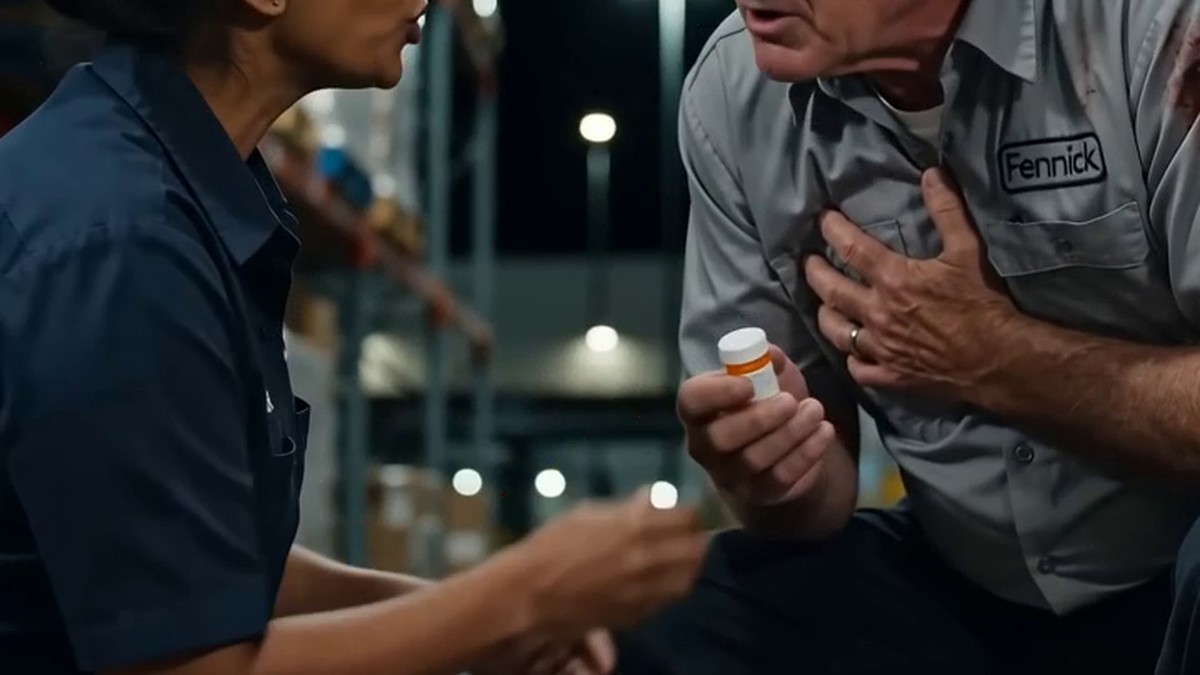
"Walt, you doing okay? You want me to call somebody?" Priya, one of the overnight custodians, found him sitting on an overturned bucket by the freight elevator, sweat soaking through his gray uniform shirt even though the warehouse kept it at sixty-two degrees.
"No, no. Just give me a few minutes, Priya. I'll be fine." He pressed a hand flat against his chest and waited for the tightness to pass, the way he'd waited maybe a dozen times in the last two months.
Walt Hodak was sixty-three years old and had two years left before he could collect his pension. He'd worked the loading dock at Fenwick for eleven years, and before that, twenty-two years at a plant in Youngstown that closed when he was still raising the boys. He drove a 2009 Silverado with 210,000 miles on it and kept a coffee can of loose change on the passenger seat for tolls.
He'd tried to take time off once — broke his ankle on a wet ramp, ended up in a walking boot for six weeks. Donna nearly lost her mind. "Walt, how much longer are you going to lie around like a lump? Get up and go earn something, we don't pay bills with you laying on that couch." He'd gone back to work with the boot still on, favoring the leg, because arguing with her cost more than his ankle did.
He picked up every overtime shift Fenwick offered, worked Saturdays loading trucks in July heat that made the asphalt shimmer, because Donna wanted a new mink coat that winter, gold hoop earrings for her birthday, a seventy-inch TV to replace the sixty-inch that "looked small" in the living room. And there were the boys — Danny, twenty-eight, and Curtis, thirty-one — both still needing help with rent, with a truck payment, with something.
His coworkers on the dock would clap him on the shoulder. "Hang in there, Walt, two more years and you're golden." He'd just give a tired half-smile. He already knew retirement wasn't going to mean rest. Not for him.
The one person who really worried about Walt was Priya Sharma, forty-one, divorced, raising a teenage daughter alone and cleaning the Fenwick offices on the night shift to make ends meet. She liked this stubborn, quiet man — liked him more than she let herself admit — and she genuinely grieved for him, because his own family treated him like a paycheck with legs. Like a vending machine you complained about but never thanked.
If they could see what it cost him. The gray in his face by 4 a.m. The way he gripped the forklift rail like it was the only thing holding him up. But they didn't see it, and worse — they didn't want to.
When Walt's chest pains got bad on shift, Priya would run to the CVS two blocks over for aspirin, then stash him in the break room supply closet so he could lie down for twenty minutes on a stack of paper towel cases. Once, folding a spare fleece blanket over his shoulders, she thought: this is the man I should have married. But there was no use dwelling on that now. A life was mostly lived already — no sense picking it apart.
"Walt, why don't you just tell Donna what's going on with your heart? How long are you going to keep swallowing this?" she asked him one night in the break room, the vending machine humming behind them.
He shook his head. Nothing good would come of telling her. Might even get thrown out — and then what? A sick man with no income, no use to anybody.
"You really think money matters more than being alive?" Priya wouldn't let it go. "You think it'd be better for them if something happened to you? If you just — weren't here?"
"Priya, don't bury me early," Walt said, managing a tired grin. "I'm tougher than I look. I'll manage."
Three weeks later, on a Tuesday afternoon at the end of August, Walt went white as printer paper on the dock floor, gasping between words. Priya panicked and called 911 against his direct request. When he refused to go to the hospital in the ambulance, she went straight to the shift manager, Gary Petrosky, and told him everything.
Gary called Walt into the little glass-walled office by the break room. It didn't take long. Walt walked out fifteen minutes later holding a folded resignation letter he'd just signed.
"Your health comes first, Walt. Take care of yourself," Gary said, not quite meeting his eyes.
Priya followed him out to the parking lot, but he wouldn't look at her. She'd called the ambulance. She'd told Gary. He'd asked her — begged her, almost — not to do either.
Now what was he supposed to tell Donna? She'd tear him apart.
"Walt — what about the dog?" That was Ernie, the night watchman, jogging over from the guard shack.
"I'll feed him tonight."
"No, you don't get it. They only let Rusty stay on the lot because you asked. Who's gonna want him now?"
"They gonna kick him out?"
"Walt, you know I'd keep him here in a heartbeat, but corporate says no dogs on the property anymore. Not my call."
Walt walked over to the chain-link fence where Rusty was tied, the mutt he'd found as a starving pup behind the loading dock dumpster three years back. He crouched down, ran his hand over the dog's head slowly, the way you'd touch something you were afraid of losing. Rusty thumped his tail against the gravel and gave a short bark, like he was saying: wherever you go, I'm coming.
"Come on, Rusty. Let's go home."
They walked out through the gate together, and Ernie stood there a long while, watching them go, feeling sorry for both of them and knowing there wasn't a thing he could do about it.
Walt got back to the trailer around 2 p.m., hours before his shift usually ended, and Donna was on him before the screen door even swung shut.
"Why are you home already? And what — is that a dog? Did you lose your mind, dragging a stray in here? Where'd you even get it? What is going on?"
"Donna, don't get worked up, okay?"
"Oh, that's a great start. Knew it wouldn't be good news."
"They let me go."
"Lord. What did you do, Walt?"
"I didn't do anything. It's my health — that's why."
"What health? You could work sunup to sundown, easy. Are you lying to me right now?"
"No. I've been feeling off lately. Had an ambulance called on me yesterday. Doctor thinks it's my heart. Says I need treatment."
"Treatment? With what money, Walt? Do you not remember the boys are counting on that Myrtle Beach trip this summer?"
Donna's voice climbed until it filled the whole trailer, sharp enough that the neighbor's window unit clicked off like it was listening too. She threw her hands around while she talked, called him things a wife shouldn't call a husband, and Walt just sat there at the kitchen table, looking at his hands, letting it wash over him the way he always did.
"And get that mutt out of my house. Now. You hear me? Or you can both go sleep on the curb."
Walt nodded and stepped back out onto the porch. Going down the cinderblock steps, a pain gripped his chest so hard he had to lean against the trailer's siding to keep from going down. Rusty pressed against his leg, whining, licking at his hand.
"It's alright, boy. Give it a minute, it'll pass."
Out on the gravel road that ran between the trailers, Walt looked down at the dog. What was he supposed to do with him now? Couldn't just leave him out here.
He didn't come home that night. Donna called. Both boys called. He let every one of them go to voicemail and walked the streets of Toledo with Rusty until the sky started turning gray over the old rail yard.
When he finally circled back toward the trailer around dawn, Danny and Curtis were both waiting outside, arms crossed.
"Dad, where the hell were you? Mom was up all night, you know that? You can't just disappear like that."
He didn't try to explain. They wouldn't have understood, and there wasn't any point wasting his breath.
"Look, Dad," Curtis said, stepping closer. "Mom told us they let you go from Fenwick."
"Yeah, they did, on account of—"
"Me and Danny already found you something," Curtis cut in. "Night security, over at the Whitfield construction site off Route 20. You can keep the dog there too. What do you say?"
"Yeah, Pop, two years and you're done. Just push through it," Danny added, like he'd solved the whole problem in one sentence.
Night watchman, then. Walt agreed — mostly for Rusty's sake, so he wouldn't end up on the street. The boys drove him out to the construction site, got him set up with the foreman, had a couple of the crew guys drag an old doghouse over near the site trailer, then dropped their father back home.
Donna talked to him through clenched teeth, though she didn't hide being glad money would be coming in again.
"Just — if they offer you extra shifts, don't turn them down. You know how tight things are right now."
Walt nodded. Of course. He'd do whatever it took for his family.
"Here, packed you some food for tonight. Dog eats on his own dime, though. Not spending grocery money on him."
That evening Walt reported to the Whitfield site for his first overnight shift. He sat outside the trailer most of the night, splitting a cold hamburger with Rusty, telling him things he'd never told another living soul.
"You know, when I was a kid, I used to watch the birds go by and think — man, I want to do that. Wanted to fly." Walt let out a short laugh. "Used to picture myself way up there, gliding through the clouds, close enough to touch the sun. Then I grew up, and that stayed exactly what it was — a kid's idea. Far off, like something you can look at but never touch. Funny thing is, lately, I keep wanting that again. To fly."
He tipped his head back and looked up a long while at the stars scattered over the rail yard lights. Rusty settled against his leg and looked up too. Something in Walt's chest went quiet and easy for the first time in longer than he could remember.
About three hours before sunup, Rusty started howling — a long, broken sound, more grief in it than a dog should be able to make.
When the crew showed up that morning and walked over to say good morning to Walt, he wasn't breathing anymore.
They buried him three days later at Willow Creek Cemetery, off Route 6. Walking away from the grave, Donna looked at the framed photo propped against the headstone and said, flat and cold: "Knew you'd let us down somehow."
Nobody from the family came back for the traditional memorial gathering nine days later. No flowers, no relatives standing at the fresh dirt. Just a plain wooden cross, a photograph in a cheap frame, and Rusty, who never left, lying against the mound of earth like it was the only post he'd ever been assigned. Not even death could pull him off that spot.
Later, he started slipping away for short stretches, but he always came back — sometimes with half a hot dog bun in his mouth, sometimes with nothing at all, just himself.
On the fortieth day, a woman in a dark headscarf walked up the gravel path to the grave. Rusty lifted his head, saw her, and his tail started going before she'd even said a word. He knew her.
She knelt and set down two carnations, and her voice cracked before she got two words out.
"Told you, Walt. Told you not to push yourself like that. You never did listen." She wiped her face with the back of her wrist. "Rest easy, okay?"
She sat down on the grass next to Rusty and stroked his head for a long time, crying without trying to stop it. Priya kept thinking, over and over: I should have just asked him to stay with me. But back then she hadn't let herself. Hadn't wanted to be the one who broke up a family — even if, looking back, there hadn't been much of a family there to break. Just two grown sons and a wife who'd used him up and never once, not once, stood behind him.
"Come on, Rusty." She hooked two fingers under his collar and stood. "You're gonna live with me now."
The dog got up without a sound and fell into step beside her.
A few yards down the path, Priya stopped, wiped her eyes one more time, and said quietly, not quite looking back at the grave:
"We'll keep coming, Walt. Both of us."
That Friday, Priya sat at her kitchen table with a folder from the county clerk's office and a printout from the bank, and did the one thing that was actually hers to do: she opened a savings account in Rusty's name — feed, vet bills, the whole twelve years or so a dog like that has left — funded with the four thousand dollars Walt had quietly signed over to her two months before he died, money Donna never even knew existed. She wasn't hiding it from anyone anymore. She just wasn't spending another dollar propping up people who'd never once shown up.




Тридцять шосте свічадо у майстерні Ганни
Ганна Тарасівна Ковальчук тридцять один рік простояла за прилавком ювелірної майстерні на вулиці Шевченка у Полтаві. Батько лишив їй цю...


The Locksmith Never Got Past My Doorman
The morning my divorce became final, I canceled a credit card. Forty minutes later, someone tried to drill through my...


Two Years Until Retirement, and a Dog Named Rusty
"Physical therapy? With what money, Walt? Do you not remember the boys are counting on that Myrtle Beach trip this...


Elka pod Wawelem, sześć krzeseł i list od policjanta
Powiedziała im, że na sześćdziesiąte urodziny nie chce prezentów. Chce tylko, żeby wszyscy usiedli razem przy jednym stole. Przyszedł policjant....


Warsztat po Ryśku, dwadzieścia sześć lat pracy i teściowa z kluczami w kieszeni
Nazywam się Bartek Sowiński, mam czterdzieści jeden lat i przez jedenaście lat byłem mężem Poli. Warsztat samochodowy przy Wólczańskiej w...


Diane Whitfield Settles a Rental Account She Signed Herself
# Diane Whitfield Settles a Rental Account She Signed Herself "Mrs. Whitfield, please don't panic—what date do we need to...


Ключі під ковриком
Тёма зник за дверима не озирнувшись, і я ще довго сиділа на пуфику для взуття, дивлячись на порожній гачок, де...


Doktor od trzydziestu lat
Ja nie jestem lekarzem. Ja jestem synem lekarza, i to jest zupełnie inna historia, niż wszyscy myślą. Ojca pochowaliśmy w...