
EN
The Workshop on Maple Avenue

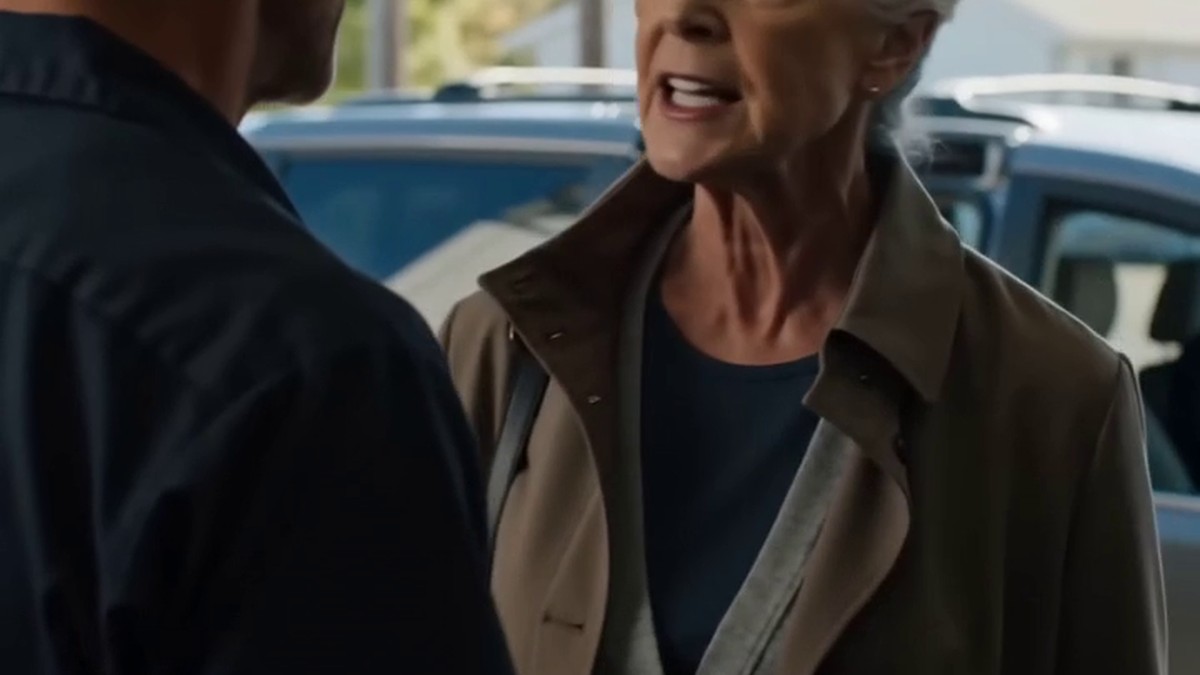
I never thought I'd be the villain in my own mother-in-law's story, but that's exactly what I became the day I signed the paperwork for the business without telling her first.
My name's Gary Pruitt, I'm forty-four, and I've been running a small repair shop in Dayton, Ohio since my father-in-law Walt handed me the keys eleven years ago. Walt trusted me. His wife Carol never did, not really, not even after I married her daughter Diane and gave her two grandkids and never missed a Thanksgiving at her house on Elm Street.
Walt died in March. Pancreatic cancer, fast — eight weeks from diagnosis to the funeral home on Wayne Avenue. Before he went, he and I sat in the shop office with the space heater humming and he told me he wanted the business in my name outright, not split three ways between me, Diane, and her brother Kevin, who lives in Phoenix and hasn't touched a wrench since high school. Walt said it plain: "Kevin'll sell it for parts the minute I'm cold. You'll keep it running." He had his lawyer, a guy named Terrence Ossei over on Brown Street, draw it up two weeks before he passed. Walt had named the place after Carol back when he opened it in 1988 — some young-husband gesture he never explained and she never asked him to repeat — and the sign still said CAROL'S AUTO BODY over the bay doors.
I didn't tell Carol. I'll own that. Twice I wrote her a letter explaining it — the debts, the jobs, the whole case I could've made in ten calm minutes — and twice I tore it up before I finished the second page, because on paper it sounded like an argument I was building against her, not an explanation I owed her. A few times I got as far as dialing her number and let it ring once before I hung up. Every time I told myself I'd just drive over and say it to her face instead, and every time I found a reason the day wasn't right — a transmission job running late, a kid's soccer game, Diane in a mood. The days added up to months before I noticed.
She found out from the county recorder's website. Carol's seventy-one, retired schoolteacher, and she still checks property and business filings the way other people check the weather — some habit left over from managing Walt's finances for forty years. She called me on a Tuesday at 6:40 in the morning, before I'd even had coffee, and she didn't yell. She just said, "You went behind my back, Gary. On a business with my name on it," and hung up.
What she hadn't known yet — what nobody but me knew — was the stack of unpaid invoices sitting on Walt's desk the week before he died. He'd stopped keeping up with the books months earlier and hadn't told anyone, not even Carol. Two guys we owed money to had already called the shop asking when they'd see a check. I spent three nights going through a shoebox of receipts just to figure out we were twenty-six thousand dollars in the hole. If that business had gone into probate split three ways, with Kevin wanting cash out immediately, it would've been sold off to cover debt within the year, and six guys who work for me — Ron, both Hendersons, Mikey, Paul, and Diane's cousin Sam — would've lost their jobs before Christmas.
I didn't say any of that to Carol. I should have. Instead I just kept my head down at the shop, and Diane stopped speaking to her mother altogether, which made everything worse, because now I was the reason mother and daughter weren't talking, not just the reason Carol felt cut out.
Carol called the shop on a Thursday in October and said she was coming by Saturday, and that I'd better be there alone. I didn't tell Diane. I spent two days running the numbers in my head, deciding how I'd lay it out, and I never once guessed she'd walk in already knowing half of it.
She showed up right on time. I remember because the Bengals game was on the radio in the bay and I switched it off when I saw her minivan pull in. She came in without a folder, without a letter, just her purse and her coat still buttoned, like she wasn't planning to stay. She stood by the Civic I had up on the lift and said, "Walt told me, Gary. Two days before he died. The debts, the plan, why it had to be you and not split three ways. He made me promise not to say anything until you came to me yourself." She stopped there, like the next part cost her something. "I waited eight months for you to sit across a table from me. Instead I had to go pull it off a website, like I was checking up on a stranger. That's what this call this morning was about. Not the shop. You, not showing up."
I didn't talk right away. I walked past her into the office and came back with the shoebox anyway, because I needed my hands doing something, and set it on the hood of the Civic between us. I started pulling invoices out — the transmission supplier, the guy who did our brakes, the insurance premium that had gone unpaid for four months — and lined them up across the hood until there was no more room and a few slid onto the concrete. "Twenty-six thousand," I said. "I know you already know the number. I just — I needed you to see it in my hands, not hear it secondhand twice in a row." I picked up the insurance invoice, put it down, picked it back up. "I should've brought you this box myself. Eight months ago. I kept telling myself tomorrow."
Carol bent down and gathered the invoices off the concrete herself, squaring the edges against her palm before she set the stack back on the hood. "I wasn't angry about the shop," she said. "I was angry you let eight months go by without once sitting across a table from me and saying any of this to my face."
I didn't have an answer that made that better. I told her so.
Then she told me the rest of why she'd come. Kevin had called her the week before asking her to co-sign a loan against her house — the one Walt paid off back in 2009 — so he could open some vape shop franchise outside Phoenix. "He didn't ask how I was doing since the funeral," she said. "He asked about the house before he even sat down to a cup of coffee. I told him no. He hung up on me, Gary. His own mother." She hadn't heard from him since.
I made her the bad coffee from the shop machine, and we sat in the office going through the rest of the shoebox together, invoice by invoice, until the numbers stopped being a secret and started being just math two people could look at.
Three weeks later, Diane and I drove to Elm Street for a Sunday dinner, the first one since the funeral. Carol had made Walt's pot roast recipe, overcooked the same way he always overcooked it. Before we ate, she slid a single sheet of paper across the table to me — a notarized letter she'd already filed with Terrence Ossei, confirming in writing that she had no claim on the shop and never would. The letter also removed her as beneficiary on the small key-man policy Walt had taken out years earlier naming her — not as his business partner, just as his wife — which would've paid her fifteen thousand dollars if anything had happened to him while he still owned the place outright. "I don't want to be owed anything by a shop I never lifted a wrench for," she said, folding her napkin into quarters like she was deciding whether to say more, then didn't.
Kevin still calls her sometimes, mostly when he needs something. Last month he called about a car payment — four hundred dollars, he said, just until Friday — and spent most of the call explaining why it wasn't actually his fault this time. She told him to call his brother-in-law if he wanted a job that paid steady, and that she wasn't a bank anymore. He hasn't called since.
The shop's still on Maple Avenue, same six guys on payroll, same space heater humming in the office, same sign over the bay doors. Carol comes by most Fridays now with a thermos of real coffee, because she says ours tastes burnt. She sits in Walt's old chair by the window and watches me close out invoices, and neither one of us brings up that Saturday in October anymore. We don't need to.




Ogni grammo conta
Il reparto di Terapia Intensiva Neonatale dell'ospedale di Varese non ha finestre che lascino intuire se fuori sia giorno o...


Il cappotto sul termosifone del quinto piano
La notte in cui Davide tornò senza giacca, capii che non mi appartenevo più a lui. Non per un capo...


The Workshop on Maple Avenue
I never thought I'd be the villain in my own mother-in-law's story, but that's exactly what I became the day...
Uno schiaffo prima del “sì” a Villa Serena
Il rumore dello schiaffo arrivò prima della marcia nuziale. Nella sala degli affreschi di Villa Serena, sul lago di Garda,...
L’ultima volta che abbiamo comprato un hamburger insieme in via del Corso
Il cartone dell'hamburger era ancora caldo quando Rosa lo appoggiò sulle ginocchia, seduta sul muretto basso vicino alla fontana, in...
Niente al Posto del Prodigio
Il profumo di gardenie copriva quasi l'odore di cera bruciata delle candeline, nella sala ricevimenti di Villa Orlandini, fuori Lecce....
Il conto della nonna
Avevo passato tutta la domenica in cucina, a casa mia a Monteverde Vecchio, tra il forno e il tavolo di...
Il passo di Emilia nella vasca di zinco
Da quando Elisa era venuta al mondo, nessuno l'aveva mai vista fare un passo da sola. Per sette anni suo...