
EN
The Interview That Split the Christmas Movie Audience

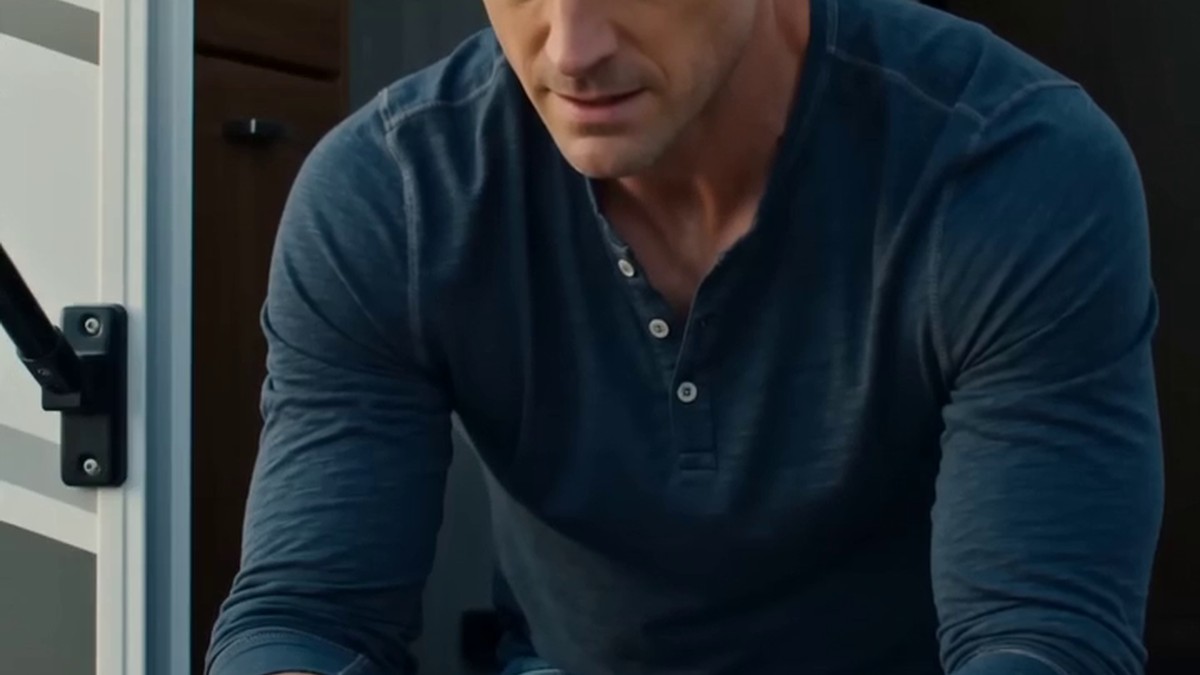
I was the one standing next to her when the reporter's follow-up question landed, and I still think about how fast the room changed.
My name's Derek Whitfield, and I was Candace's co-star on four of her holiday films before all this happened — the kind of guy who plays the charming contractor or the widowed dad who learns to love Christmas again by act three. I'd worked with Candace since 2015, back when she was still doing double duty between Hallmark sets in Vancouver and flying home to see her kids in LA. We weren't close-close, but you spend six weeks on a set in a fake snowstorm in July, sweating through a flannel shirt, you get to know somebody.
So when she left Hallmark for Great American Family in 2021, a bunch of us followed her. It wasn't political for most of us — it was a paycheck and a decent script. GAF was shooting out of a studio lot near Franklin, Tennessee, and honestly the craft services were better than half the places I'd worked in Burbank. Candace had taken on this new title, Chief Creative Officer, which meant she wasn't just showing up to deliver lines anymore. She was in casting meetings. She was reading scripts before they got greenlit. She had opinions about the ending of a movie I was shooting that fall — wanted the big kiss moved to a diner instead of a barn, said barns were "overdone." She was right, honestly.
I was in my trailer between takes on November 14th, 2022, phone propped against a half-eaten turkey sandwich from the craft table, when my publicist's text came through: a screenshot, one line pulled out and circled. Candace, in the Wall Street Journal, saying GAF would keep "traditional marriage" at the center of its Christmas movies.
I read the line twice and went back to my sandwich. People say things in interviews that get flattened. By the time I came back from the next take, my phone had thirty-one notifications I hadn't asked for. JoJo Siwa had posted something sharp about it. Hilarie Burton Morgan called the comment harmful. The head of GLAAD put out a statement with Candace's name in the second sentence. A text came in from a number I didn't recognize — a reporter who'd never spoken to me in my life, who'd gotten my agent's email somehow, asking for comment on "working alongside Candace Cameron Bure amid backlash." My agent called four minutes later, before I'd even typed a reply, and said the only sentence that mattered: "You don't have to say anything. But if you do, it's on you, not me." I sat there on the edge of the trailer steps holding the phone with both hands, thumb over the keyboard, and I didn't type anything. I still don't know if that was courage or just the fastest way to end the day without making it worse. I turned the phone face-down on the step and went back in for the next take.
Here's the thing nobody on set talked about out loud: most of us liked her fine, and most of us also didn't agree with what she'd said. Those two things sat in the same trailer at the same time. I watched her walk across the lot the next morning with a stack of script pages under one arm, and nobody said anything to her about it — not because we were scared, but because it felt like it wasn't ours to referee.
Bill Abbott, the CEO, put out his own statement a few days later — said Candace wasn't speaking for the whole company, that story decisions got made project by project. I actually read that one standing in the hallway outside wardrobe, still in my fake snow boots, and thought: that's a company trying to have it both ways. Keep the audience that loved her, keep the door cracked for the audience that didn't.
Candace put out her own statement too. Said she loved everybody, said parts of the interview got left out, said some outlets were stoking division on purpose. She didn't walk the line back. I remember thinking — she's not going to. Whatever this costs her, she's decided it's not worth pretending she meant something else.
What people outside the industry don't see is what happens on the ground after a headline like that. Our shoot schedule didn't change. The budget didn't change. But GAF did start greenlighting a wider range of holiday stories the following year — not with any announcement, just quietly, in the slate. I read for a role in late 2023 that would've been unthinkable for that network two years earlier. It didn't go to me, but it existed. Nobody put out a press release calling it a response. It just showed up on a call sheet.
I kept working with Candace through 2024. She never brought the WSJ piece up to me, and I never asked. We talked about blocking, about whether a scene needed a second take, about whether craft services had run out of the good coffee again. That's mostly what the job is.
The audience split, hard, right down a line I couldn't predict in advance. Some longtime Hallmark fans followed her to GAF out of loyalty and stayed loyal after the interview too. Others, people who'd watched her play D.J. Tanner on Full House thirty years ago, said they were done — not angry, just done, the way you stop going to a diner because the new owner changed something you can't name. The ratings didn't collapse. They also didn't recover to where some executives wanted. Both things were true, and neither one made the trade papers simplify it into a win or a loss.
Last spring I ran into Candace at a GAF wrap party in Franklin, the kind with string lights over a parking lot and a taco truck that undercharges everybody. She was going over a stack of pitch decks with two junior producers, pen behind her ear, asking pointed questions about a script's third act. Somebody mentioned the 2022 interview to her in passing — a producer joking about "the controversy days" — and she just said, "I said what I meant. I still mean it." Then she went right back to the pitch decks, circling a line of dialogue she wanted cut.




Il tavolo in fondo alla sala
Mi chiamo Carla, ho sessantatré anni e vivo a Lucca, in una casa che con mio marito Renato abbiamo tirato...


The Interview That Split the Christmas Movie Audience
I was the one standing next to her when the reporter's follow-up question landed, and I still think about how...


The Garage on Route 9
My name is Carol Jensen, and I've been a hospice chaplain at St. Luke's for almost twenty years. I don't...


Il matrimonio di Daniel e la cartella che aspettava in banca
Avevo partorito da nemmeno due ore quando il telefono vibrò sul comodino dell'ospedale. Mia figlia dormiva sul mio petto, ancora...


Il cavallo che riconobbe Elisa nella tenuta di Casalpino
La sala del Castello di Casalpino, vicino a Bergamo, era addobbata per la serata di beneficenza più esclusiva dell'anno. Lampadari...


Il bambino che ha chiesto a Evelina di ballare
La sala del Teatro Sociale di Como era piena fino all'ultima fila. Era la serata di gala della Fondazione Speranza,...


Devo scoprire come l’italiano richiede un adattamento completo con nomi, città, valute e dettagli italiani, mantenendo la struttura della trama.
Il conto che Daniele non ha mai saputo leggere Per undici anni ho lasciato che Daniele Ferraglia credesse di avermi...


Il cappotto di Alessia Monti e le vetrine di Via Montenapoleone
Alessia Monti aveva ventisei anni e un contratto a tempo determinato che le avrebbe permesso, forse, di pagarsi un mutuo...