
EN
Dana Pruitt Didn’t Wobble, and the Calloways Finally Paid $186,000

I've fitted hems at Calloway's Department Store on Bull Street for nineteen years. I know the smell of that building better than I know my own kitchen — mothballs, steam from the pressing irons, and under all of it, the river smell that never quite leaves Savannah in August. I also know the brass fitting frame in the third-floor salon, because my late husband Tom helped calibrate it back when he still worked for the Calloway family as a machinist, before his heart gave out in 2009.
That frame is older than me. Built in 1931, mahogany legs, brass plates inside shaped like two narrow stalls. Old man Elias Calloway used it to measure shoe lasts for his factory workers. His great-grandson, Weston Calloway III, decided four years ago that it would measure something else entirely: wives.
Weston's father had told him, flat out, over Thanksgiving dinner, that he wouldn't get his third of the Calloway Trust — forty-two million dollars, give or take — until he married. So Weston pulled the old frame out of storage, had the hinges oiled, and announced that any woman who wanted to be considered would stand inside it. He never told a soul what the dials measured. He'd look at the readout, say "next," and that was that. Four years. Hundreds of women. Nobody passed.
I checked the calibration before every single trial because Weston's aunt Corinne — who ran the Trust's day-to-day business while Weston stayed unmarried — insisted on it, personally, every time. I always thought that was strange. You don't babysit a machine that measures nothing but vanity unless you have a reason to want it to keep failing.
The morning Dana Pruitt showed up, I was running behind. We'd had thirty-one candidates sign in before ten o'clock, and the salon smelled like three dozen different department-store perfumes fighting each other. The candidates stood in a line along the velvet rope in dresses that cost more than my monthly pension check, if I'd had a pension check, which — we'll get to that.
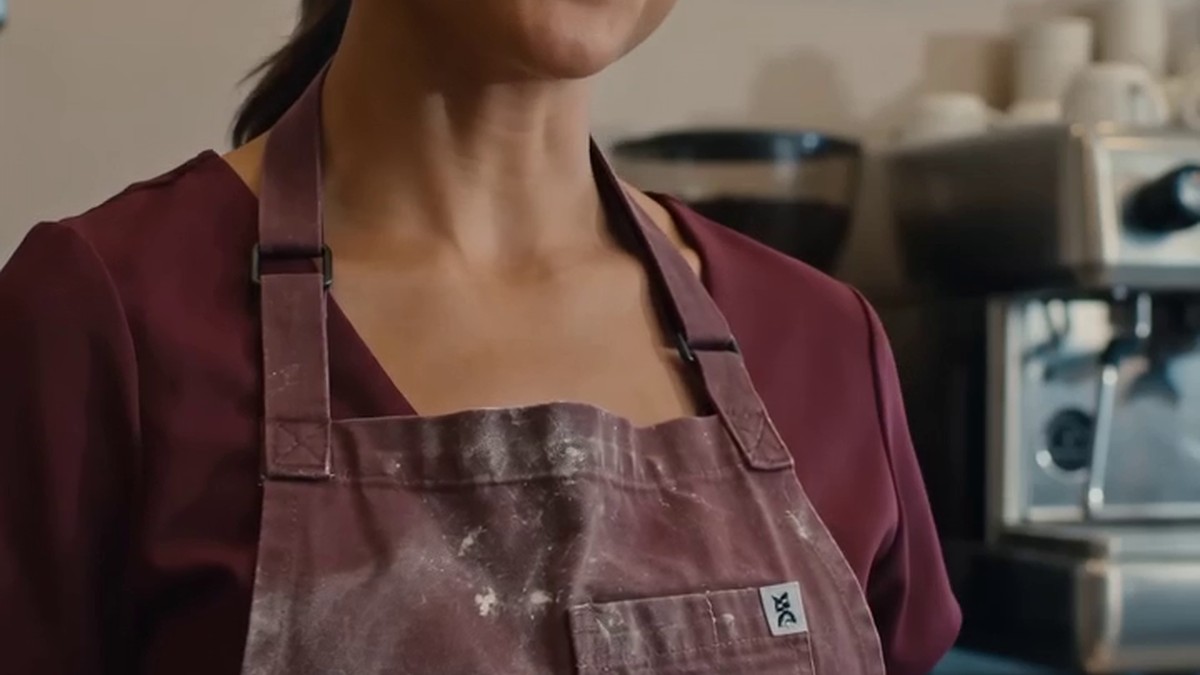
Dana came in near the back of the line in a burgundy dress from, I'd bet money, the Goodwill on Montgomery Street. She was short, round through the middle, with flour still dusted into the crease of her wrist. I found out later she'd come straight off a breakfast shift at the Clary's on Abercorn. Two of the younger candidates covered their mouths when they saw her. One of them said, not quietly, "Is she actually going to try the leg thing?"
Dana heard it. She didn't answer. She just waited her turn with her hands folded in front of her, the way you wait in line at the DMV when you've already decided the wait isn't worth your energy.
When her turn came, I told her the frame was narrow and she might be more comfortable sitting this one out. I wasn't trying to be unkind. I was trying to spare her the laughing.
She looked right at me. "If the rules are the same for everybody, I'd like to try."
Weston hadn't lifted his head off his hand all morning. At that, he did. "Let her."
The room went still the way a kitchen goes still right before a pot boils over.
Dana stepped up, put one foot and then the other into the brass stalls, and stood. I watched the dial — the one Tom built, the one only three people in Savannah have ever understood how to read — and the needle didn't move. Not a flicker. Twelve full seconds, which is six seconds longer than anyone had ever held it, and the needle sat dead center, like it was bolted there.
I'd seen that reading exactly once before, in a logbook my husband kept in a strongbox under our bed. Once, in 1988, for a woman named Margaret Calloway — Weston's mother, who died when he was nine. Tom had written beside her numbers, in pencil: "Steadiest I've ever measured. Tell the boy, when he's grown, that this is what he's looking for. Not the shape. The stillness."
Weston stood up out of his chair. Four years, hundreds of trials, and he'd never once gotten up. He crossed the room and asked Dana her name. She told him, and then she told him why her legs didn't wobble — twelve-hour shifts, eleven years, carrying four plates up one arm through a dining room with a bad floor, never spilling a drop of coffee on anybody's lap.
That's when Corinne Calloway came through the salon doors like she'd been listening at the top of the stairs, which, knowing her, she had been.
"The frame is clearly malfunctioning," she said. "Ruth, check the calibration."
I'd already checked it. I told her so. She told me to check it again. I told her I didn't need to, because I had my husband's logbook at home with the original 1988 reading written down in his own hand, and it matched this one to the decimal.
Corinne didn't want that logbook anywhere near daylight, and I understood why the second Weston asked me to bring it in that afternoon. Because once that book came out, it wasn't just about Margaret Calloway's riddle. It was about the other numbers Tom had written in the margins over the years — overtime hours for the seamstresses and fitters on the third floor, hours the Trust had been quietly rounding down since 2013, the year Corinne took over payroll. Eleven years of shortchanged overtime for six of us, totaling, once the store's own accountant ran it with Weston standing over his shoulder, one hundred eighty-six thousand dollars.
I want to tell you I planned that. I didn't. I just didn't want to lie about a calibration reading to protect a woman who'd never once, in nineteen years, asked whether I could afford my own rent.
Weston didn't make a speech. He asked the store's attorney, who happened to be upstairs finalizing the lease on the fourth floor, to draw up a release from the staff pension fund right there in the salon, on a folding table someone dragged in from the stockroom. He signed it himself, in front of the thirty remaining candidates, who by then had mostly stopped pretending they weren't watching. Corinne tried to say the Trust's board needed to approve it first. Weston told her the board had approved his inheritance of the voting shares that morning, the same morning she'd insisted on triple-checking a machine that had already told the truth.
She didn't say another word. She picked up her handbag and walked out through the same doors Dana had walked in through an hour before, and nobody held them open for her.
Dana didn't throw her arms around Weston or cry or any of what you'd expect from the ending of a story like this. She asked for a chair, sat down next to the fitting frame, and asked me if the money was going to actually land in our accounts by Friday, because she knew how trust funds could drag their feet. I told her I didn't know. She said she'd make sure of it, and three weeks later, when my check came through — four thousand one hundred dollars more than my usual pension deposit, the back pay split over six months — I believed her.
I still work the third floor twice a week, mostly out of habit now. The frame sits in the corner under a canvas cover. Nobody's used it since. Dana comes by sometimes on her lunch break from the diner — she kept the job, didn't quit, said she liked the regulars too much to walk away from a griddle for a ring. Last week she brought me a slice of peach pie wrapped in foil, set it on my sewing table without a word, and went back downstairs before I could even thank her.




The Folder on Hollyhock Lane
I knocked on my daughter's door the same week her name showed up on Channel 7 News with a number...


Dana Pruitt Didn’t Wobble, and the Calloways Finally Paid $186,000
I've fitted hems at Calloway's Department Store on Bull Street for nineteen years. I know the smell of that building...


Il peso che mio nipote Nicolò non voleva portare
Mi chiamo Edoardo Ferraris, ho quarantatré anni, sono geometra e vivo a Bergamo con mia moglie Chiara e i nostri...


Il furgoncino bloccato davanti alla scuola
Io quella mattina avevo solo voglia che il turno finisse. Mi chiamo Marco Ferretti, ho quarantadue anni, guido un furgone...


The $14,200 Lien My Mother Hid Behind the Toaster on Woodmont Avenue
My mother called me eleven times the week before she collapsed in the Kroger parking lot on Woodman Drive, and...


The Window I Broke for Biscuit Cost Me $612
Two days after I pulled a Pomeranian out of a locked Durango, I got a certified letter from the car's...


The Last Porch Light on Willow Creek Road
Ruth Ann Calloway hadn't planned on going to the shelter that Tuesday. She'd only stopped by the Bradenton Feed &...


Qualche tempo fa, un mercoledì mattina, mi svegliai con mille pensieri per la testa
☕ Buongiorno e buon mercoledì! A volte basta un piccolo gesto per trasformare una giornata qualunque in un ricordo prezioso....