
EN
The Folder on Hollyhock Lane

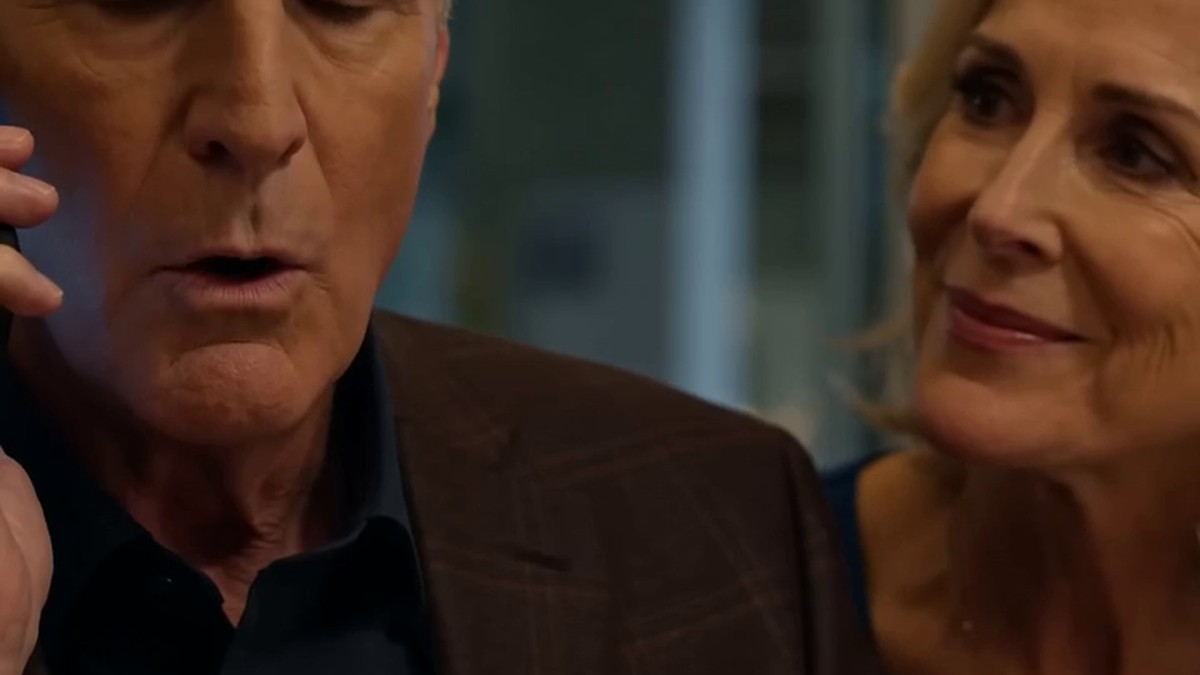
I knocked on my daughter's door the same week her name showed up on Channel 7 News with a number next to it: eight point four million dollars. That's the part people remember. What they don't know is what happened six months before that, at Giovanni's on Far Hills Avenue, with a sheet cake and balloons and my younger daughter blowing out thirty-one candles while my other daughter called from a hospital chapel in Dayton to tell me her husband and her two kids were dead.
I'm not going to pretend I come out of this looking good. I know how it sounds. But I want somebody to hear it the way it happened to me, not the way it looks from the outside.
That Tuesday started like any other Tuesday in April. Dana had been planning her birthday dinner for three weeks — deposit paid, private room reserved, her mother-in-law flying in from Columbus. My phone rang at 6:40 in the evening, right as the waiter was setting down the appetizers. I almost didn't answer it. Dana's dog, a beagle named Pepper, was barking at something out back and I remember thinking I'd have to let her out before we left for the restaurant.
It was Claire. Her voice didn't sound like crying. It sounded flat, scraped out.
"There's been an accident," she said. "Dale's gone. Tyler's gone. Maya too."
I didn't process it the way a father should. I know that now. I said something like "What happened?" and my wife Carol grabbed my arm because she could see my face change, and in the background Dana was tapping a fork against her water glass saying "Everybody, come on, gather around, I'm about to do the candles."
Claire asked us to come Friday. For the funeral.
And I told her — God help me, I told her — that Friday was Dana's birthday party, that the restaurant was already booked, nonrefundable deposit, Carol's sister flying in. I said it like I was rescheduling a dentist appointment. I didn't mean it that way in my head. In my head I was thinking, there's nothing I can do for Dale and the kids now, but Dana is standing right here with a cake in front of her and I can't just walk out.
That's not an excuse. It's just what was actually happening inside my skull at the time.
I didn't go to the funeral. Neither did Carol. Neither did Dana. My aunt Ruth drove six hours from Toledo by herself because a neighbor called her — not us — to tell her what happened. I think about that more than I think about almost anything else from those months. Ruth, seventy-eight years old, driving alone on I-75 because none of us picked up the phone to call her.
For six months we went on. Dana got engaged in June. We sent Claire the invitation. We put birthday photos in the family group text. Carol texted her something about missing her at Dana's party — I remember reading it over her shoulder and thinking it sounded wrong, but I didn't say anything, and that's on me too.
Claire didn't answer any of it. Not one message. I told myself she needed space. I told myself grief takes time. What I didn't let myself think was that we'd already told her, with our actions, exactly where she ranked.
Then came the Tuesday in January.
I was at the kitchen table doing the crossword when Carol's phone started buzzing on the counter, over and over, like a trapped fly. She picked it up, and I watched her face go white, then she turned the screen toward me.
CLAIRE WHITFIELD AWARDED $8.4 MILLION IN WRONGFUL DEATH SUIT, LAUNCHES TYLER & MAYA SAFETY FUND.
There was a photo. Claire in a dark coat, standing in front of a podium with pictures of Dale, Tyler, and Maya blown up behind her on an easel. The trucking company's insurer had settled. She'd announced a foundation that would fund child-safety seat programs and crash-barrier research on rural highways — the exact stretch of I-75 where it happened.
I called her three times before noon. Carol called twice. Dana called once and then texted a string of heart emojis like that would fix something. Nobody answered. The phone just sat there lighting up with our names, one after another, and I like to think Claire watched it happen the same way we'd once watched hers.
By four o'clock, Carol said, "We have to go see her. In person."
I didn't argue. I think some small ugly part of me was already doing math I'm ashamed of now — wondering whether there'd be anything left over for a family that had shown up for nothing in six months. I'm telling you that because it's true, and because it's exactly the kind of thing Claire needed to see written on our faces so she'd know, finally, what she was dealing with.
We drove out to Kettering, to the little brick house on Hollyhock Lane that she and Dale had bought the year Tyler was born. The porch light was on. There was a kid's bike missing from where one used to lean against the railing — I noticed that, and it hit me harder than I expected, because I remembered Tyler riding it up and down that driveway the last time we'd visited, which by then was almost two years ago.
I knocked. Then I knocked again, harder.
"Claire! Open up! We need to talk!"
The door opened slower than I expected. She was standing there in a gray cardigan, holding a manila folder against her chest like a shield. Behind her, a step back in the hallway, stood a man in a navy suit I didn't recognize — her attorney, it turned out, a guy named Phil Ostrander who'd driven over from his office on Main Street the second the story broke, because Claire had asked him to.
"Dad," she said. Just that. No hug, no invitation inside.
"We came as soon as we saw," Carol said. "Claire, honey, we're so—"
"You're six months late," Claire said. Not loud. Not shaking. Just flat, the same flat voice from the hospital chapel.
Dana started to say something about how she'd always meant to call, and Claire held up one hand, and Dana stopped.
"I'm not angry anymore," Claire said. "I want to be clear about that. I'm past angry. I just needed you to know what I'm doing, because you're going to hear about it anyway, and I'd rather you hear it from me standing in front of you than from a reporter."
She opened the folder and held it out. Not to me — to all three of us, I guess, since none of us moved to take it, so she just set it down on the porch railing, flat, so we could see.
Inside were two documents. One was the articles of incorporation for the Tyler & Maya Children's Safety Fund, every dollar of the settlement already assigned to it — a hundred percent, she told us, not a cent held back for herself beyond what the mortgage and her own bills required. The other was a notarized letter, dated that same morning, removing my name, Carol's name, and Dana's name as emergency contacts, as beneficiaries of any future estate, and as anything resembling next of kin on every piece of paperwork she still had the power to change.
"I'm not asking you to sign anything," she said. "This isn't a negotiation. I already filed it. I just wanted you to see it before you read about it somewhere else, too."
My mouth went dry. I remember reaching toward the folder and Phil Ostrander shifting his weight just slightly, not threatening, just present, the way lawyers stand when they want you to remember they're there.
"Claire," I said, "we're your family."
"You were," she said. "At the restaurant. On the phone, when I needed you in a chapel with my husband's blood still on my hands. You picked Dana's cake."
Nobody answered that. What was there to answer.
She picked the folder back up, tucked it against her side, and said, "The foundation's announcement is public. If you want to donate, the website takes donations like anyone else's money. That's the only way any of you will ever touch a dollar of this."
Then she stepped back, and the door closed. Not slammed — just closed, with the same ordinary click a door makes every day of the week, and I stood there on the porch step listening to Phil Ostrander's car start in the driveway behind us, and somewhere down the block a dog I didn't recognize was barking at nothing at all.
We didn't knock again. Carol cried the whole drive home on 675, and Dana kept saying, over and over, that she hadn't meant for any of it to happen like this, and I just drove, because there wasn't a single thing left in me to say that would have made a bit of difference to a woman who had buried a husband and two children while we lit birthday candles four miles away.
A week later the foundation's first grant went out — crash barriers for an eleven-mile stretch of I-75 near the county line. I read about it in the paper, same as any other stranger would.




The Folder on Hollyhock Lane
I knocked on my daughter's door the same week her name showed up on Channel 7 News with a number...


Dana Pruitt Didn’t Wobble, and the Calloways Finally Paid $186,000
I've fitted hems at Calloway's Department Store on Bull Street for nineteen years. I know the smell of that building...


Il peso che mio nipote Nicolò non voleva portare
Mi chiamo Edoardo Ferraris, ho quarantatré anni, sono geometra e vivo a Bergamo con mia moglie Chiara e i nostri...


Il furgoncino bloccato davanti alla scuola
Io quella mattina avevo solo voglia che il turno finisse. Mi chiamo Marco Ferretti, ho quarantadue anni, guido un furgone...


The $14,200 Lien My Mother Hid Behind the Toaster on Woodmont Avenue
My mother called me eleven times the week before she collapsed in the Kroger parking lot on Woodman Drive, and...


The Window I Broke for Biscuit Cost Me $612
Two days after I pulled a Pomeranian out of a locked Durango, I got a certified letter from the car's...


The Last Porch Light on Willow Creek Road
Ruth Ann Calloway hadn't planned on going to the shelter that Tuesday. She'd only stopped by the Bradenton Feed &...


Qualche tempo fa, un mercoledì mattina, mi svegliai con mille pensieri per la testa
☕ Buongiorno e buon mercoledì! A volte basta un piccolo gesto per trasformare una giornata qualunque in un ricordo prezioso....