
EN
A Casket Full of Concert Stubs

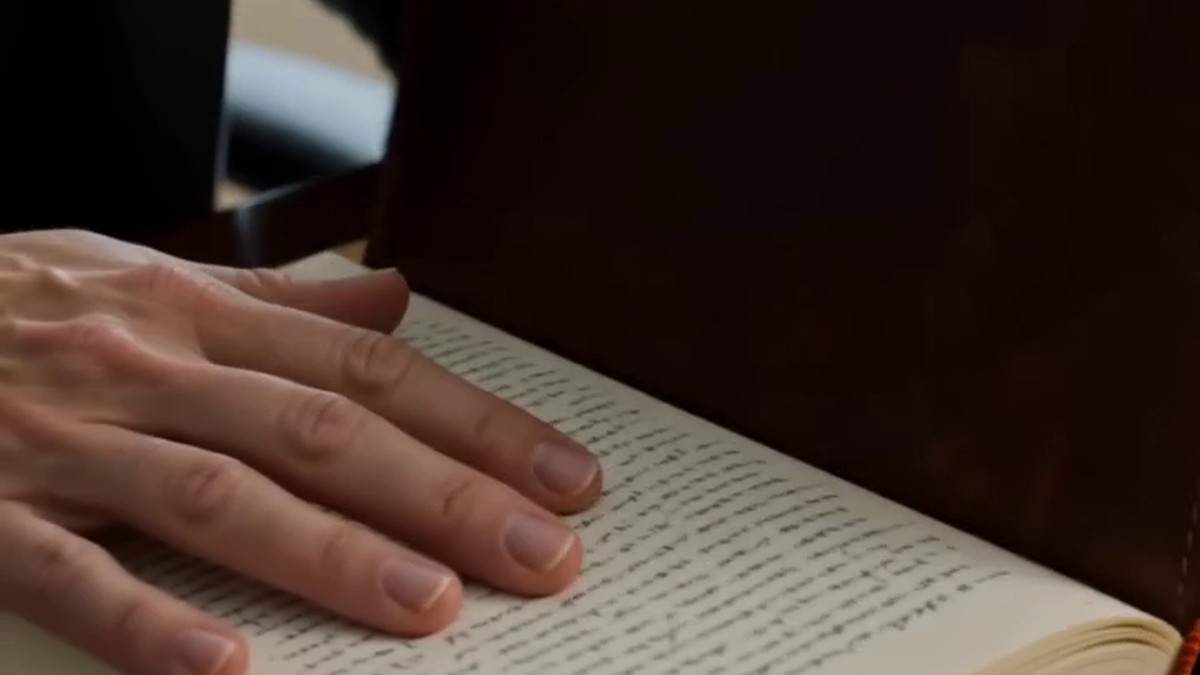
I've worked at the county records office in Hartford for twenty-three years. I sort documents, log files, pack other people's lives into cardboard boxes with typed labels. I thought nothing could surprise me anymore. But that one Tuesday in November, I got home at nine at night and couldn't fall asleep until three in the morning. Because of one woman, one scrap of paper, and a hundred dollars.
It started with a call from the historical society up in Litchfield. A young archivist, Megan, I think her name was, said they'd come into some private correspondence belonging to an old farming family from out near the Connecticut River, and asked if we could take it as a deposit, since the heirs wanted it stored somewhere secure. I agreed. On Friday the cardboard casket arrived — that's what I call it in my head: a box about three feet long, packed with letters, receipts, glass-plate photographs, pressed lavender gone brittle.
Out of that box tumbled three cloth-bound notebooks. A diary. The woman who signed them called herself "Caroline W.," and underneath, in a different ink, someone had added later: "Whitfield, née Ivens, Litchfield County."
It was her whole life laid out. Born into a well-off farming family, but the money never bought her any freedom. At seventeen she signed a marriage contract that was supposed to join her father's land to her husband's name. The diary held one sentence by itself on its own page at that point, like she'd had to swallow the rest first: "No one asked me if I wanted this."
Her husband gave her a roof, hired help, nice dresses, trips to Saratoga Springs. But it was a house built on nothing. The notebooks kept circling back to a cold bedroom, a table set for two where they ate without a word, and long evenings when she counted the days until her mother's next letter arrived.
Then, partway through the second notebook, the handwriting changed. It got faster, choppier. Caroline described a concert. A Hungarian pianist had come through Hartford — his name was written in pencil in the diary, like she wasn't ready to say it out loud yet: "Franz." The university hall was packed, people standing in the aisles. She sat in the sixth row in a navy dress with a high collar, and after the third piece she felt tears running down her face. Not from sorrow. From fury that in eleven years of marriage, no one had ever told her a person could feel like that.
She wrote about it later that night, sitting at her writing desk, gripping her pen so hard it left a dent in the paper. The ticket cost a dollar. She'd brought along a coin purse with change for the carriage and nothing more — her husband gave her a monthly allowance, accounted for down to the penny in a ledger she kept for him herself, like he was a child. But that evening she pulled a folded bill from under her cuff — a hundred dollars she'd been setting aside bit by bit from her sewing-notion money, for a whole year, telling herself she'd never actually spend it.
The musician's secretary, a young Italian man, stood there with his mouth open, repeating, "A hundred? For one ticket?" She told him her heart was worth exactly that price, and set the bill on the little table, pressing it down with one finger like she was afraid the wind might carry it off along with her resolve. It was the first purchase she'd made entirely on her own in eleven years of marriage.
And you know what? The way she wrote it isn't dramatic at all. In her notebook it reads plain, like she was noting down the price of flour for winter. That's what got me.
The diary breaks off suddenly, probably around the turn of 1847 into 1848. There's a gap after that, and then letters that don't read like a diary at all anymore: dry, full of formal phrasing, addressed to some lawyer in Hartford about a "legal separation." And after that — papers about the estate.
Here's something I've never done before: I sat with those documents longer than procedure required, and copied down, in my own words only, what I'd read in them — dates, names, case numbers. I'm not allowed to take originals out of the storage room, not even one page, and I kept to that. But what I'd read stayed with me for a whole week like a stone in my coat pocket.
Because I've worked in this office for twenty-three years, and I know exactly what things like a court's approval, seven signatures on an annulment, and a division of property are worth. I also know Caroline's life could be summed up in one sentence: she fell for a man she couldn't marry, and waited decades for a decision from church authorities. Finally, when they were both past sixty, the approval came through. The date on the document matched, day for day, the anniversary of that concert in Hartford — I didn't catch it until the third time I read it, and I had to set the paper down because my fingers were shaking too much to hold it steady.
And you know what they did with that approval? Nothing. The wedding was supposed to happen in a small chapel, the flowers were already ordered — it's right there in the receipts, a bill from a florist in Litchfield County. And then a sudden silence in the letters, lasting several weeks, and the first letter after that silence opens with: "I understand your decision, though I cannot make sense of it." I don't know who changed their mind. There's no trace in the files of an argument, no explanation, just that one bitter line, and then ordinary, calm letters again, like nothing had happened.
She rented an apartment in Boston and wrote books about religion. He took minor orders and settled near a seminary outside the city. Two separate addresses, a ten-minute walk across a bridge. For the rest of their lives they wrote to each other on paper with the same watermark — I checked under the lamp, holding the sheets one over the other: same mill, maybe even the same batch of paper bought in bulk years earlier, back when they still lived close to each other.
Monday morning I called Megan at the historical society. I told her what I'd been muttering to myself for three days, ever since I first opened those notebooks.
"Megan, you know what her freedom cost?"
"No," she said, like she thought I meant the total on some invoice.
"A hundred dollars, back then. Saved up year after year from sewing money. And then forty years of waiting for a piece of paper that didn't change anything anyway."
"So what came of it?"
I didn't answer right away, because at that exact moment I'd reached to the bottom of the box, where there was one more envelope I'd missed on the first pass. Inside was a concert ticket. The paper gone yellow, one corner torn off, but the price still clear: one hundred. Next to it, a lock of dark hair tied with a faded ribbon, and a small card where someone else, after her death, had added in pencil: "the last thing she never gave away."
"That ticket, the hundred-dollar one — she kept it until the day she died," I finally said. "Even after she called off the wedding. She never sold it, never burned it. She kept it."
I closed the box and pulled the storage room key toward me, and put the ticket and the lock of hair back in the envelope, right where they belonged — at the bottom, under the letters, just as I'd found them.
There's a red geranium on my windowsill that I overwater, and sometimes, when I'm alone in the records room, I straighten the labels on the boxes, like that's what keeps the whole place in order. That evening I stayed an hour later than usual. I didn't take the short way home. I walked along the river, past couples laughing, past students heading back from the college. In my coat pocket I carried my own notebook, no original document, just my own words copied from someone else's life, and still I felt the weight of it, like I was carrying something I had no right to take out of there.
I still don't fully understand what she did. I just know that on my desk right now sits a slip of paper with three words I copied from her notebook before I put it back where it belongs:
"I paid for myself."




Mi hanno detto che il cane stava per morire, invece quella frase ha fermato tutti
Elena era davanti al box numero sette e il cane dentro non alzò nemmeno la testa. Dietro di lei, una...


A Casket Full of Concert Stubs
I've worked at the county records office in Hartford for twenty-three years. I sort documents, log files, pack other people's...


Patatine di Chiara
Quando Rosa tirò fuori dalla borsa l'ennesimo contenitore — plastica, coperchio a scatto, portato apposta da casa — a Chiara...


The Note in Mrs. Castellano’s Pocket
I run the front desk at Birchwood Commons, a six-story co-op off Grand Avenue in Albany, New York, and I've...


The Jar on the Kitchen Windowsill
The IV line hummed in the quiet of Room 412 at St. Agnes Children's Hospital in Tulsa, and I counted...


Il panino da due euro che ha zittito una dinastia
Il profumo di porchetta e rosmarino usciva dal furgone di Elena Marchetti da sempre, ogni mattina alle sei, in Piazza...


Il cognome che Romano non conosceva
Chiara Bellini stava ancora sanguinando quando Romano Ferretti entrò nella sua stanza alla clinica Villa San Raffaele di Monza con...


La casa di Positano che Ashley non sapeva fosse mia
C'erano quattro giorni di sole, il profumo di limoni dal giardino sotto la terrazza e il rumore del mare che...