
EN
Clementine Waited by the Door, and I Almost Said No

My name is Renee Castillo, and for six years I've run intake and adoptions at Mad River Animal Rescue, a cinderblock building off Needmore Road in Dayton, Ohio, with a buzzing fluorescent sign and a vending machine that's been broken since March. I'm telling you this part of the story because the woman who adopted the puppy, Dana Ferris, only saw half of what happened that Saturday. I saw the other half. And honestly, for about four hours, I was the obstacle standing between a mother dog and the only thing she still wanted.
Clementine came to us seven weeks earlier, pulled out from behind a collapsed equipment shed on a soybean farm off Route 48. A county worker heard crying through a rusted door panel. We moved the five puppies first, little blind things barely able to stand, and Clementine wouldn't let us put a leash on her until every one of them was carried out and set down beside her. She counted them. I watched her do it with her nose, touching each puppy twice before she'd stop shaking.
Both her eyes had gone cloudy from an untreated infection, the left one almost solid white. Our vet said she was maybe four years old, worn down from repeated litters, and that her sight wasn't coming back. She learned the shelter by scent and vibration within three days. She never once ran into a wall.
By the Saturday I'm talking about, four of her five puppies were already placed. Only Pepper was left, a stocky little guy in a new green harness, already weaned, already sleeping away from his mother most nights. Everyone on staff figured his adoption would be the easy one.
Dana Ferris came in around eleven that morning. She works nights as a pediatric nurse at Miami Valley Hospital and had that specific kind of tired you only recognize if you've worked twelve-hour shifts yourself — steady hands, slow blink, the look of someone running on vending-machine coffee. She fell for Pepper in about ninety seconds. Her husband Tom was home finishing a fence in their backyard in Kettering, so she signed the paperwork alone.
At 11:42, she picked him up off the exam table. Pepper turned his head toward the hallway. Clementine, behind the low gate near the lobby, lifted her ears and walked forward until her chest pressed against the metal bars. Her nose worked once, twice. She knew exactly whose scent was leaving the building.
Dana crouched and offered Clementine her hand to smell. Then she said, "I'll take care of him," like that sentence could cross the gap between two species. The lobby door opened. Pepper went out into the parking lot. The door closed.
Clementine didn't bark. She didn't throw herself at the gate. She walked over, pushed her nose into the half-inch gap under the door, and lay down flat against the tile.
I grabbed her orthopedic bed from the back room and dragged it toward the entrance, laid a blanket on it that still smelled like her litter, even scattered a trail of kibble leading to it. She followed partway, then a side door opened for a delivery, and she abandoned the whole setup to go check.
That happened on repeat for three hours. A family walked in to look at cats — Clementine stood. A volunteer came back from a Subway run — Clementine stood. A dog food delivery truck pulled up out back and she heard the dolly wheels through the wall and stood again. Every single time, she was wrong. She drank water from her bowl near the counter but wouldn't touch food. No emergency, no collapse, nothing I could log on an incident report. Just a dog refusing to stop waiting.
Here's the part Dana never saw: I had already decided, before any of this, that I wasn't going to suggest Clementine go home with her. We'd had three returns that spring — people who adopted bonded pairs with good intentions and brought the older dog back six weeks later because two animals, two vet bills, two sets of needs, turned out to be more than they'd planned for. A blind senior dog isn't a small commitment. She'd need ramps, consistent furniture placement, someone who wouldn't rearrange a living room without thinking about it first. I wasn't trying to be cold. I was trying not to set Clementine up to lose a second home the same week she lost her last puppy.
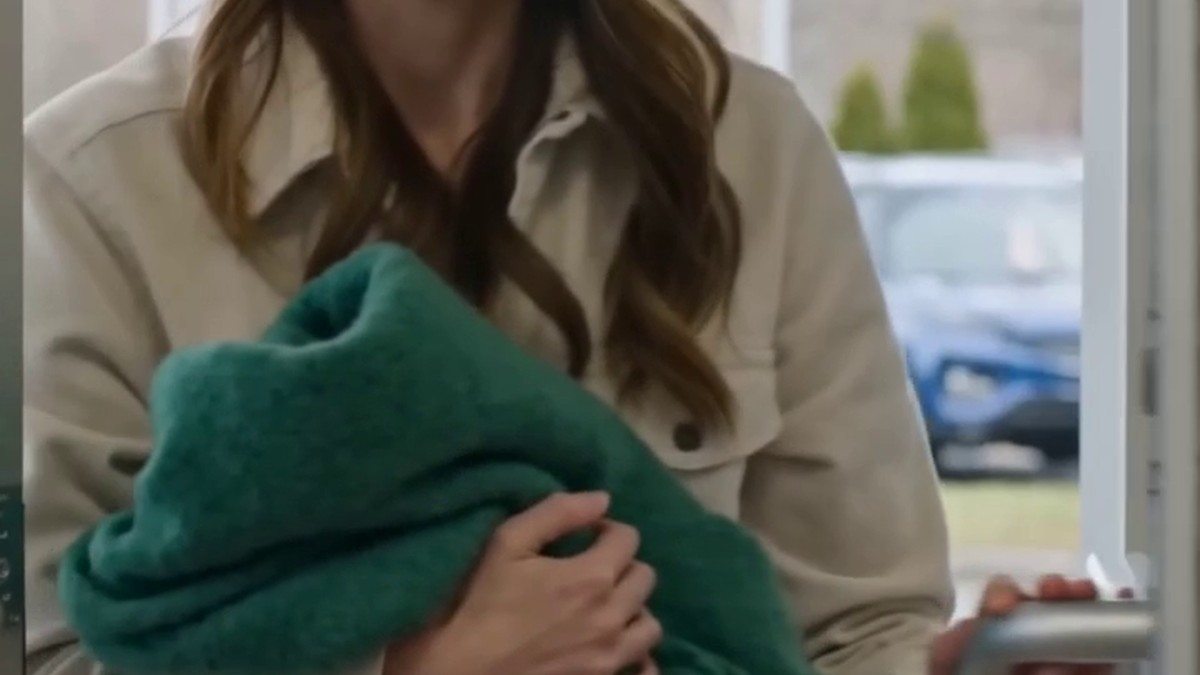
Pepper, meanwhile, was already in the Ferrises' kitchen in Kettering, sniffing a fenced yard, testing out a new dog bed by the stove. But every time he settled, he shoved his face into the green fleece blanket Dana had brought from the shelter — the one that still smelled like Clementine. Dana watched him do it for a solid ten minutes before she picked up her phone.
She called at 3:17. "Could Clementine live with him?" she asked me.
I didn't say yes. I also didn't say no. What I said was, "Come back. Let's actually talk about what she needs" — because I needed to see Dana's face when she heard the whole list: the quarterly eye exams, the no-rearranging-furniture rule, the fact that senior blind dogs sometimes live eight more years and sometimes live eight more months, and you don't get to know which going in.
Dana left Pepper with Tom and drove back across town with the green blanket on her passenger seat.
When she got to Clementine's gate, she didn't call out or try to touch her. She just set the blanket down on the tile. Clementine's ears went up immediately. Her nose moved twice, then she stood and crossed the floor one careful step at a time, testing each tile the way she always did, until her face found the fabric. She breathed it in.
Then she didn't curl up on it. She turned straight toward the lobby door and stood there, waiting — not for the smell of her puppy, but for the puppy himself, like seven weeks of nursing, four lost litters, and total blindness still hadn't convinced her that her job was finished.
I watched Dana cover her mouth with her hand. I'd seen a lot in six years at that counter, and I still had to walk into the back office for a second.
When I came out, I pulled the senior-dog folder from the file cabinet — we run a program called Golden Years Forever that waives most of the fee for dogs over six, and I stretched the paperwork to cover Clementine even though she was likely only four, because by that point I'd stopped pretending this was about policy. I filled in a companion-adoption addendum, the kind we use when a second pet goes to a home that already adopted from us within thirty days. Total cost: forty-five dollars, microchip transfer included.
Dana signed it at the counter without reading the second page. Tom showed up twenty minutes later with Pepper in the truck, because I'd called him myself and told him to just come. The second Clementine heard that specific jingle of Pepper's new harness tag through the lobby door, she was on her feet before the door even opened.
I scanned Clementine's chip, then Pepper's, logged the transfer in our system, and watched the two of them walk out of Mad River Animal Rescue together on a Saturday afternoon in July, Clementine's leash in Dana's left hand and Pepper's in her right. The broken vending machine was still flashing its "exact change only" sign behind them. Somewhere in the parking lot a cicada started up, the way they do in Dayton the second it hits ninety degrees.
I filed the paperwork, closed the folder, and went back to my counter, because there was still a line of people waiting to adopt cats, and my daughter had a soccer game at six I was already going to be late for. I didn't think about it as some kind of lesson. I just knew the forty-five dollars was the cheapest thing I'd ever been glad to waive.




No Nails on Magnolia Street
The plastic bag is still warm from his pocket when Mark Sullivan sets it on the desk between himself and...


Clementine Waited by the Door, and I Almost Said No
My name is Renee Castillo, and for six years I've run intake and adoptions at Mad River Animal Rescue, a...


Eleven Years at Carol’s House, Then I Paid My Own Way to Maple Ridge
The smell out here on the terrace is fried catfish from the dining hall vent and somebody's cigarette two tables...


Danny Mercer’s 100th House, Paid Off, Toledo, Ohio
In the fall of 1977, Danny Mercer was eighteen, two months out of Rogers High School with no diploma and...


Qualche giorno fa mia figlia mi ha telefonato mentre stavo sistemando la cucina.
A una certa età, il programma ideale per il sabato sera è un pigiama comodo, una tisana calda e nessuno...


The $150 the Churro Cart Made Off Kate Hudson’s Kiss Scene on Ninth Avenue
I've run my cart on the corner of West 45th and Ninth for eleven years. Coffee, churros, the occasional bacon-egg-and-cheese...


Seven Years in the Shadows, One Night of Courage
At one in the morning, a boy walked into the police station on Elm Street in Rockford, Illinois. He gripped...


The Dog Who Knocked Over a Folding Table on East Passyunk
I run the front counter at a vet clinic on East Passyunk in South Philly, and most of what I...