
EN
“Ma’am, do you really believe he’s going to make it?”

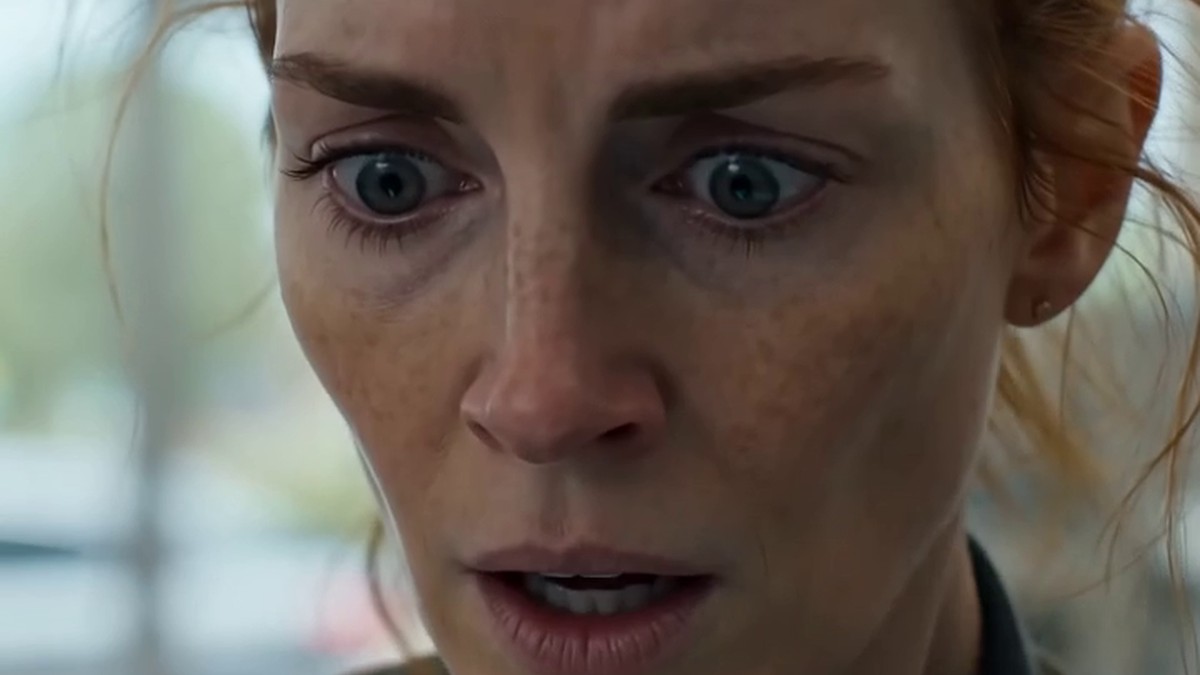
**"Ma'am, do you really believe he's going to make it?"**
My neighbor Deb stood in my kitchen doorway with a carton of milk in her hand, looking at me like I'd just announced I was going to save a field that had already burned to the ground. Outside it was dark already, the temperature had dropped into the thirties, and my husband Mark wasn't back yet from his night shift. We had a bathroom renovation hanging over our heads and eight thousand dollars of debt I was trying hard not to think about.
And I had a bundle sitting on my lap.
It didn't have a name yet. It was about the size of a matchbox, gray as ash, with legs that couldn't hold up its own weight. It hadn't made a sound in a while — just trembled, so faintly that if I hadn't been holding it, I wouldn't have believed there was any life in it at all. Only one side of its body rose and fell.
I'd found it by the dumpster behind the post office, walking home from the all-night pharmacy. At first I thought it was a dropped glove. Then the glove moved.
Somebody had left it there. I knew it right away, because something that small doesn't cross a parking lot on its own. Millbrook, upstate New York. Late November. Everybody else was hurrying home with bags of the first clementines of the season, thinking about the kettle on the stove.
"Listen," Deb set the milk on the counter and wiped her hands on her windbreaker. "I'm telling you this as a neighbor. Because my heart's breaking here. But look at it. You've got your job, you've got Mark, you've got enough on your plate already. Anybody can see this isn't a kitten that's going to pull through."
"Deb," I said, "I already fed him."
"Fed him what? He's not going to make it a week."
"He will. And if he doesn't, at least I'll know I did everything I could, instead of knowing I threw a living thing in a trash bag."
Deb pressed her lips together, picked up the milk, and left. But she left the milk behind.
That's how it started. With that carton of milk.
I fed him with a needleless syringe I could only get from one pharmacy, because Alice at the counter never asked questions. Every three hours. At night I set alarms for one, four, seven a.m. At first Mark grumbled that with all this going on he couldn't get any sleep before his shift, and then one night I woke up and his side of the bed was empty. I padded barefoot into the kitchen. He was sitting at the table, the kitten tucked against his work jacket, dripping milk from his fingertip because the syringe had clogged.
"Go back to bed," he said, not looking up. "I've got him tonight. You sleep."
I named him Gus. I don't know why. After my grandfather, who spent his whole life bringing home broken things from the junkyard: a radio that played again after a week, an umbrella that lasted him fifteen more years after he stitched it up, a dog with one eye. Gus. The name just walked in and joined the rest of our life, the way things did in our house.
The vet in Albany, where we drove once a week, told us plainly and calmly:
"He's never going to walk normally. His joints are just put together wrong. He may need extra care his whole life. I understand you're weighing the costs — the special prescription food runs about ninety dollars a month."
"I understand," I said, even though I had last visit's receipt for sixty dollars in my bag and was doing math about groceries in my head.
And then I'd watch Gus wash himself.
It was a whole production. He'd raise a paw, aim for his ear, miss, and topple onto his side. Then he'd sit back up. Raise the paw again. Topple again. It went on for fifteen minutes. And he never once got tired of trying.
My husband, who hadn't even liked cats before Gus, would sit there with the remote in his hand and watch a cat attempt to wash his face instead of watching the game. The game would be running in the background, twenty million dollars' worth of players sprinting up and down a field, and Mark would talk to the back of the cat's head:
"Stu, leg to the right. There you go. No, not like that. Try the other one."
And when Gus finally landed a paw on his ear, Mark would clap. Actually clap.
Gus also had this expression on his face that made people forget how to talk the first time they saw him. Yellow eyes, round, set a little too close together. Eyebrows shaped like little awnings. And this permanent look of total astonishment, like he'd just found out milk comes from a cow and had no idea what to do with that information.
I remember when Rachel, the bookkeeper from my office, stopped by. The shop was closed for inventory and she needed to drop off some paperwork. Gus walked into the front hall, sat down, and fixed those yellow eyes on her.
Rachel set her purse down on the floor. Very carefully.
"Ellie. What's wrong with him?"
"Nothing. That's just his regular face."
"He looks at everyone like that?"
"All the time. He wakes up surprised."
Rachel stood there a moment with her mouth open, then pulled out her phone and took a picture. Then another. Then a third. And said:
"It's like he just saw God in an elevator holding a jar of pickles."
That's how it began. With one photo in a front hall.
Then there was the co-op board meeting. Deb, the milk lady, happened to be in charge of the community bulletin board that month and suggested putting up a photo display of cats with disabilities, to show people they don't have to be perfect to be loved. I said yes. I gave her three pictures of Gus, labeled "Gus, age 1, wobbly walk, absolutely happy." Somebody wrote on the neighborhood Facebook group that it was the best face they'd ever seen on any community bulletin board, ever. Somebody else shared it to a wider local group. By evening I had two hundred likes. By morning, seven hundred.
Then the real avalanche hit.
I got a message from a woman who ran an account called "Hudson Valley's Imperfect Cats." She asked if she could repost Gus's picture. I said sure. Then a friend of hers in Brooklyn saw it. A month later Gus was on a flyer for a local awareness campaign about caring for cats with disabilities. On an actual flyer. Somebody scheduled a photo shoot with my cat. A photographer drove up from Brooklyn, laid a silver backdrop on the floor, and Gus sat right in the middle of it, staring at her like he'd just been told pasta grows on trees.
The photographer laughed for a solid minute. Then she said you couldn't hire a model like that for any amount of money.
And that's when the offer came in — the one I never told anyone about.
An ad agency out of Manhattan reached out wanting me to sign an exclusive contract to use Gus's image for a veterinary pet-food campaign. The number: six thousand dollars. Real money, especially for a cat that, according to Deb, wasn't supposed to survive the week.
But what surprised me wasn't the money.
It was that the company wanted exclusive rights. A clause banning me from posting any pictures of Gus in any context other than the ones they approved. Another clause said I could lose any say in how my cat's image got altered. Designers could redraw his face, swap the background, slap on a caption that wasn't even true. It wasn't that I wanted to keep Gus locked away from the world. It was that these people had never seen him spend fifteen minutes failing to wash his own face, or watched my husband clap for him like he'd won something.
I read the contract three times. I stood with it by the kitchen window while the season's first sleet came down outside. Gus sat on the radiator with an expression like he'd just figured out the meaning of life and was a little let down by it.
Then Deb called.
"Ellie," she said, quieter than I'd ever heard her. "I know what they offered you. Because they called me too, asking if I'd confirm that I found the cat. They wanted a whole tearjerker story. Wanted me to say I'm the one who saved him. That he's alive today because of their food. You understand? That they'd supposedly been feeding him since he was blind."
I froze with the contract still in my hand.
"Ellie," Deb went on, "I told them where to go. Not because I've got anything against you. Because it's not true. You raised him off your own finger. Mark too. All I did was leave milk on the counter. One time."
The contract pages sat on the table, foreign, stiff, cold. Under the kitchen light they looked like a bill for a miracle.
I called Mark. He said not to sign anything until we could sit down together. So we sat. Dinner was over, the tea had gone cold, Gus was asleep in the cardboard box he'd picked out for himself, even though we'd bought him a ninety-dollar cat bed.
"You know what I see?" Mark said, picking up one of the pages. "I see a trap. They pay you six grand now, and then every single time you want to post a picture of our cat, you'll be worried you're breaking some contract. And what do you even want to show people — the real cat who falls over trying to wash his ear, or a cat with a logo stamped on his forehead?"
He suggested I write back and say no to exclusivity. I offered them a counter: they could use one set of Gus's photos, unedited, no invented backstory, for fifteen hundred dollars.
The agency wrote back three days later. They declined. Said they needed multi-year image rights because the campaign required continuity.
I tore up the contract.
I dropped the scraps into an empty jam jar and used them as kindling in the fireplace, which hadn't worked in years until Mark finally fixed it that winter. Gus watched the flames from the couch. He had the look of a cat who'd just discovered he couldn't count past ten and had no idea, for the life of him, what had gone wrong.
I don't regret it.
Because he's not a brand. He's not a campaign concept. He's just a cat who lives with us in a second-floor apartment in Millbrook, has a strange-shaped head, walks lopsided, and can't wash himself properly. And every single time he tries, and it takes forever, I sit down on the floor next to him and watch. Not because I feel sorry for him. Because I respect him.
When he finally lands a paw on his ear, I tell him:
"There you go, Stu. Knew you had it."
And he looks at me with those yellow eyes like he's just found out he was wrong about something. And that's the strangest part of this whole story: he always looks like everything surprises him. And the thing that seems to surprise him most is that every time he tips over sideways, I'm still right there.
The photo exhibit went up at the public library two weeks ago. A crowd came, because the weather was miserable and the library was warm. In the middle of the room they set up a large print of Gus. Caption: "Gus, age 1, wobbly walk, absolutely happy. Rescued in Millbrook. A true story."
I stood off to the side watching people take pictures. There were so many I lost count.
Gus sat in Mark's arms, looking at his own poster with an expression like he'd just been told all cats can read.
Deb came over, hugged me with one arm, and straightened my husband's collar with the other.
"See," she said to me, quiet enough that only I could hear. "And I said he wouldn't make it."
"Deb," I said, "you're the one who left milk on the counter."
She looked at the cat, then at me, and smiled the way someone smiles when they know there's nothing left to say.
Because he wasn't supposed to survive the week.
This morning I found an envelope in the mailbox from Manhattan. Same agency. They're writing to say they're dropping the exclusivity clause. They say they read about Gus online. They say they'd like me to talk to their team about what it's like caring for a cat with disabilities. For free. Because they want to learn.
I hold the envelope over the trash can, right at the edge, the paper already bending under my fingers. Outside it's sleeting again. Gus sits on the radiator watching me like he's trying to figure out why that envelope smells like an office building, air conditioning, and fresh toner.
I pull my hand back from the trash. I set the envelope on the windowsill, next to the geranium pot, and weigh it down with the jam jar so the draft from the window won't blow it away.
The cardboard box Gus slept in his first few weeks sits on top of the closet now. Mark says he's going to throw it out next week.
He won't.
I know him.




The Mistake That Cost Eleven Years
**The Mistake That Cost Eleven Years** She opened her eyes at five fifteen. No alarm clock — she'd stopped setting...


Wdowia korytkówka, sekcja 14 i pudełko po śniadaniach
Ostatnie osiemset złotych z konta wydałam na dwa bilety w sektorze dla niepełnosprawnych, blisko murawy, na mecz Legii. Kiedy dotarliśmy...


“Ma’am, do you really believe he’s going to make it?”
**"Ma'am, do you really believe he's going to make it?"** My neighbor Deb stood in my kitchen doorway with a...


Nowe życie po drugiej stronie lustra
Nazywam się Bartek Zawadzki, mam trzydzieści cztery lata i pracuję jako elektryk w firmie budowlanej pod Wrocławiem. Piszę to, bo...


The Woman Who Brought Candy, Two White Poodles, and Never Asked Us for Anything
**The Woman Who Brought Candy, Two White Poodles, and Never Asked Us for Anything** The first time she came to...


Mamo, wciąż z tobą rozmawiam
Mamo, wciąż z tobą rozmawiam. Ja, Basia, czterdzieści sześć lat, mieszkam od dwunastu lat z mężem i dziećmi w Bydgoszczy,...


Плита автомайстерні на Раїси Окіпної
Мене звати Тарас Дубенко, мені сорок один, і я той самий сусід, через якого сталася вся ця історія з тіткою...


Автомийка на Чечелівці, яку я мало не втратив
Мене звати Тарас, мені сорок два, і сімнадцять років я тримаю автомийку на два пости біля Аульського мосту в Дніпрі....