
EN
The Long Deployment

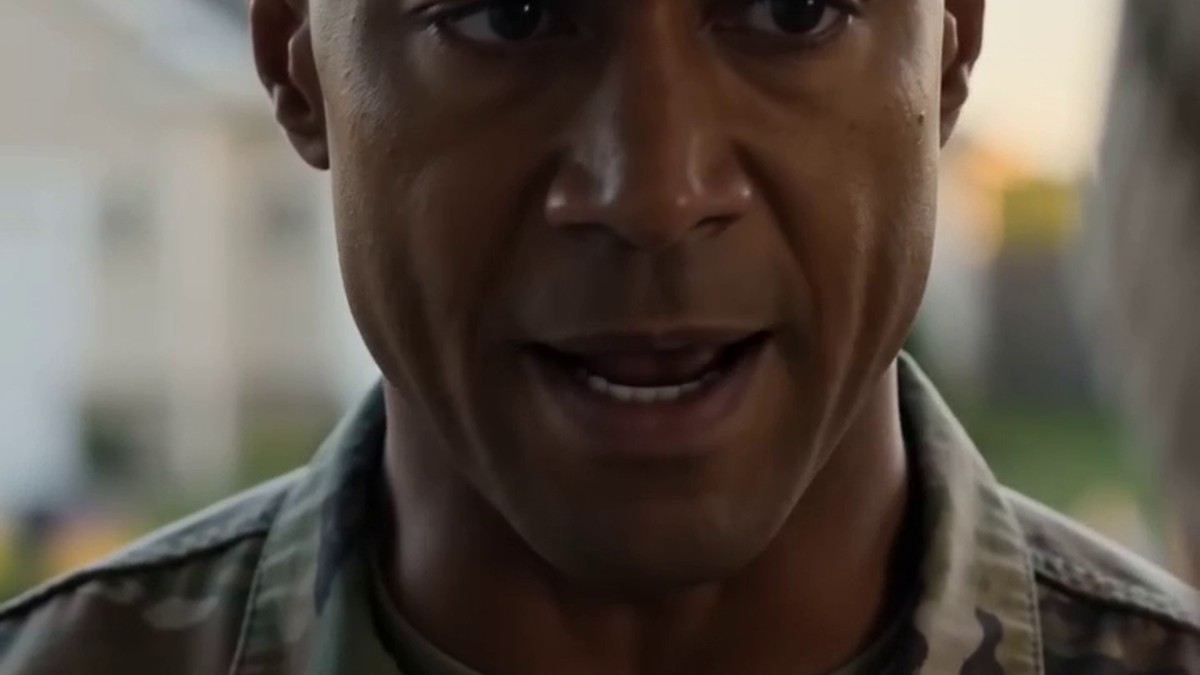
Four years of combat pay, almost every dollar of it, went straight into a joint account back in Millbrook, Ohio. I'd checked the balance from a laptop in a supply tent outside Kandahar and told myself: that's the house. That's Reyna's future. That's us finally getting ahead.
When my unit got an unexpected seventy-two-hour window before redeployment, I didn't call anyone. I wanted to walk through my own front door and watch my wife's face break open with surprise. I pictured her dropping a dish towel and running.
The cab dropped me at the end of Sycamore Court a little after four in the afternoon, and for a second I thought the driver had the wrong address. Vinyl siding, freshly painted the color of wet sand. A black Ford F-250 in the driveway, still wearing dealer plates. String lights looped along a new pergola. I stood there with my duffel bag thinking, we made it.
Then I heard water running behind the garage.
Reyna was kneeling over a plastic basin, scrubbing a roasting pan with her bare hands. She had on a knit cap, even though it was eighty degrees out, and her wrists looked like something you could snap between two fingers. A ceramic plate lay in shards near her knee, and she was picking up the pieces one at a time, like she was afraid of making more noise than she already had.
My mother's voice came through the screen door before I could say a word.
"Tell Baldy she's not allowed out here while we have company."
That was my sister, Delaney, actually — I heard her laugh follow it a second later. Reyna's whole body went rigid. She turned, saw me standing there in uniform, and instead of running to me, she stumbled backward and covered her head with both hands like she expected to be hit.
That's the part I can't unsee, even now. She flinched from me.
I crossed the yard and pulled the cap off her head as gently as I could manage. Her scalp was shaved down to stubble, nicked in three or four places, some of it scabbed over.
My mother, Carol, came out onto the back steps in a robe that still had the boutique tag hanging off the sleeve. Delaney trailed behind her, thumbing through a phone I didn't recognize, a designer bag over one shoulder that cost more than my last paycheck.
"She did that to herself," Carol said, barely glancing over. "Bleached it with some drugstore kit and fried the whole thing off. Then she got it into her head she had to starve herself skinny on top of it."
Delaney snorted. "She burns through your money and still wants everybody to feel sorry for her."
Reyna didn't defend herself. She didn't say anything. But her sleeve rode up an inch when she lowered her arm, and I saw it — a strip of medical tape over the crook of her elbow, the faint bruised track of an IV that hadn't fully healed.
Four years in the Army teaches you one thing above almost everything else: when people are lying to you, you don't tip your hand until you know the whole shape of the lie.
So I smiled.
"Actually, I came back with good news," I said. "My deployment pay and the hazard bonuses finally cleared. Just under two hundred grand."
The temperature in that backyard changed instantly. My mother started talking about redoing the kitchen. Delaney was already scrolling car listings on her phone, mentioning a trip to Cabo. Neither one of them asked why my wife could barely stand upright.
That night I found out Reyna wasn't sleeping in our bedroom. She'd been sleeping in the garden shed, on a cot with a sleeping bag that smelled like motor oil and rain.
She sat next to me on that cot in the dark and started unbuttoning her shirt with hands that shook. Below her collarbone was a scar I didn't recognize, still pink at the edges.
"I have cancer," she said. "They found the tumor five months ago."
Everything I thought I understood folded in on itself right there.
She told me the rest in pieces, stopping every so often like she was checking whether I was still going to be angry with her instead of for her. She'd begged my mother for sixty dollars to see an oncologist for a first consultation. Carol had refused, and then told her she was faking symptoms to try to get her hands on my deployment money before I even got home. Delaney had started monitoring her phone calls, deleting numbers, listening in when the clinic called back.
So Reyna did the only thing she could think of. She cut off her own hair and sold it to a wig supplier in Columbus for around three hundred dollars, enough to cover a bus ticket and the biopsy copay. While my mother and sister slept upstairs in a house furnished with money I'd earned overseas, my wife had sold pieces of herself just to find out if she was going to live.
I held onto her and told her to hang on a little longer.
I lay awake next to her the rest of that night in that shed, listening to the house creak above us, thinking about every wire transfer I'd sent home and where it had actually gone. Somewhere around three in the morning, I stopped being furious and started being methodical, because I knew exactly what I needed to do before the sun came up.
At 6 a.m. I called the bank's emergency line from the shed doorway, mostly out of earshot, and had the joint account frozen pending a fraud review — I still had my military ID and deployment orders as proof of identity, and four years of deposit records with my name on every single one. Then I called Dr. Wexler's office, the oncology clinic Reyna had been seeing on and off, and paid the outstanding balance in full over the phone with my own debit card: eleven thousand, four hundred dollars, the number burned into me because I watched it drain the balance in real time.
By eight, I had Reyna in the truck — the F-250 that had dealer plates because nobody had bothered registering it in anyone's actual name yet — and drove her to Wexler's for a full workup, not the rushed, cash-strapped visits she'd been scraping together. I sat in the waiting room and filled out the insurance forms myself, using my military health benefits, the ones that had been sitting unused the entire time because nobody in that house had thought to ask about them.
When we got back to Sycamore Court that afternoon, my mother was standing in the driveway with a bank statement printed out, asking why the account showed frozen. Delaney was on the porch, arguing with someone on the phone about a car loan that had just gotten flagged.
I didn't yell. I set my discharge paperwork and the fraud claim confirmation number on the porch table where they could both see it.
"The house is in my name," I said. "The truck's in my name. The account was mine. As of this morning, all three of those things are closed to anyone who isn't on Reyna's treatment team or mine."
Carol started to say something about family, about sacrifice, about how she'd raised me. I let her finish. Then I told her the moving truck would be there Saturday, and that she and Delaney had until then to find somewhere else to keep the bags and the truck they liked so much.
Reyna didn't watch them pack. She sat on the shed's cot with a folder of new appointment cards on her lap, running her thumb along the edge of the first one, the one for the following Tuesday, the one that actually had her real diagnosis written on it instead of a guess.




Він забрав квартиру, тепер хоче забрати мій спокій — розказує Марко
Мене звати Марко Гнатюк, мені сорок два, і я працюю технічним директором у логістичній компанії у Вінниці. Розказую цю історію...


Ключ, який не підійшов до батькового замка
Того ранку, коли ховали батька, Марина Гончар виявила, що замок на дверях гаража на Троєщині вже не відкривається її звичним...


Розлучення на межі Карпат: тепер батько Мари вирішує, скільки коштує моя тиша
Я не пам'ятаю точно, коли зрозумів, що більше не витримаю. Може, тоді, коли Ірина вдруге лежала в лікарні, а моя...


The Cookie Tin on Maple Street
# The Cookie Tin on Maple Street Eleanor is seventy-two years old and has one rule she never breaks: on...


The Long Deployment
Four years of combat pay, almost every dollar of it, went straight into a joint account back in Millbrook, Ohio....


The Nurse and Two Rosaries in the Safe
**The Nurse and Two Rosaries in the Safe** I heard this from a woman who ran a care home in...


The Notebook That Went to Riverside Drive
I handed my daughter the holidays after thirty-eight years, and I did it without a single ounce of resentment. I...


Widow Denied Shelter by Her Son Learns Her $47M Trust Has a Trap Clause for Him
The rain had been coming down since noon, and by the time Diane Holloway's cab pulled up outside her son's...