
EN
Kittens Left Behind at Fort Worth Station

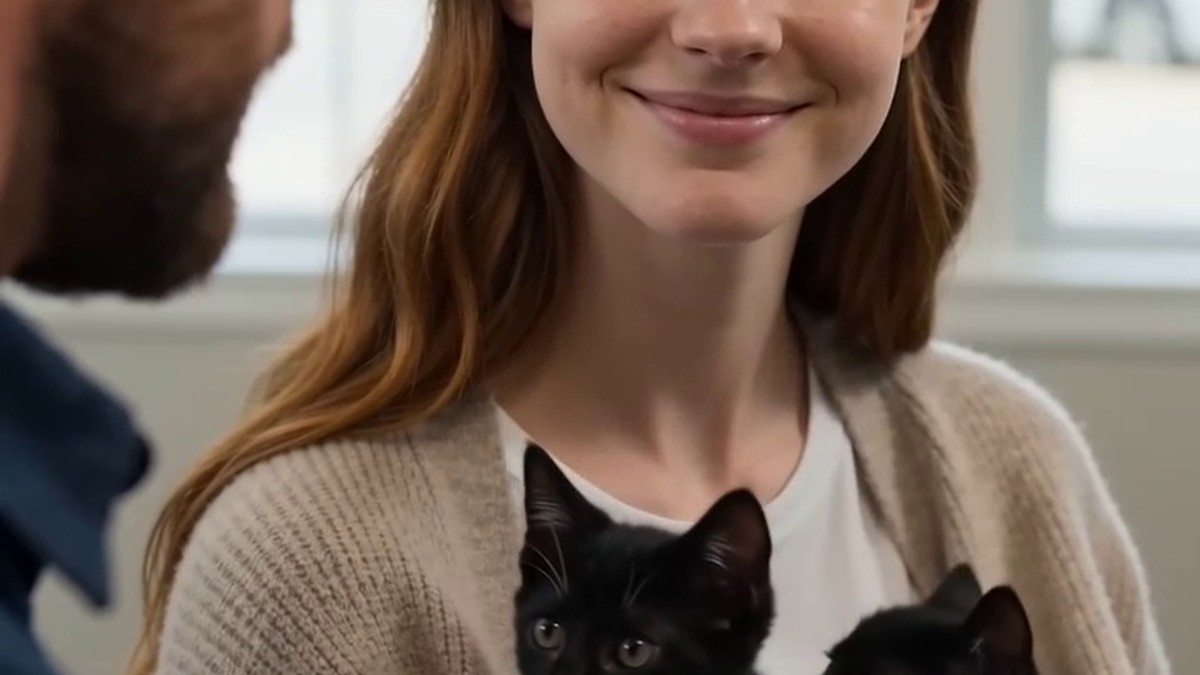
Grace Whitfield had exactly six minutes before the 7:40 to Chicago pulled out, and her boyfriend Marcus was already checking his watch for the third time.
"I told you not to go over there. I told you." He hoisted the duffel bag higher on his shoulder. "Now we're gonna miss it, and there goes our whole trip."
In the little patch of grass beside the Fort Worth Amtrak platform, two black kittens tumbled over each other in the early light — brothers, maybe eight weeks old, fur the color of spilled coffee grounds. Nobody else gave them a second look. A man in scrubs walked past on his way to a shift change at the hospital across the street. A woman dragging a rolling suitcase steered a wide half-circle around them without even seeming to notice she'd done it.
The kittens had a system by now. Whenever footsteps got close, they froze and stared up, hopeful, like maybe this was the pair of hands that would finally scoop them up. When the footsteps kept moving — swallowed by the diesel rumble of an idling train or the hiss of a bus pulling into the lot next door — they went back to wrestling each other in the dirt, sharpening claws they didn't know yet how to use.
Their mother had been gone eight days. She used to bring back scraps from the dumpster behind the Waffle House on Commerce Street, but one morning she just didn't come back. Now the two of them fended for themselves, picking through fast-food wrappers, waiting for somebody — anybody — to stop.
Grace had heard the warning already, twice this week alone. Her aunt Deb had actually swerved the car once to avoid a black cat crossing Highway 287, muttering something about bad luck under her breath. And an older man at the gas station two days ago had yanked his grandson's hand back when the boy reached for a kitten just like these, telling him black cats "carry the devil in 'em."
Grace didn't believe any of that. She'd grown up with a barn full of cats on her grandmother's place outside Waco, and not one of them had ever brought anything but mouse carcasses left proudly on the porch mat.
"Ignore them, Grace," Marcus called again, sharper this time. "We are going to miss this train."
She'd already put her bag down.
She crouched, and the smaller of the two kittens — the one with a notch missing from his left ear, like something had already tried to take a piece of him — pressed his head into her palm before she'd even finished reaching. The second one climbed straight into her lap like he'd been waiting for a seat to open up.
"Ira—" Marcus caught himself, using the pet name that had stuck since college, back when she used to bring home every stray dog in a five-block radius. "Grace. What are you doing? Put them down, we've got four minutes."
"I heard you." She didn't look up. Both kittens were purring now, loud enough that she felt it in her chest more than heard it. "I'm just not doing what you're telling me."
She didn't have kids yet — they'd talked about it, in the vague way people talk about things three or four years out — but something in her had already decided these two counted. Not as pets. As emergencies.
Marcus set his own bag down next to hers, arms crossed. "You know people say black cats are bad luck, right? My grandmother wouldn't let one in the house if you paid her."
"So what am I supposed to know?" Grace stood, one kitten tucked into each arm now, dirt already smudged across her white t-shirt. "That two eight-week-old kittens are cursed because somebody's grandmother in 1962 stepped on a nail after seeing one? Marcus, they're starving. Look at them — you can count every rib."
He looked. He didn't want to, but he did, and the notch-eared one looked back at him with the kind of unblinking directness that made him feel, for one uncomfortable second, like the kitten understood exactly what was being decided.
The station clock read 7:37.
"Grace, I am begging you. The tickets are nonrefundable. We booked this trip in March."
"Then go." She wasn't yelling. That was somehow worse. "I'm not leaving them here to get run over by a shuttle bus or picked off by something at that dumpster. I'm not doing it."
For a second neither of them moved. A conductor down the platform called the two-minute boarding warning over a speaker that crackled worse than it should for a station this size. Somewhere behind them, a stroller wheel squeaked past, a mother hushing a toddler who wanted to pet the kittens and was being told, gently, "not now, baby."
Marcus looked at the train. He looked at Grace, streaked in dirt, holding two shaking animals like she'd already made a decision that included him whether he agreed to it or not. He thought about the deposit on the lake house in Michigan they'd split three ways with his brother. He thought about how many times, in four years together, Grace had asked him for something and he'd said not now.
"You're serious," he said. It wasn't a question anymore.
"Dead serious."
He exhaled through his nose, grabbed both duffel bags off the bench, and hooked one over each shoulder. "Then we're both staying. I'm not putting you on a train alone and I'm sure as hell not getting on one without you over a couple of kittens I now apparently own."
The 7:40 pulled out three minutes later, empty of two passengers who'd paid full fare and one folding stroller's worth of luggage that got left, briefly, at customer service until Marcus jogged back for it.
They named the notch-eared one Waffle, after the restaurant where their mother used to scavenge. The bigger one, who never stopped headbutting anything within reach, became Biscuit. The vet on Riverside Drive — a walk-in clinic that squeezed them in between a Rottweiler's checkup and someone's parakeet — said both kittens were underweight but otherwise fine, no worse than a hundred other strays she saw that month, and definitely no more cursed than the parakeet.
They rebooked the trip for the following month. Amtrak charged a sixty-dollar change fee per ticket, a hundred and twenty dollars total, which Marcus paid without a single complaint, because somewhere between the station bench and the vet's waiting room he'd stopped being the guy worried about missing a train and started being the guy who now kept a bag of kitten kibble in his car.
A year later, the lake house trip they'd finally taken was barely a memory — a few photos on Grace's phone, nothing more. What stuck was smaller and stranger: two black cats sprawled across the foot of their bed every single morning, Waffle's notched ear twitching at the sound of the coffee maker, Biscuit headbutting Marcus awake at six a.m. sharp like he had somewhere to be.
Marcus's grandmother met them at Thanksgiving that year, took one look at Waffle curled in Grace's lap, and said, without missing a beat, that black cats were bad luck.
Grace just handed her a plate of stuffing. "Tell that to the two hundred and forty dollars in vet bills that turned into the best decision I made all year."
The old woman didn't argue. She just reached down, scratched Biscuit behind the ears, and let him fall asleep against her hand before dinner was even served.


Ворота Тараса
Мене звати Ольга Іванівна, і зятя мого звали Тарас. Ось хай хтось скаже, що я упереджена — так, упереджена, бо...


Кава на двох, розмова на одну
Мене звати Соломія, мені сімдесят два, і цю історію я розповідаю з боку Карменти — так, так, мене всі так...


The Scar That Exposed Sixteen Years of Lies
**The Scar That Exposed Sixteen Years of Lies** We were supposed to stand under the chuppah at seven that evening,...


The Bridge on Maple Street
Ten-year-old Callie Hensworth had a name she refused to use, and a woman she refused to call by it either....


Kittens Left Behind at Fort Worth Station
Grace Whitfield had exactly six minutes before the 7:40 to Chicago pulled out, and her boyfriend Marcus was already checking...


The Deed That Didn’t Need His Signature
# The Deed That Didn't Need His Signature The day Marisol bought the house, San Antonio was in the middle...


Пес на прив’язі за метром двору
Мене звати Оксана, мені сорок три, і сімнадцять років я працюю адміністраторкою в приймальні притулку для тварин на околиці Житомира...


Заборгованість майстерні Ковальчука
Мене звати Тарас Гринюк, мені сорок два, і я одинадцять років керую автосервісом на Замарстинівській у Львові. Той сервіс мені...