
EN
The Flight That Grounded Everything

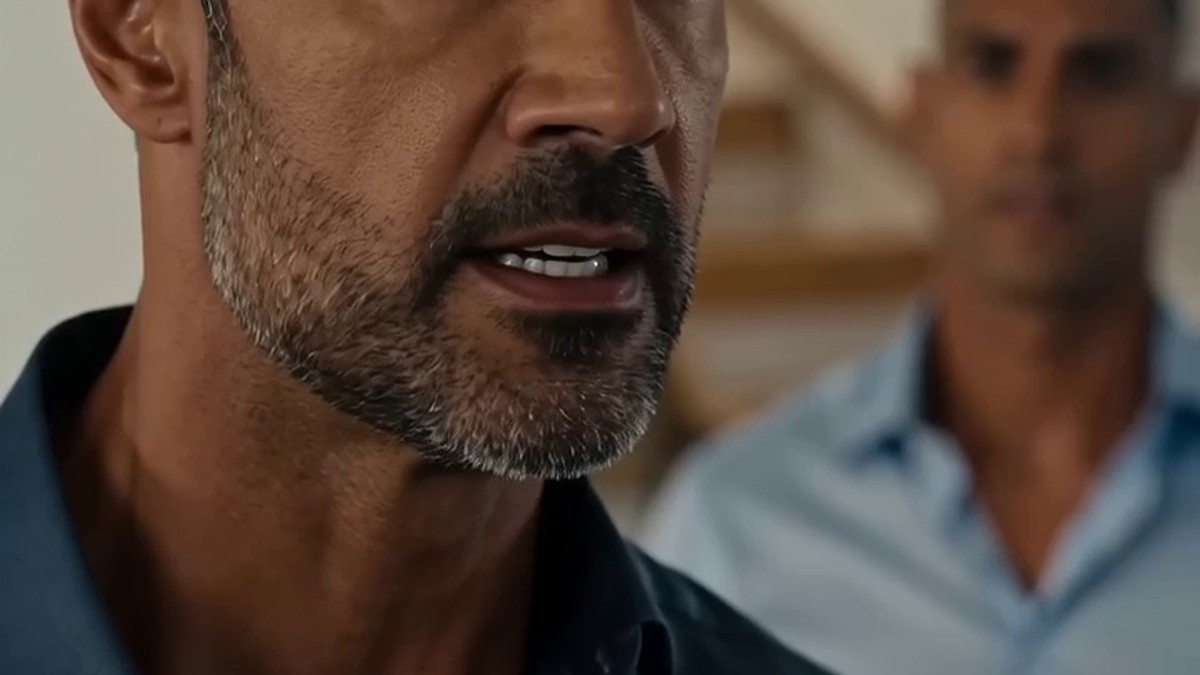
My name's Daniel Ferris, and I want to tell you about the Tuesday my 4:15 flight got canceled over Charlotte and I found out what a decade of friendship was actually worth: $540,000.
I was supposed to be in Atlanta that night, closing a restoration contract worth $9.2 million for my company, Ferris Structural Group. A line of storms rolled through, and instead of booking a hotel room by the airport, I grabbed an Uber home to Winston-Salem. I wanted to surprise my wife Renee with an actual night together — we'd barely had dinner alone in weeks.
The Uber dropped me a block early because of a water main crew blocking the street, and that's the only reason I saw it before I saw anything else: a gray Ford F-250 I knew better than my own truck, parked crooked in my own driveway like it owned the place. It belonged to Marcus Teague — my college roommate, my best man, and the godfather to my daughter Hope.
Across the street, old Mrs. Okafor was out watering her azaleas in the dark, which she never did. She saw me. She didn't wave. She just looked down at the hose like it had suddenly become very interesting.
I stood on the sidewalk under a dead streetlamp, duffel bag in hand, and looked up at our bedroom window. The shade wasn't even drawn. Renee stood there in the blue robe I'd bought her for Christmas, hair down, and behind her — a hand on her shoulder. She leaned back into it like it was nothing new.
My phone buzzed in my pocket. A bank alert.
*Business transfer authorized: $540,000.00*
I checked it twice, because my brain refused to connect the number to anything real. Five hundred forty thousand dollars had just left the operating account of Ferris Structural Group and landed in an account belonging to Teague Commercial Holdings — Marcus's company.
I let myself in through the side door by the garage, the one with the squeaky hinge I'd meant to oil for two years. Two wine glasses sat on the kitchen island next to a half-eaten charcuterie board — the good prosciutto, the kind we only bought for holidays. Laughter drifted in from the living room.
In the hallway I found Marcus's jacket slung over the banister. But what waited for me in the bedroom was so much worse than infidelity.
Spread across the bed: loan documents, corporate resolutions, copies of my driver's license, printed emails from my company account, and my laptop sitting open to my own banking portal. One page showed a transfer of a 49% ownership stake in Ferris Structural Group. Another had a signature on a wire authorization that looked almost exactly like mine. I'd never signed it.
They weren't expecting me until Monday — I'd told Renee twice I'd be flying straight from Atlanta to a site walk in Raleigh. The canceled flight had broken their whole calendar, and they hadn't bothered to put anything away yet.
Then I saw a folder, hand-labeled in Sharpie: SUNDAY SIGNING.
Inside, a document waiting for my signature. I read the last clause twice before the real shape of it hit me — the $540,000 wasn't the theft. It was the down payment on something much bigger.
I walked downstairs. Marcus was pouring himself another glass of the Malbec I kept for client dinners.
"Five hundred forty thousand dollars, Marcus. That's what fifteen years of friendship costs now?"
I laid the photos of the documents on the coffee table.
"There's also a 49% transfer, a forged signature, and my email account logged in from your laptop."
He set the bottle down without pouring. "You told me he'd come around eventually," he said — not to me. To Renee.
"Don't put this on me," she snapped. "You said it was clean. You said he'd never even have to know until it was done."
That sentence hurt worse than anything I'd seen on that bed. Renee hadn't just been sleeping with my best friend. She'd known the plan.
"The transfer reads as an advance on a buyout," Marcus said, like he was reading from a script he'd rehearsed in the car. "And you can't prove who signed what. You go to the police, it's your word against documents three lawyers helped draft."
I didn't say anything else. I picked up my duffel bag, walked out, and sat in my truck in the driveway for eleven minutes before I called Dale Whitfield, the attorney who'd handled my father's estate and knew our family longer than I'd known Marcus.
That night I checked into a Hampton Inn off I-40. I sat on the edge of the bed with the TV off, took the hotel notepad out of the nightstand, and started writing down every date I could remember Marcus "stopping by" over the past year. By the time I filled the second page, my hand was shaking too much to keep the letters straight, and I put the pen down and just sat there with the air conditioner humming until it got light outside.
My Ring doorbell had been quietly logging Marcus's visits for months, every time I traveled.
Dale didn't say anything for a long moment after I told him everything. Then: "Don't confront them again. Go home. Let them believe you're ready to forgive."
"Sunday they're going to push you to sign," he said. "By then, we'll be ready."
The next morning I drove back home practicing my face in the rearview mirror the whole way — tired, defeated, bending. Renee ran down the stairs in one of my old UNC sweatshirts, eyes swollen.
I set my laptop bag by the door and didn't say anything at first. I thought about the girl I'd met at a Wake Forest tailgate twenty years earlier. The one-bedroom apartment off Peters Creek Parkway we furnished with a credit card. Our daughter Hope's first steps in that same kitchen. Sunday mornings with biscuits from the Krispy Kreme on Stratford before either of us had six-figure accounts or business trips.
Then I did what Dale had asked.
"I can't erase twenty years in one afternoon," I told her. "I want to understand what happened."
She swore it was a mistake. Swore Marcus had manipulated her. Swore she'd never meant to take anything from me. I kissed her forehead and went to make coffee, and while the machine ran I stood at the counter with my back to her so she couldn't see my face.
For two days I played the hardest role of my life. I took her to dinner at the place on Trade Street. I sat through her describing what happened with Marcus as "a stupid moment of weakness." I even agreed to look into couples counseling.
Meanwhile, Dale assembled a small, quiet team. A forensic document examiner compared the signatures to a decade of originals and found clear inconsistencies. An IT consultant traced the email logins to devices registered under Marcus's name. The bank froze part of the $540,000 before it cleared out of the country through a shell account in the Caymans. Mrs. Okafor handed over her own doorbell footage voluntarily — twenty-six separate visits from Marcus, every one timed to a business trip.
But the piece Dale needed most hadn't shown up yet.
Sunday morning, Renee got a text and tried to act like it didn't matter.
"Marcus wants the three of us to have dinner. Says he wants to hand back the money and settle this like adults."
I kept my eyes on my coffee mug and didn't answer right away.
The dinner was set for a steakhouse downtown, the kind with white tablecloths and a $38 ribeye. Dale had already filed a complaint with the Forsyth County District Attorney's economic crimes unit and turned over the first batch of evidence, and two detectives would be seated at the bar before we sat down — Dale made sure of that going in. There was no theatrical reveal planned, just paperwork, a documented money trail, and a dinner where Marcus would almost certainly try to get me to sign something validating the whole arrangement.
He walked in wearing a navy suit, smiling like a man who still believed he was in control.
Renee sat between us, her hands clenched around her purse strap the whole time.
Marcus ordered a $90 bottle of Cabernet, told old stories from our fraternity days, talked for close to ten minutes about mistakes and second chances. Then he slid an envelope across the table.
"This is the fix. I walk away from the equity stake, the money gets wired back, and we close the book on this whole mess. All you have to do is sign that there was never any intent to harm you."
On the last page was exactly what I expected: a clause acknowledging I'd verbally pre-authorized the earlier transactions and waiving any future claims.
I took out my phone and set it face-up on the tablecloth.
"I've been recording since I sat down. My attorney already knows this conversation is happening."
"The stupid thing I did," I said, "was years ago, when I confused trust with an open invitation into my life."
"Logins to my company email from devices tied directly to you."
"Twenty-six separate entries into my house, timestamped by my own neighbor's doorbell camera."
I tapped the document he'd handed me.
"You're asking me to sign that I authorized transactions you denied making three days ago. And you're offering to return money you swore was a legitimate advance."
"Tell him it was your idea," Renee blurted out suddenly. "Tell him, Marcus."
"You promised me he'd sign and then we'd sell the company out from under him," she said.
Marcus's jaw worked, but nothing came out. Renee had just blown apart the only defense they'd built together.
The two detectives from the bar walked over and identified themselves. No scene, no handcuffs in front of the whole restaurant. They told Marcus he needed to come in for questioning and that he was free to call a lawyer. Marcus set his wine glass down so carefully, so slowly, that it barely made a sound against the tablecloth.
"That's what friends used to do," I said, "before they decided to ruin each other."
When Marcus was walked out between the two officers, Renee sat frozen, both hands flat on the table like she was trying to keep it from tipping over.
"You were my friend when you handed him my passwords. You were my friend when you walked into my office at 9 a.m. like it was nothing. You were my friend at our fifteenth anniversary dinner, already planning this."
"That's the worst part," I said. "It's probably true. And you still chose to do this to me."
Hope was nineteen, a sophomore studying mechanical engineering at NC State. I'd told her everything that same morning because I didn't want her hearing some twisted version secondhand. She'd driven down from Raleigh. She wasn't going to walk into the restaurant, but once she got there, she asked to see me outside.
"I just need to know one thing. Did you know about the company?"
Renee had followed us out and tried to explain that it was complicated. She talked about loneliness, about Marcus, about feeling invisible for years.
Hope stood with her arms crossed, listening to the whole thing without interrupting.
"That's enough," she said. Two words that ended the marriage more completely than any document in that folder.
Renee kept talking anyway, faster now, her voice climbing — she'd pay back everything, testify against Marcus, start therapy, start over completely. She reached for my sleeve and I stepped back onto the curb.
"Tell the truth," I told her. "For Hope, if nothing else. But don't come looking for me."
The frozen funds were recovered almost in full. The documents never produced the ownership transfer Marcus had planned. Combined with the digital trail, the bank records, the handwriting analysis, and the text messages Renee eventually turned over, the DA's office built a case showing the plan had been in motion for close to a year.
I sat through one day of the trial — the day the forensic examiner walked the jury through the signature on the wire authorization, blowing up my real signature next to the forged one on a screen at the front of the courtroom. From where I sat I could see the difference in the pressure of the pen strokes before the examiner even pointed it out. Marcus stared at the table the entire time. Renee wasn't in the room.
About sixteen months after that dinner, a Forsyth County jury convicted Marcus on charges of wire fraud and forgery. The court ordered restitution. Renee, who'd cooperated and turned over the texts that sealed Marcus's conviction, got probation. Dale called me with the verdict while I was standing in a Lowe's parking lot, and I remember I just stood there by my truck for a minute before I unlocked it.
The company survived. We closed that Atlanta contract a few weeks later than planned, and the next year we landed a bigger project outside Charlotte. With part of the profit, I started something I hadn't planned on: a legal and counseling fund for people dealing with financial exploitation inside family relationships, run out of our local Legal Aid office.
Mrs. Okafor was the first person I invited to the small launch event.
"I just handed over some video," she said, waving off the thanks.
"No," I told her. "You chose not to look away."
Hope eventually transferred to a program closer to home so she could be near me. For a while, she barely mentioned her mother. I never told her she had to hate Renee, and I never told her to forgive her either. That decision belonged to her and nobody else.
One Sunday almost two years later, Hope and I sat on Mrs. Okafor's back porch with coffee and a box of Krispy Kreme donuts Hope had picked up on her way over.
"For a while, yeah. A lot," Hope said, picking at the glaze on a donut that had gone stale in the box. "Until I figured out hating her just meant I was still keeping a room for her in my head."
She finally gave up on the donut and dropped it back in the box, laughing at herself.
Later that afternoon I drove out to a lookout point near the Blue Ridge Parkway and parked. I got out, leaned against the tailgate, and let the truck's radio run low through the open window while the hills turned orange in the last of the light. I still had a half-full cup of gas station coffee in the cup holder, gone cold hours ago, and I reached in and poured it out over the gravel before I climbed back behind the wheel and headed home.




Bikini da 90 euro e la scoperta che nessuno si aspettava
Di quella foto ero abbastanza fiera. La spiaggia di Sabaudia, il sole basso, io in un bikini turchese comprato in...


The Flight That Grounded Everything
My name's Daniel Ferris, and I want to tell you about the Tuesday my 4:15 flight got canceled over Charlotte...


Il mendicante alla Basilica di Superga
La pioggia aveva smesso di cadere proprio mentre Elena Ferraris usciva dalla Basilica di Superga, sopra Torino, con il velo...


La morta che allattava al battesimo
Il giorno in cui scoprii che mio marito era vivo, per poco non ci andavo. Era una domenica di fine...


Il tovagliolo di lino al Caffè Bellavista
Elena Ravazzolo aveva imparato a riconoscere il rumore dei tacchi sul pavimento di cotto ancora prima di alzare gli occhi....


Diciannove anni e un cuore che impara a restare
Ad Alessio Ferraro non piaceva parlare della notte in cui diventò padre. Non perché fosse un segreto, ma perché ogni...


Il topper da ottanta euro
— Mamma si trasferisce da noi sabato, le lasciamo la nostra camera — annunciò Davide senza alzare gli occhi dal...


Il miele dell’ultimo vagone
Il treno sobbalzò per la terza volta in un minuto e il tè nel bicchiere con il portabicchiere d'argento fece...