
EN
Thirty-Six Years of Dread: How Aunt Esther Kept the Family on a Short Leash

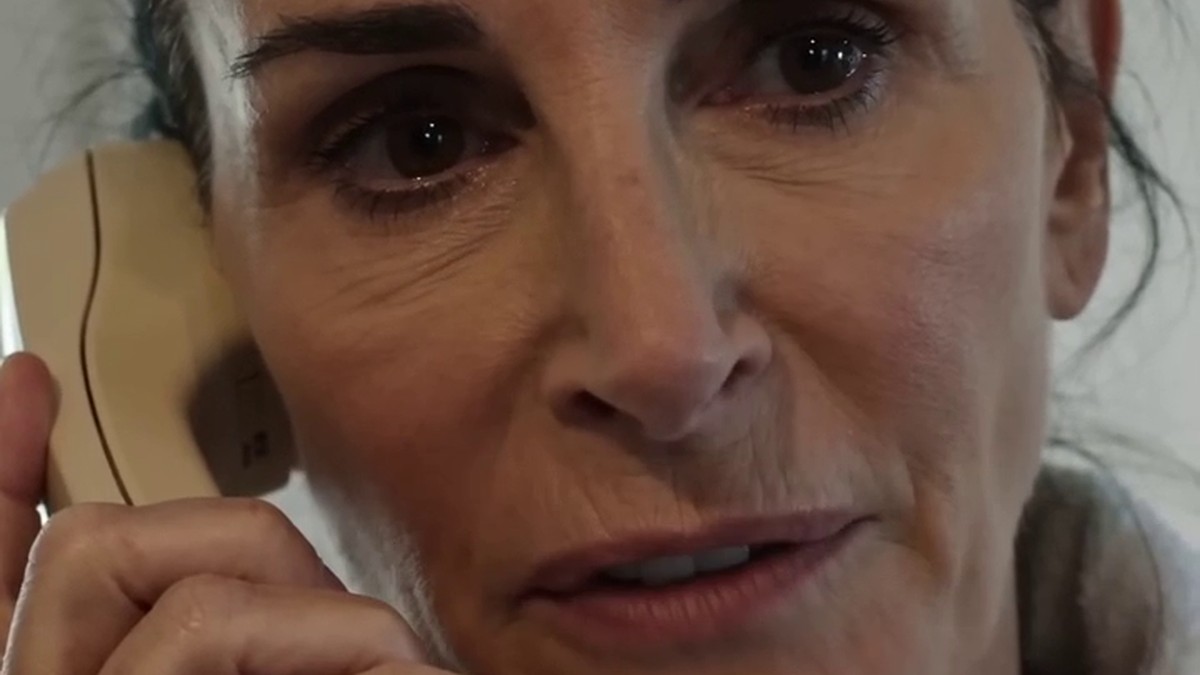
It's a sweltering August afternoon in Cleveland, the kind of heat that makes the sidewalk on Lorain Avenue feel soft underfoot. In a second-floor apartment in the old Tremont neighborhood, in a room with high ceilings and a box fan rattling like it's got a bumblebee trapped inside it, Sylvia Rabinowitz is lying on the couch, moaning as if this is her final hour on earth.
"Marty, I feel awful," she tells her husband. "Just awful."
Martin Rabinowitz, sixty-two years old, thirty-six of them married to this woman, sets down the *Plain Dealer* and looks at his wife with the particular alertness of a man who has long since memorized every variety of her "awful."
"Should I call 911?" he asks, though he doesn't believe it for a second.
"What 911, Marty! Doctors don't know anything!"
Here he could argue — medicine has come a long way, there are new medications, there are cardiologists who went to real medical schools. But there's no point arguing. A battle is coming, and he needs to save his strength.
"So what do we do, Syl?" he asks carefully.
"Endure," she answers, in the voice of a woman who has maybe forty minutes left to live.
This is a serious signal. Martin knows that particular "endure" in exactly one context — it means they have to drive out to Aunt Esther's place in Shaker Heights.
Aunt Esther is in a category all her own, the kind of relative every family has a word for. You don't say outright that she's mean or unbearable — you just say, simply, "her." And everyone immediately understands who you mean and what's waiting for you there.
She's feared in the family for the reasons she's always been feared: she's the oldest, she was first, she remembers every funeral and every debt, and she knows things about everyone that are better left unsaid at a wedding or a shiva. Sylvia's mother, still alive back when Martin first joined the family, told him plainly: "You visit Aunt Esther. That's just how it is, end of story." And for thirty-six years, that period at the end of the sentence held firmer than any prenup.
"Maybe we take the RTA down to the lake instead, get some air?" Martin tries, offering a small sacrifice to buy his way out. The sacrifice is purely symbolic, by the way — Sylvia controls every dollar of the household budget, down to the last cent.
"Marty, I can't even make it to the front door!"
"Then maybe we're due at Mount Olive to visit the plot?" he says, half-joking now, going on the counterattack. "You know, Syl, my blood pressure's been acting up too."
This is outright rebellion. To crush it immediately, Sylvia begins dying in earnest.
"Oh, Marty, I feel so awful… I think I'm—"
And she collapses weakly onto the pillow. In situations like this, protocol demands a glass of water and twenty drops of her heart drops into a little glass that used to hold cherry cordial. Martin brings it. His wife drinks with a trembling hand, and according to the rules of the genre, within a few minutes she should feel better and want to go say goodbye to her beloved aunt — especially since the annual visit, by the unwritten law of every family on this side of town, is mandatory, even though Sylvia herself hates that woman no less than her husband does.
In her whole long life, Aunt Esther has never paid a single sincere compliment. She has the eyes of a hawk and the smile of an angel.
"Sweetheart," she'd tell her niece, "you look so run-down! Even worse than last year…" — meaning that Sylvia hadn't shown her face in a while, so the change seemed all the more dramatic.
Martin got his share too.
"Marty, that shirt suits you the way a noose suits my neck!"
"You bought me this shirt for my birthday!" he couldn't help pointing out, almost cheerfully.
"Oh, how time flies," Aunt Esther wouldn't miss a beat. "Last year it suited you. But fashions change, and so do you — for the worse. Drinking too much, probably."
Then it was everyone else's turn at the table. Cousin Rhoda got asked if she had worms, since she'd gotten so thin. The neighbor got asked why her apples were full of bugs and her pickles looked like something fished out of a dumpster. Aunt Esther herself served nothing but a pale, weak tea the color of something you'd bring to a lab for testing — which she also enjoyed discussing in detail, right there at the table.
And for Martin there was a separate, yearly, unchanging ritual.
"Marty! Have you made manager at the shop yet?"
"No," he'd answer patiently.
"Maybe head mechanic, then? Still no? Senior technician, at least? No again? So what *are* you? A plain mechanic? Oh, poor Sylvia! All these years married to a man without a single title to his name. You're not starving, at least? Not walking around barefoot? Because I look at Sylvia and she's wearing the same dress as two years ago. Marty, aren't you ashamed?"
Sylvia would squeeze his fingers under the table and whisper, "Hang in there, Marty, she's old, she doesn't have much time left" — which is what she'd said ten years ago, and five years ago, and last year, and every single time, somehow, the two of them would walk away feeling guilty, as if they really did owe her something, though neither could have said exactly what.
And then, just as Aunt Esther seems to have won the battle for the obligatory visit, the moment turns on a dime. Sylvia, having run through all these conversations in her head in advance, suddenly sits up on the couch, straight-backed, in a perfectly healthy voice, as if she hadn't been dying a minute ago.
"Marty," she says firmly. "Let's actually go to the lake. Not Edgewater — let's do the one by the pier, there's supposed to be a band playing tonight."
Martin, stunned by this turn of good fortune, immediately worries for his wife.
"Syl, your aunt will never let you hear the end of this!"
"I don't give a damn," she says, with a certainty that hasn't been in her voice for maybe fifteen years.
"She'll curse us to the whole family!"
"Ha, like she doesn't already?"
Sylvia gets up off the couch as easily as if she hadn't been dying a minute before, and walks to the phone — the old rotary one on the kitchen wall, left over from her mother, still working better than any cell phone ever could. But the phone beats her to it, ringing long and sharp.
And she already knows who it is.
"Sylvia! You don't even have bus fare to come visit your old aunt?"
"We've got bus fare," Sylvia answers, calm as anything. "We just don't have any desire to drag ourselves somewhere we don't want to go."
"What did you say? What did you just say to me?!" Aunt Esther sputters, feeling her whole world — built on dominion over her relatives — start to wobble. "How dare you? I'll have you know I'm about to tell the whole neighborhood about you and your husband—"
"I don't give a damn," Sylvia says, and hangs up the receiver.
She looks at Martin, triumphant. He looks back at her with an admiration made up of equal parts astonishment and thirty-six years of shared life.
But the story doesn't end with that call — an hour later, Aunt Esther calls back, this time in tears, threatening to cut Sylvia out of her will, to strike her name from the deed to the little one-bedroom condo in Shaker Heights she'd always promised to leave her "for good behavior." And that's when Sylvia finally says out loud what she hasn't let herself even think in all these years: that she never put up with thirty-six years of this for the condo — the condo was just a convenient excuse to stay quiet. The real reason was fear, drilled into her by her mother's old warnings, and shame in front of the family, which now strikes her as small and foolish.
"Auntie, I never actually needed that condo of yours," she says. "Marty and I have been on our own waitlist for a new-construction co-op for years now — we're set to close on a two-bedroom out in Parma in about two years, we've got the down payment saved, took us eleven years. I spent thirty-six years afraid of offending you, Auntie, and it was never about the condo. I was just afraid. Well, that's done now. You live a long life, and live it in your own house."
On the other end — silence, long as the line at the bank on the day savings bonds mature.
Martin pulls an old suitcase down from the closet shelf — yellow, with metal corners, the one they bought for their wedding thirty-six years ago — and packs a towel, his wife's swimsuit, and a cold bottle of lemonade from the fridge. They walk out of the apartment, lock the door twice, and head for the bus stop — the one with the route that goes straight down to the lake.
The fan in the empty room keeps spinning for a long while, pushing the hot August air back and forth, and the phone on the kitchen wall stays silent — for the first time in years, right when it should have been ringing.




Giulia scoprì il vero significato di quel peluche una mattina di novembre, quando vide Bruno compiere un gesto che nessuno dei volontari aveva mai osservato prima.
Giulia scoprì il vero significato di quel peluche una mattina di novembre, quando vide Bruno compiere un gesto che nessuno...


Thirty-Six Years of Dread: How Aunt Esther Kept the Family on a Short Leash
It's a sweltering August afternoon in Cleveland, the kind of heat that makes the sidewalk on Lorain Avenue feel soft...


Il delfino che nessuno si aspettava a Marina di Camerota
Era il ventitré luglio, poco dopo le sette del mattino, quando Dario Senese tirò fuori il suo drone nuovo per...


Le chiavi che pesano come un’eredità
Rosanna esce di casa la mattina del suo sessantatreesimo compleanno e trova, parcheggiata davanti al cancello, un'utilitaria color grigio ghiaccio...


The Garage on Willow Street
Marianne Castellano didn't notice the quiet at first. It crept in the way water finds a crack — through the...


The Second Shift on Cobb Street
My name's Marcus Whitfield, and I've lived next door to Renee Ashford for six years now, here on Cobb Street...


I work the Cinnabon counter at Gate B14, Chicago O’Hare, and I’ve been doing it for six years. That Saturday I’d already clocked out, standing there in my apron eating a free pretzel from the stand next door, just killing the twenty minutes before my ride showed up. I wasn’t even supposed to be near that gate. But my manager had asked me to drop a box of napkins off at the crew lounge, and the path cut right past B14 as the plane was boarding.
I didn't know any of these people. I just happened to be standing by the window when a woman and...


Rex non ha mai smesso di abbaiare, e io non ho mai smesso di sentirmi in colpa per quello che ho pensato in quei tre secondi
Mi chiamo Davide, ho trentasei anni, e faccio il veterinario a Lucca da otto. Potrei dirvi che ho scelto questo...